Tired and emotional … Christopher Lee in Dracula: The Horror of Dracula, from 1958. Photograph: Cinetext/Hammer/Allstar
Two cutting-edge production companies are revitalizing the horror genre. Is this the start of the genre expanding in the manner of Marvel?
Since the beginning of the cinema industry, horror has been a mainstay. Hollywood companies have cleverly tapped on the human need for fear. With Ti West’s sweating slasher trilogy, X, Pearl, and the forthcoming MaXXXine, cool-kid company A24 is the newest in the string of businesses that have built their reputations and their businesses on horror movies.
Horror worlds may seem to be a recent phenomena, yet the idea of a “universe” was actually first introduced by horror movies, decades before superhero-centric multiplatform series and movies. They began with Universal specifically with its vintage monsters series. When Universal unintentionally struck the jackpot in 1931 with their adaptations of two literary works, Bram Stoker’s Dracula and Mary Shelley’s Frankenstein, they were linked with horror from the beginning. Tod Browning’s and James Whale’s now-classic adaptations, respectively, were moneymakers that kept Universal alive throughout the Great Depression. The Mummy (1932), The Invisible Man (1933), and The Wolf Man joined them (1941). From the time Frankenstein’s monster and the Wolfman first appeared together in the 1943 picture with the creatively named Frankenstein Meets the Wolf Man, Universal mixed and matched its monsters to maximize box money possibilities.
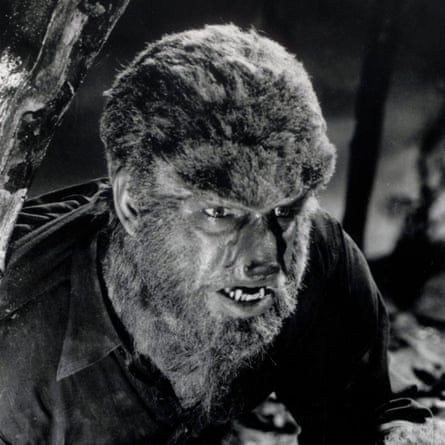
Lon Chaney Jr as The Wolf Man. Photograph: Photo 12/Alamy
The fearsomeness of the creatures was lessened by this, and as time passed, their looks tended to be more comical than scary. The true horror genre all but vanished from American television when the 1934 Hays Code outlawed “brutality and possible gruesomeness,” and the terrifying creatures of the past fell out of style. The monster was slain by oversaturation.
The now-defunct RKO Films, which produced more than 140 genre films between 1929 and 1956, ran concurrently with Universal. Most of the studio’s classic horror films, like Cat People (1942), I Walked With a Zombie (1943), and The Seventh Victim, are recognized for their elegance (1943). Lewton preferred subtlety and shadow play over blatant monsters. While other filmmakers in the genre have been inspired by his films, they never quite attained icon status.
Hammer, a British production studio, used the same two public domain books that had rescued Universal to revive the monster and establish a template for gothic, violent, and eroticized filmmaking. The Curse of Frankenstein (1957) debuted a harsh, verging on horrific new interpretation of Shelley’s monster; a year later, the same director and cast—Peter Cushing, Christopher Lee—made Dracula, with Lee purposefully portraying a far more blatantly sexual version of the vampire. The popularity of these two movies led to the creation of franchises for each monster, the development of a distinguishing aesthetic for Hammer horror films, and the continued on-screen cooperation of Cushing and Lee.
Recently, Universal Studios tried again to breathe new life into its horror realm. Midway through the decade, they introduced the star-studded Dark Universe, introducing actors like Johnny Depp as the Invisible Man, Javier Bardem as Frankenstein’s Monster, Russell Crowe as Dr. Jekyll/Mr. Hyde, Sofia Boutella as the Mummy, and Tom Cruise as, conveniently, a brand-new character who would undoubtedly have many visually stunning stunts. Despite all the promotional commotion, only one movie—2017’s The Mummy—was ever released, and it was doomed by unfavorable critic reviews, weak box office performance, and rumors of creative control conflicts between Cruise and director Alex Kurtzman. Two lonely tweets were all that the Dark Universe left behind when it arrived.
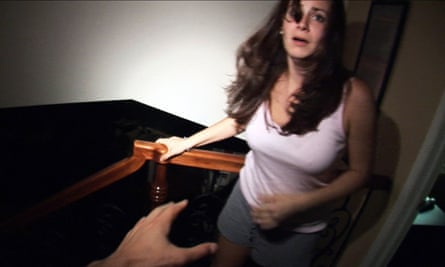
Katie Featherston in Paranormal Activity. Photograph: Universum Home Ent./Cinetext/Paramount Pictures/Allstar
The void was filled by independent production company Blumhouse, who in 2020 successfully reimagined The Invisible Man as a technologically advanced tale of domestic abuse thanks to a 10-year first-look agreement with Universal. The found-footage haunter Paranormal Activity from 2015, which allegedly broke box office records and launched a series of eight further films, was Blumhouse’s first major success. The political slasher The Purge and the haunted home series Insidious were both created by Blumhouse, another uncommon accomplishment in recent years. In addition to serving as a significant societal shift, their 2017 picture Get Out introduced a fearless new voice in the genre in Jordan Peele and inspired several think pieces on “elevated horror.”
Similar to how Hammer became a byword for British horror, Blumhouse has come to represent contemporary fright. A24, which celebrates its tenth year this year, established themselves in the genre with Robert Eggers’ acclaimed The Witch in 2015 before solidifying their position with Ari Aster’s horror family drama Hereditary in 2018.
The first wave of monsters—Dracula, the Mummy, the Invisible Man, and Frankenstein’s monster—would establish the horror subgenre and transcend any one adaptation, performance, or motion picture. Their influence is still being felt, and it won’t be long until we learn if Blumhouse or A24 have produced a new breed of monsters.
Anna Bogutskaya is a writer, host of The Final Girls podcast and co-lead programmer of In Dreams Are Monsters, which runs at venues across the UK from 17 October to 31 December. For more details click here.
Thanks to Anna Bogutskaya at The Guardian whose reporting provided the original basis for this story.
-
Frank DiBernardo handles LNGFRM's Foodie and Miscellaneous writing tasks. He's always getting ideas from users, so don't be afraid to send an email to the editor.


