The global clock ticks, marking another day where the familiar and the utterly novel collide, shaping a landscape that is at once bewildering and profoundly consequential.
From the skies where pilots navigate the boundaries of age and experience, to the geopolitical theatre where centuries-old conflicts find new expressions, and into the digital ether where artificial intelligence races ahead, the world is a kaleidoscope of shifting priorities and urgent dilemmas.
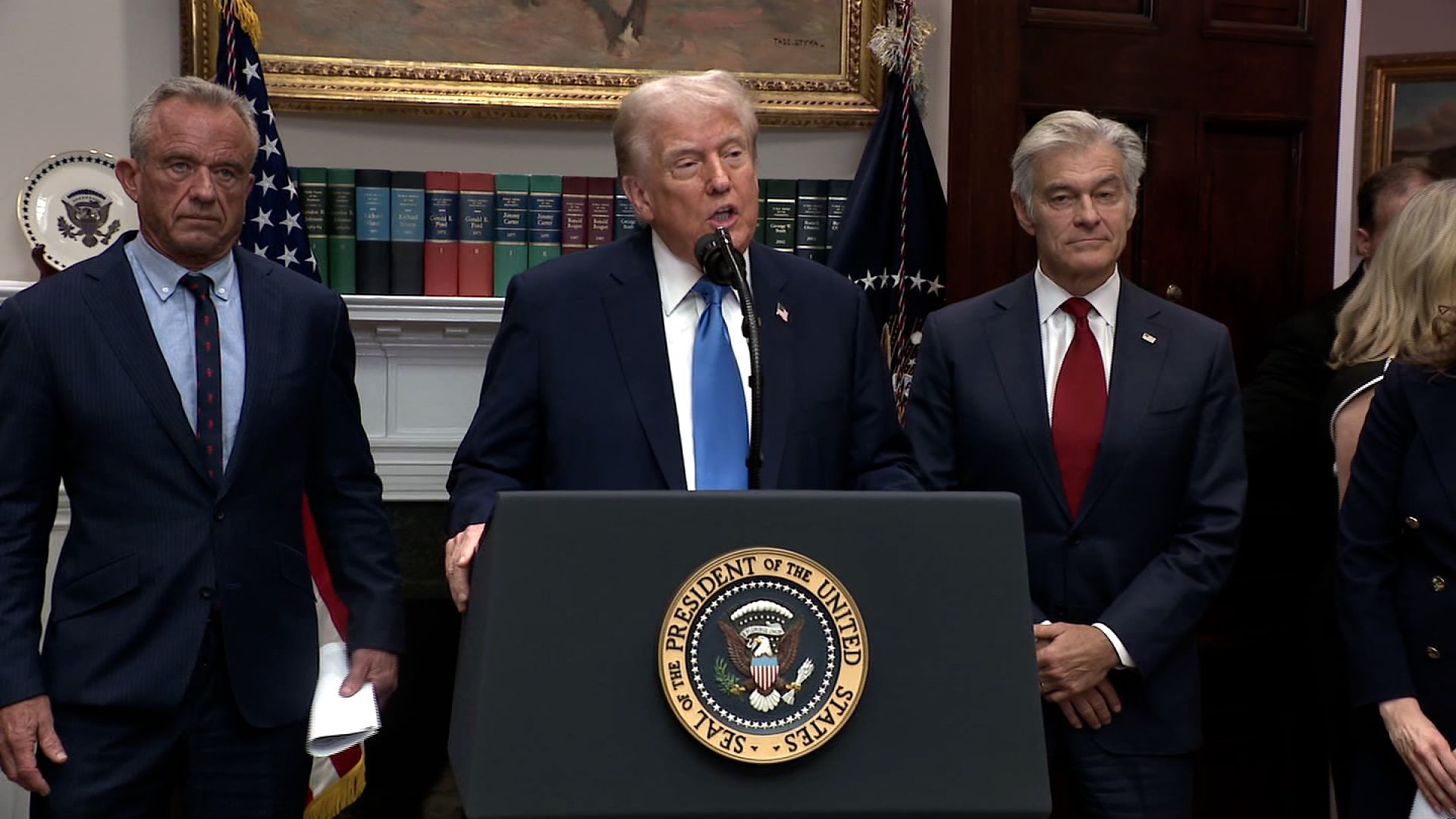
Perhaps no story encapsulates the current zeitgeist of confusion and consequence more starkly than the contentious announcement regarding autism and Tylenol use during pregnancy.
In a move that sent ripples of alarm through the medical and public health communities, President Donald Trump publicly linked acetaminophen to autism, a claim that stands in direct opposition to decades of rigorous scientific inquiry. For more information, see the FDA’s response to evidence of possible association.
This isn’t merely a political gaffe; it’s a dangerous foray into the realm of public health.
It threatens to erode trust in established medical guidance and potentially cause widespread anxiety among expectant mothers.
The Food and Drug Administration, in a seemingly reactive posture, is now reportedly initiating changes to acetaminophen product safety labels and issuing new guidance to physicians, urging limited use during pregnancy “unless medically necessary.” More on this can be found in the FDA guidelines on drug use during pregnancy.
While the FDA’s role is to ensure drug safety, this swift action, coming on the heels of a presidential statement that contradicts overwhelming scientific evidence, raises uncomfortable questions about the interplay between political rhetoric and public health policy.
Tylenol maker Kenvue rightly expressed deep concern, not just for potential health risks, but for the profound “confusion this poses for expecting mothers and parents.” See Harvard’s findings on acetaminophen use during pregnancy.
When political pronouncements override scientific consensus on issues as sensitive as fetal development, the bedrock of informed medical decision-making begins to crack, leaving vulnerable populations adrift in a sea of misinformation.
Meanwhile, on the grand stage of the United Nations General Assembly, a different kind of shift is unfolding, one that speaks volumes about the evolving global order.
France’s declaration of recognition for a Palestinian state, joined swiftly by Belgium, Monaco, Luxembourg, and Malta, follows similar moves by Britain, Canada, Australia, and Portugal. For a deeper understanding, refer to International recognition of Palestine.
This wave of diplomatic recognition is more than symbolic; it marks a significant pivot in international opinion, further isolating Israel and its staunchest ally, the United States, on the global stage.
The fact that the U.S. now stands as the sole permanent member of the UN Security Council not to recognize Palestinian statehood is a stark indicator of its increasingly solitary position on this deeply entrenched conflict.
Analysts are quick to point out that this growing international consensus could reshape the dynamics of future peace negotiations, applying renewed pressure on all parties to find a viable, two-state solution, while simultaneously highlighting the diminishing influence of traditional power brokers.
Beyond the political and medical arenas, the world continues its relentless march into the future, albeit with new anxieties.
The artificial intelligence race, a pursuit that promises to redefine industries and societies, saw a monumental leap with Nvidia’s commitment of up to $100 billion to OpenAI. For detailed insights, check out Nvidia’s investment in OpenAI.
This colossal investment, involving both cash for chips and non-controlling shares, underscores the feverish pace of AI development and the immense capital being poured into securing a dominant position in this transformative technology.
The deal, coming just days after Nvidia’s $5 billion commitment to Intel, paints a vivid picture of a tech landscape where alliances are forged and broken with dizzying speed, all in the pursuit of computational supremacy.
What this means for the future of work, ethical considerations, and even the very definition of intelligence, remains a sprawling, unanswered question.
Yet, even as we gaze toward the algorithmic horizons, more terrestrial concerns demand immediate attention.
The skies, once a realm of predictable air travel, are now increasingly fraught with the specter of unidentified drones.
The closure of Oslo and Copenhagen airports due to drone sightings, disrupting thousands of travelers, highlights a growing security vulnerability.
While there’s no immediate link to recent Russian drone incursions into NATO airspace, the incidents serve as a chilling reminder of how easily critical infrastructure can be compromised by seemingly innocuous, yet potentially malicious, airborne devices.
This new dimension of airspace security adds another layer of complexity to an already intricate global security apparatus.
And then there are the enduring, immutable forces of nature.
Hurricane Gabrielle, now a Category 4 storm, churns menacingly east of Bermuda, while other tropical systems hint at further disruption. To understand this better, visit the impact of climate change on hurricanes.
The annual dance with powerful storms, exacerbated by a changing climate, brings with it the grim spectacle of mass evacuations, such as the 400,000 residents in China’s Shenzhen preparing to flee Typhoon Ragasa.
These events are a powerful, recurring testament to our planet’s raw power, reminding us that even amidst our most profound technological and political machinations, we remain fundamentally susceptible to the forces of the natural world.
From the fraught debate over mandatory retirement for pilots at 65 – a human dilemma of experience versus perceived decline – to the spectacle of Harry Styles running the Berlin Marathon, the world presents a tapestry of grand narratives and personal moments.
The common thread, perhaps, is a pervasive sense of living through significant, often unsettling, transitions.
As former Vice President Harris reportedly demurs on a 2028 presidential run, the political landscape remains fluid, mirroring the broader global currents.
In these “very, very heavy times,” as one Oscar-winning actress observed, discerning truth from noise, and navigating complex challenges with clarity and wisdom, feels more crucial than ever.
-
Frank DiBernardo handles LNGFRM's Foodie and Miscellaneous writing tasks. He's always getting ideas from users, so don't be afraid to send an email to the editor.