In a political landscape often characterized by staid tradition and incremental change, a small, ambitious party in Japan is poised to launch an experiment that could redefine the very essence of leadership.
The Path to Rebirth, a relatively new entrant to Japan’s political scene, has unveiled plans to install a chatbot penguin as its “AI leader,” a move that sounds more like science fiction than serious governance.
This isn’t merely a whimsical rebranding; it’s a profound, if legally fraught, attempt to usher artificial intelligence directly into the corridors of power.
The genesis of this peculiar proposal lies in disappointment.
After a string of electoral failures, the party’s founder, former Akitakata mayor Shinji Ishimaru, stepped down.
The subsequent leadership race was won by Koki Okumura, a 25-year-old doctoral student at Kyoto University specializing in AI research.
But Okumura, rather than embracing the mantle himself, promptly declared his intention to be an assistant to an entirely different kind of leader: an artificial intelligence.
“The new leader will be AI,” Okumura stated, envisioning a future where the party “entrusts decision-making to AI.” For more on the implications of AI in political leadership in Japan, check out this CNN article.
The avatar? A penguin, a calculated nod to Japan’s affection for animals, though its appearance remains under wraps.
Okumura’s vision is audacious.
He believes AI possesses the potential to operate with “greater precision than humans,” capable of considering “voices that are often overlooked,” thereby fostering a “more inclusive and humane environment for political participation.” You can explore more about AI’s impact on politics here.
It’s a compelling argument, especially in an era where public trust in human politicians often wavers.
The promise of an impartial, data-driven entity making decisions, free from personal bias or the vagaries of human emotion, holds a certain allure.
For a party born from the belief that anyone interested in politics should have a shot, this leap into algorithmic leadership is perhaps a logical, if extreme, extension of its founding philosophy.
Yet, reality, as always, presents its own set of constraints.
Japanese electoral law mandates that candidates must be a natural person and a Japanese citizen.
This means the AI penguin cannot, in fact, run for office. Okumura will remain the formal, human representative, a necessary legal fig leaf for a truly digital brain.
This immediate practical hurdle underscores the inherent tension in this experiment: how much power can an AI truly wield when the legal and societal frameworks are still fundamentally human-centric?
Japan, as a nation, has been increasingly open to integrating AI into various aspects of public life.
Facing a rapidly aging population and a shrinking workforce, the government has encouraged AI adoption to boost efficiency, from clerical duties in ministries to matchmaking services and even identifying abandoned houses. For a deeper understanding of the challenges of AI in governance, refer to this ISACA article.
However, none of these initiatives approach the wholesale delegation of political decision-making that Okumura is proposing.
This isn’t about optimizing existing processes; it’s about fundamentally altering the agency of governance.
The Path to Rebirth is not alone in its techno-political ambitions.
Last year, Victor Miller introduced an AI chatbot, VIC, as a mayoral candidate in Cheyenne, Wyoming, while in the UK, “AI Steve” sought a parliamentary seat in Brighton, both aiming to delegate authority to neural networks.
For more on similar past initiatives, also check this Japan Times article.
These previous attempts, however, hit significant roadblocks.
OpenAI, the creator of ChatGPT, cut off access to its software for these political endeavors, and officials were quick to reiterate that an “AI bot is not a qualified elector.” This notion includes various ethical considerations of AI in political decisions detailed in a LSE article.
These precedents offer a cautionary tale, highlighting the deep-seated legal and ethical barriers to AI entering the political arena.
Unsurprisingly, observers in Japan and beyond have expressed considerable skepticism.
Hiroshi Shiratori, a political science professor at Hosei University, believes Japanese voters are simply not ready for a party so reliant on AI.
“Voters choose the person who can be relied on and also choose the party who is in line with the people’s feelings,” Shiratori told CNN, emphasizing that “The AI is totally apart from that.” You may also read about the risks AI poses to democracy here.
He raises a critical point about the human element of politics – the need for empathy, relatability, and the ability to connect with constituents on a visceral level, qualities algorithms currently lack.
Furthermore, Shiratori warns that if all political parties were to delegate decisions to AI, they might converge into a homogenous, “anti-democratic” bloc, stifling the pluralism essential for a healthy democracy.
Ethicists echo these concerns.
Thomas Ferretti, a senior lecturer in ethics and sustainable business, points out that while AI can analyze data rapidly, it struggles with the nuances of political decision-making because “people have different values and disagree about what our societal goals should be.” For insights into AI governance, explore this Brennan Center article.
AI can process facts, but it cannot intrinsically understand or reconcile conflicting human values, nor can it grapple with the moral dilemmas that are the daily bread of political life.
Theodore Lechterman, UNESCO Chair in AI Ethics and Governance, further stresses that the relationship between politicians and voters extends far beyond mere delegation of power.
We expect human politicians to act autonomously, interact physically and socially, examine conditions on the ground, and attend ceremonies – a multifaceted role that an AI avatar, however sophisticated, cannot fulfill.
He insists on “deliberate, honestly, and transparently” approached AI use, with clear accountability.
For Koki Okumura, however, this isn’t just about winning elections; it’s about pioneering.
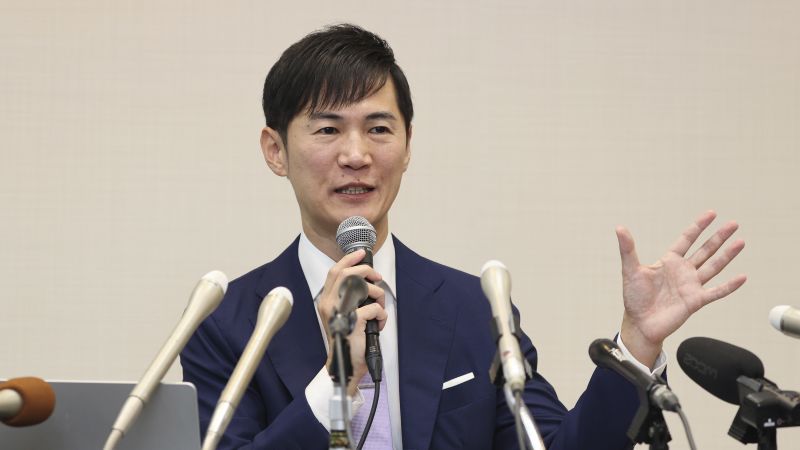
“We’re heading towards a world where we’ll be interacting with AI,” he mused during his press conference.
“If that happens, how should we proceed with the social systems and political systems that have been taken for granted until now? We want to be the first to conduct that experiment at the cutting edge.”
Whether this AI penguin becomes a trailblazer or a fleeting curiosity remains to be seen.
It challenges our fundamental assumptions about leadership, representation, and the very nature of democracy.
In an increasingly complex world, the allure of an emotionless, hyper-efficient decision-maker is undeniable.
But as this peculiar experiment unfolds, it forces us to confront uncomfortable questions: What does it mean to be governed?
And in the inevitable march of technological progress, how much of our humanity are we willing to delegate to the algorithms we create?
-
Frank DiBernardo handles LNGFRM's Foodie and Miscellaneous writing tasks. He's always getting ideas from users, so don't be afraid to send an email to the editor.