Sharath Chandra Parashara blends enterprise leadership with technical depth in SaaS, AI, and retail logistics. As CTO and CISO at FenixCommerce, Parashara has overseen large-scale, cloud-native platform deployments, architected AI-powered logistics solutions, and delivered custom system integrations for global retailers.
His experience in integrating ERPs, WMSs, and omnichannel commerce platforms brings a strategic perspective to next-generation eCommerce ecosystem design. Within the evolving landscape of e-commerce fulfillment, the seamless integration of marketplace apps and enterprise analytics has grown increasingly critical.
Facing heightened consumer expectations and operational complexity, businesses seek robust solutions for real-time shipping insights, unified data, cost control, and delivery reliability. Parashara’s technical leadership aligns with this demand, applying modern AWS microservices, explainable AI, and standardized logistics ontologies to centralize analytics and optimize shipment routing across diverse marketplaces.
Integration-first marketplace app design
Parashara’s background in building enterprise integration platforms forms the basis of his approach to Shopify and BigCommerce application development. “My background in building enterprise-grade integration platforms—connecting ERPs, WMSs, carriers, and commerce systems—directly shaped how I approached Shopify and BigCommerce app development at FenixCommerce,” he explains.
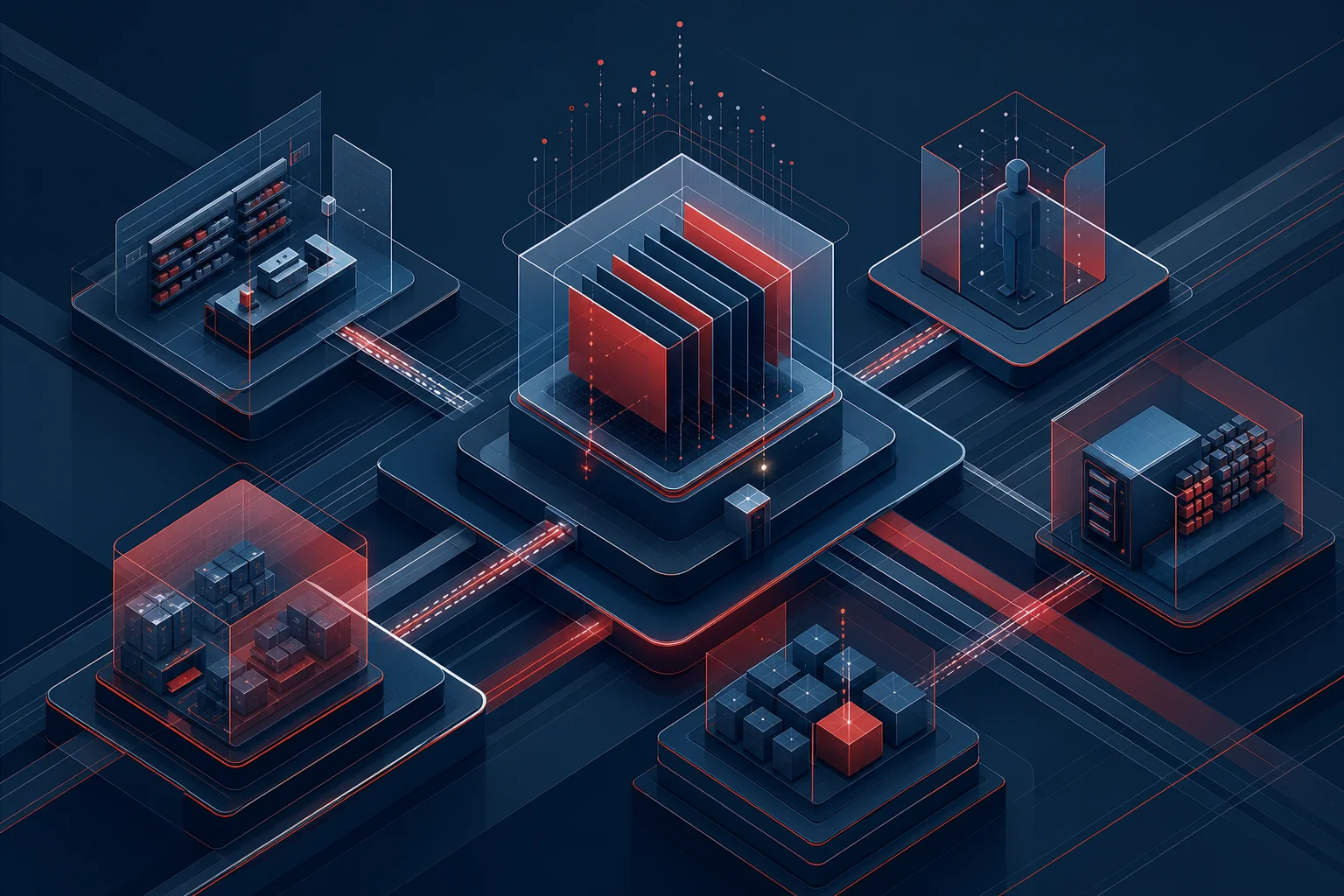
Rather than isolating marketplace apps as standalone plugins, he designed them as: “Secure integration gateways into a broader logistics intelligence platform.” This architecture enables marketplace apps to function as lightweight ingestion points while offloading advanced analytics and decisioning to centralized services.
Parashara believes, “Shipping analytics across marketplaces became consistent, normalized, and enterprise-ready, even for merchants operating across multiple storefronts and fulfillment networks.” Effective integration supports scalable orchestration and paves the way for streamlined insight generation, reflecting practices that underpin robust WMS-ERP integration strategies.
Addressing semantic variance in integration
Connecting disparate systems requires more than structural schema alignment—it demands semantic normalization. “A key challenge is semantic mismatch, not just structural differences,” Parashara notes. ERPs and WMSs encode business concepts such as orders and shipments differently, leading to inconsistent data lifecycles and terminology.
He overcomes this by: “Defining a canonical shipping-event ontology independent of source systems and implementing translation layers that map source-specific schemas to canonical events.” By preserving source metadata for traceability and enforcing schema versioning, his strategy supports rapid onboarding of new systems while maintaining data integrity and analytical consistency.
These practices reflect industry guidance on shipping-event ontology, which prioritizes data consistency and real-time updates between systems through message-based integration and business events, as seen in modern ERP-WMS synchronization architectures.
Event-driven microservices on AWS
The backbone of Parashara’s integration approach is a cloud-native microservices ecosystem built on AWS. “I architected a cloud-native microservices ecosystem on AWS that enables secure, scalable data flow between marketplaces and logistics backends,” he states. API Gateway acts as the controlled ingress for marketplace webhooks, while AWS Lambda powers event-driven processing of order and SLA data.
Stateless microservices handle data enrichment, validation, and routing, with downstream analytical and persistence layers supporting central insight generation. “This architecture ensures elastic scalability during traffic spikes, low operational overhead, and strong isolation between marketplace-facing and backend systems.” Such modern event-driven designs support loose coupling and independent service evolution, mirroring event-driven architectures used for scalable, resilient eCommerce workflows.
Unified analytics for actionable insights
Integrating order and SLA data from multiple marketplaces enables merchants to move from fragmented reporting toward unified, proactive decision-making. “By aggregating order and SLA data from Shopify and BigCommerce into a single analytics plane, merchants gain visibility that is otherwise fragmented across platforms,” Parashara says. This unified approach allows for “accurate cost-per-shipment analysis,” monitoring SLA adherence, and early identification of carrier issues.
The ability to track performance consistently across channels elevates analytics: “From reactive reporting to proactive optimization,” he states, providing leverage for negotiations and strategy. These efforts align with industry trends in centralized shipping analytics, where integrated platforms provide dynamic EDDs, reduce cart abandonment, and enhance conversion through transparent, reliable delivery commitments.
Embedding intelligent rate-shopping and delivery prediction
Parashara integrates rate-shopping logic and AI-driven delivery prediction directly in order orchestration. “Each order triggers real-time carrier evaluation, SLA feasibility checks, and cost-versus-reliability optimization,” he explains, allowing routing based on current operational data. “This ensures that every order—regardless of originating marketplace—is routed to the most efficient carrier based on current conditions, not static rules.”
This capability advances from manual selection to dynamic, data-driven routing, driving down shipping costs and minimizing late deliveries. AI-powered predictive analytics in fulfillment can achieve high forecasting accuracy, optimize order flow, and significantly boost operational efficiency by reducing stockouts and improving fulfillment speed.
Ensuring real-time, bidirectional synchronization
Maintaining real-time, bidirectional sync between storefronts and backend logistics systems is essential in high-volume commerce. Parashara states, “I employ event-driven synchronization using idempotent APIs, versioned payloads, and state reconciliation mechanisms.” He highlights, “Retry and compensation workflows for transient failures, while assigning clear source-of-truth ownership per data domain.”
Such architectural discipline enables low-latency, eventually consistent integration, ensuring resilience even under intensive loads. Real-time synchronization is further supported by direct API/SQL connections, middleware, and event streaming—principles consistent with flexible approaches for WMS-ERP data unification and operational scalability.
Advanced analytics for merchants and logistics teams
Analytics technology must do more than visualize data; it must drive decisions. Parashara structures analytics with Athena for querying, and Quicksight and Tableau for visualization. “We present carrier performance trends, cost leakage indicators, SLA risk heatmaps, and seasonal and regional shipping behavior,” he reports. Dashboards are expressly designed to translate operational data into actionable insights for merchants and logistics teams.
This approach supports deep visibility, enabling both day-to-day adjustments and longer-term strategy. Dashboards that synthesize real-time shipping, SLA, and performance metrics reflect the growing importance of explainable, data-driven analytics and AI in logistics technologies, as seen in applications supporting on-time delivery rate improvement and operational savings.
Future trends in seamless marketplace integration
Looking ahead, Parashara identifies technologies that will advance seamless marketplace integration and analytics. “I see strong potential in event-driven architectures with finer-grained streaming analytics; explainable AI for marketplace-level shipping decisions; standardized logistics APIs across commerce platforms; [and] deeper integration of real-time carrier telemetry.” He anticipates these shifts will “further reduce friction between marketplaces and logistics systems, enabling near-autonomous shipping optimization at scale.”
Emerging architectural and data standards, the growth in explainable AI, and the maturation of telemetry are expected to drive further innovation and market competitiveness. Hybrid neural models and interpretable dynamics frameworks are gaining traction, emphasizing transparency and auditability for both operational users and regulatory stakeholders, as explored in developments toward explainable logistics AI.
The drive for seamless integration between e-commerce marketplaces, backend logistics, and centralized analytics is reshaping online retail. As apps expand from simple plugins to integral gateways for real-time intelligence, merchants gain unprecedented analytical control, cost efficiency, and delivery performance. The foundational architectures, semantic normalization, and AI-powered orchestration applied by leaders like Parashara offer a blueprint for the next era of unified, resilient e-commerce infrastructure.
-
Mike Malone is Deputy Editor and co-founder of LNGFRM. His main areas of coverage are interviews, music, entertainment, and anything to do with gaming — with a growing focus on automotive culture, from the tech shaping next-gen vehicles to the intersection of cars, gaming, and entertainment (think sim racing, car culture in film, and the gearhead crossover in gaming communities). Whether he's sitting down with a chart-topping artist or breaking down the latest in automotive innovation, Mike brings the same curiosity and eye for detail to every story.