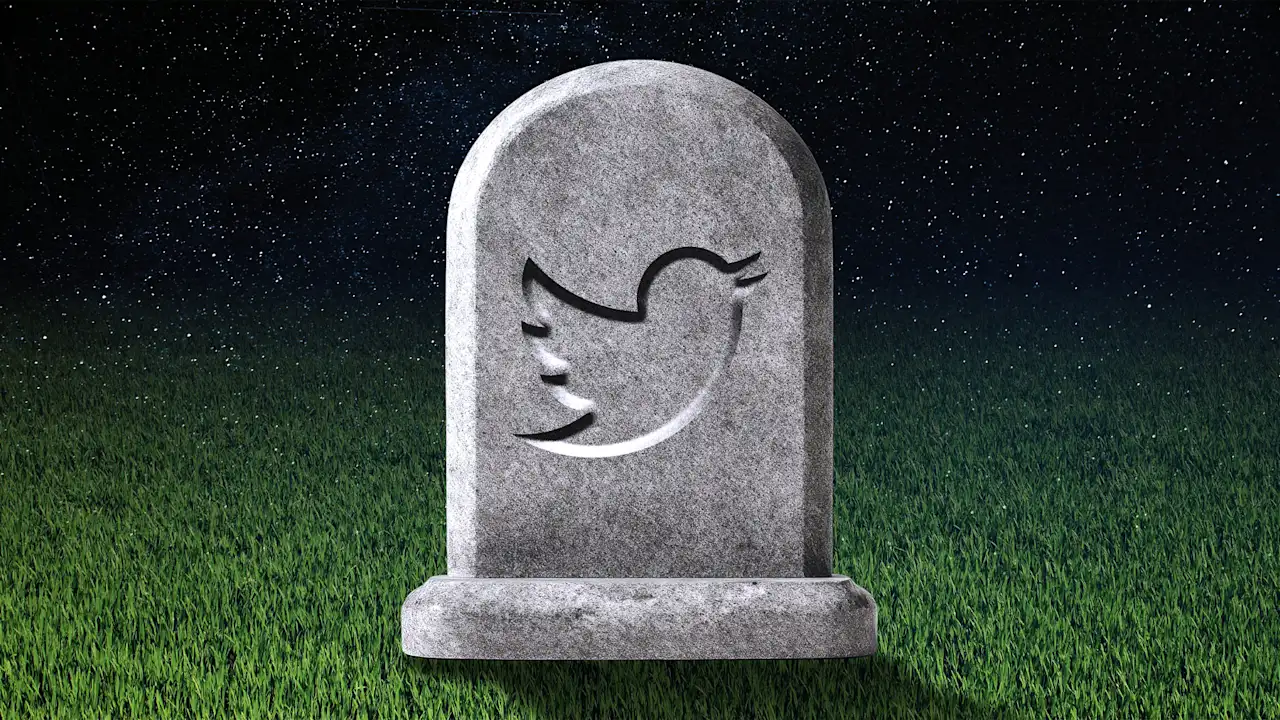
The digital gravestone for Twitter.com is officially being etched, marking a definitive end to an era that once defined global discourse.
As of November 10, the familiar URL, a gateway to over a decade and a half of breaking news, viral memes, and collective consciousness, will vanish, leaving only the stark, enigmatic ‘X.com’ in its wake.
This isn’t merely a technical redirect; it’s the final, symbolic severing of ties with a brand name that, for better or worse, became synonymous with the internet’s pulse.
The announcement, delivered with characteristic subtlety through a series of posts from X’s @Safety account between October 24 and 25, feels less like a celebration and more like a quiet burial.
It arrives more than a year after Elon Musk, the platform’s mercurial owner, unilaterally rebranded Twitter to X in July 2023.
That move, following his tumultuous $44 billion acquisition in 2022, was met with widespread dismay, critics famously branding it “brand suicide.”
Many loyal users indeed jumped ship, seeking refuge on nascent platforms like Threads and Bluesky, but the new name, it seems, is here to stay, enforced now with the disappearance of the original domain.
What makes this domain retirement particularly noteworthy – and, for some, frustrating – is not just the erasure of a digital landmark, but the practical headache it presents for a segment of its user base.
Buried within the @Safety account’s message was a critical directive: users relying on specific two-factor authentication (2FA) methods will need to update their login credentials before November 10, or face the ignominious fate of a locked account.
This isn’t a blanket warning for all 2FA users.
Those who safeguard their accounts with authenticator apps can breathe easy.
The mandate specifically targets individuals employing a physical security key, such as a Yubikey, or a passkey – an encrypted, passwordless option typically leveraging biometric scans like fingerprints or facial recognition.
These are the vanguard of online security, chosen by users who prioritize robust protection against remote hacking attempts.
The irony, of course, is that these very bulwarks of security are now being forced into a precarious position by the platform they’re designed to protect.
The process for re-enrollment, while straightforward, places the onus entirely on the user.
Before November 10, those affected must navigate to their account settings, delve into “Security and account access,” then “Security,” and finally, the “Two-factor authentication” section.
There, they’ll find the option to “Add another key,” which will guide them through the steps to create a new security key or passkey, this time linked irrevocably to the “x.com” domain.
Failure to comply means a locked account, forcing users to either re-enroll, choose a different (and potentially less secure) 2FA method, or, against all security recommendations, disable 2FA entirely.
It’s a stark choice, and one that feels imposed rather than collaborative.
This entire episode underscores a broader narrative playing out in the digital realm: the consolidation of power in the hands of platform owners and the diminishing agency of the user.
The casual, almost secondary manner in which such a critical security update was communicated speaks volumes about X’s priorities.
There’s a distinct lack of hand-holding, a presumption that users will simply adapt, even when it means actively reconfiguring their security protocols.
The platform’s failure to respond to requests for comment on other steps it might be taking to ensure a smooth transition only reinforces this perception of detachment.
The retirement of Twitter.com is more than a mere URL change; it’s the final act in a rebranding saga that has consistently prioritized one man’s vision over the collective memory and established identity of a global communication network.
As the digital ghost of Twitter.com fades into the internet’s vast, forgotten archives, it serves as a potent reminder of the ephemeral nature of online identities and the constant, sometimes uncomfortable, evolution of our digital lives.
Users, it seems, must not only accept the new name but actively re-authenticate their existence within its new, austere architecture.
The blue bird may be gone, but its legacy continues to cast a long shadow over the ‘X’ that strives to replace it. For more information on best practices, users can refer to Multifactor Authentication – CISA or Use Two-Factor Authentication To Protect Your Accounts.
-
Frank DiBernardo handles LNGFRM's Foodie and Miscellaneous writing tasks. He's always getting ideas from users, so don't be afraid to send an email to the editor.