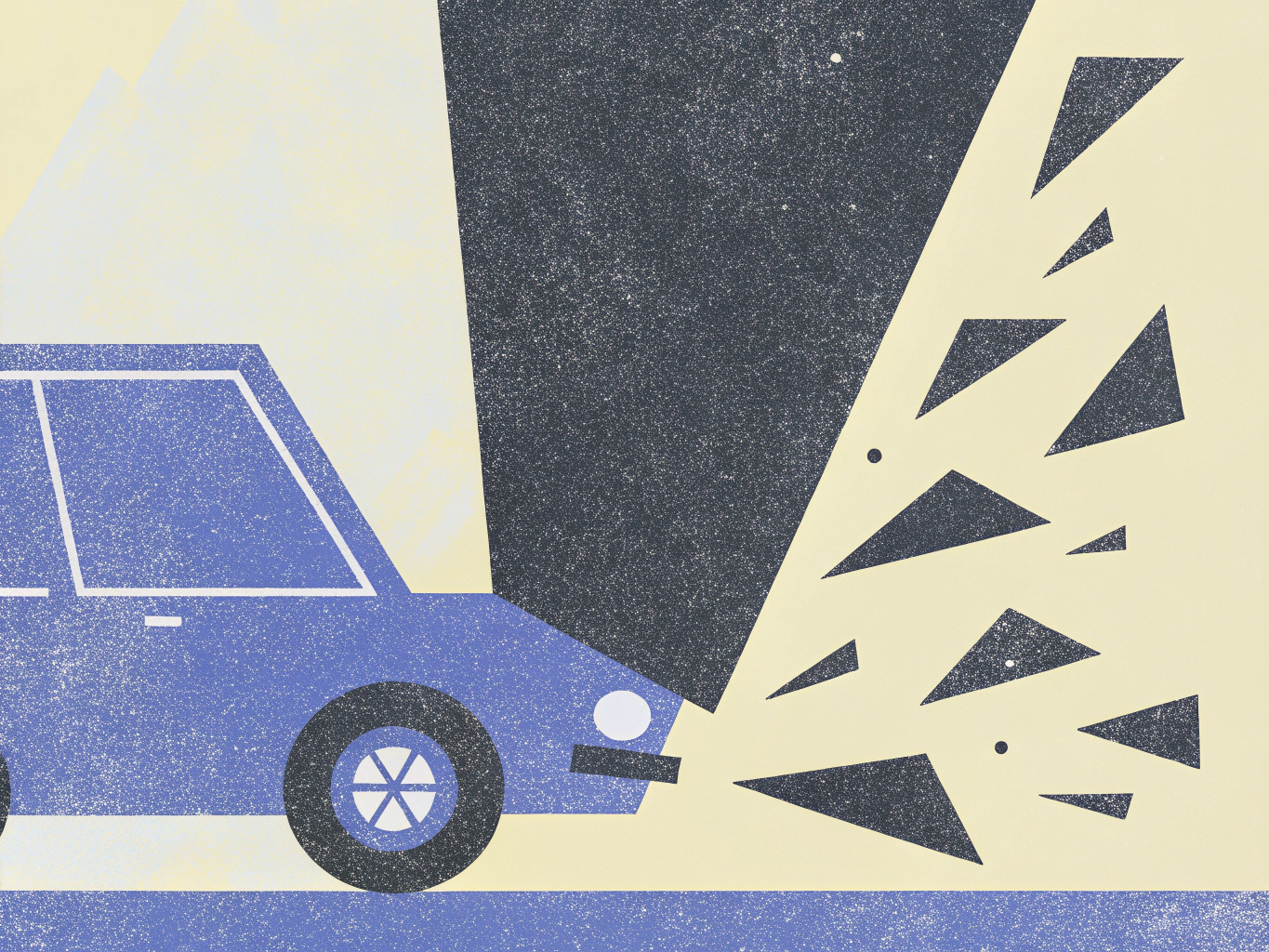
The modern automobile, a marvel of engineering designed ostensibly to shield its occupants, is increasingly casting a literal shadow over the safety of those outside its metallic shell.
A groundbreaking new study reveals a troubling paradox: as vehicles grow larger and more imposing, their drivers are losing crucial visibility.
This creates vast blind spots that could be contributing to the alarming surge in pedestrian and bicyclist fatalities across American roads.
The research paints a stark picture, released last Thursday by the Insurance Institute for Highway Safety (IIHS).
The IIHS is a nonprofit organization funded by the insurance industry, collaborating with the United States Department of Transportation’s Volpe Center.
The study meticulously examined six popular passenger vehicles: the Chevrolet Suburban, Ford F-150, Honda Accord, Honda CR-V, Jeep Grand Cherokee, and Toyota Camry.
It traced their evolution from 1997 to 2023.
The findings were unequivocal: direct forward visibility has diminished substantially.
Blind zones have expanded to an extent that should give every motorist pause.
“The across-the-board decrease in visibility for this small group of models is concerning,” stated David Harkey, president of the Insurance Institute.
He delivered this statement as a powerful indictment of current design trends.
His words carry the weight of a potential crisis, suggesting a deeper, more systemic issue at play.
“We need to investigate whether this is a broader trend that may have contributed to the recent spike in pedestrian and bicyclist fatalities,” Harkey added.
It’s a call to action, urging a closer look at the unintended consequences of automotive aesthetics and perceived utility.
The study’s most dramatic revelations center on the ubiquitous sport utility vehicles (SUVs).
These vehicles have dominated the American automotive landscape for years.
For three popular SUVs, forward visibility within a 10-meter radius plummeted by as much as 58%.
This 10-meter radius is a critical zone for spotting pedestrians, cyclists, or even small children.
The Honda CR-V stands as a particularly stark example of this regression.
Drivers of the 1997 model could survey a healthy 68% of the area 10 meters in front of their vehicle.
Fast forward to the 2022 model, and that figure shrinks to a mere 28%.
This isn’t just a minor inconvenience; it’s a colossal loss of peripheral awareness.
It creates a gaping hole in the driver’s immediate world.
The culprits, according to the researchers, are a combination of design choices.
These include higher hoods that block more of the frontal plane.
Larger side mirrors obscure crucial views at their front corners.
Thickened A-pillars also contribute to the problem.
These elements are often integrated for structural rigidity, aerodynamics, or even stylistic flair.
Collectively, they conspire to create an increasingly opaque bubble around the driver.
While sedans like the Honda Accord and Toyota Camry also experienced visibility reductions, their decline was far less severe.
Their visibility typically fell less than 8% in later generations.
For instance, the Accord’s visibility decreased modestly from 65% in 2003 to 60% in 2023.
This is a testament to how different vehicle classes are navigating the same design pressures.
The implications of these findings are profound.
This is especially true when viewed through the lens of shifting consumer preferences.
As Becky Mueller, a senior research engineer at the Insurance Institute and co-author of the Volpe Center study, pointed out:
“These results are notable because we already know that the portion of SUVs in the U.S. fleet grew substantially over these years as well.”
This isn’t just about individual vehicle designs; it’s about a macro-trend in vehicle type impacting overall road safety.
If, as Mueller suggests, declining visibility in SUVs is a general change, then it “has compounded the effects of taller, blunt-nosed vehicles that IIHS has already documented.”
The cumulative effect is a national fleet of vehicles that, by their very design, are less equipped to prevent collisions with vulnerable road users.
This troubling trend coincides precisely with a period when pedestrian and bicyclist fatalities on U.S. roads have soared to alarming heights.
While the direct causal link between growing blind zones and these fatalities is still under investigation, the correlation is too striking to ignore.
The IIHS researchers are actively conducting further studies to quantify this relationship.
They are examining how blind zones directly affect crash rates and, by extension, insurance claims.
Their new method of measurement uses computational software and a portable camera rig to create precise blind zone maps.
This promises to yield more definitive insights than traditional techniques.
In an era where advanced driver-assistance systems (ADAS) and sophisticated sensor technologies are lauded for enhancing safety, it’s a stark reminder that fundamental design choices still hold immense sway.
While cameras and radar can offer valuable assistance, they are not a substitute for direct human vision.
This study serves as a critical wake-up call, urging automakers to reconsider the balance between aesthetics, utility, and the fundamental imperative of clear driver visibility.
For policymakers and urban planners, it underscores the need for infrastructure that acknowledges the limitations of modern vehicles.
And for every driver, it’s a sobering reminder that the biggest dangers on the road might just be the ones we can no longer see.
The path forward demands not just technological fixes, but a renewed commitment to designs that prioritize the safety of all road users, visible or not.
-
Frank DiBernardo handles LNGFRM's Foodie and Miscellaneous writing tasks. He's always getting ideas from users, so don't be afraid to send an email to the editor.