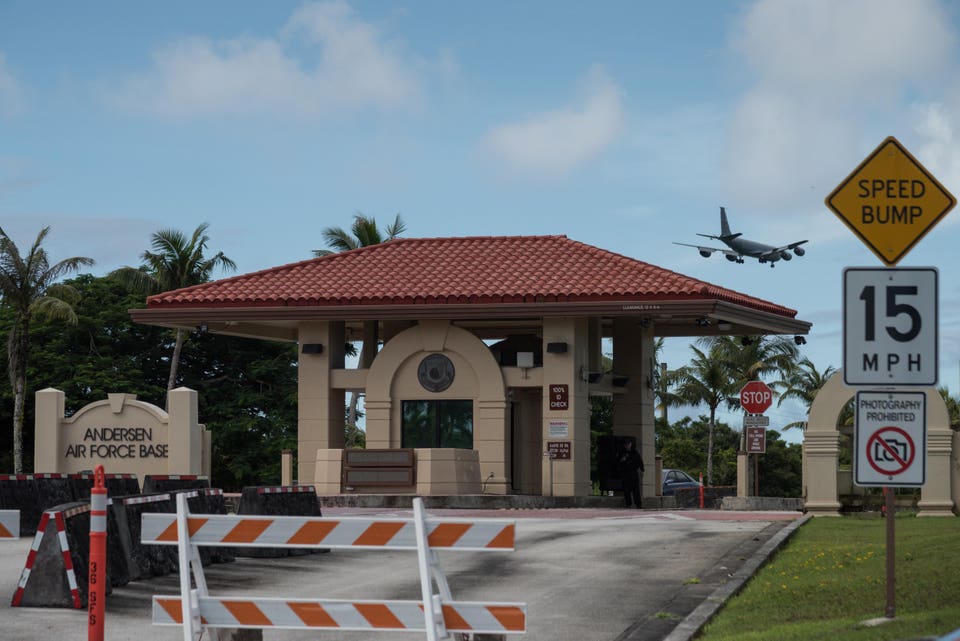
In a modern twist of high-tech mischief that has left many in the cybersecurity world scratching their heads, a YouTuber’s flights over U.S. military bases in Guam have prompted serious security concerns and raised questions about drone surveillance capabilities.
At the heart of this unfolding drama is Billy Cruz, a content creator whose PlanetGuam channel typically focuses on island life but who now finds himself tangled in a legal quandary with the FBI.
The saga began in February when Homeland Security Investigations tipped off the FBI about aerial footage of Camp Blaz, a U.S. Marine Corps base, posted on YouTube (Billy Cruz pleads not guilty to charges).
The footage, captured by a drone, violated national defense airspace restrictions—a serious breach for an area newly opened and strategically significant.
Camp Blaz, which welcomed its first marines and sailors this year, is a symbol of growing military collaboration between the United States and Japan, with substantial funds from the latter aiding its development.
Cruz’s legal troubles deepened when it emerged that he had allegedly pulled a similar stunt over Andersen Air Force Base back in January 2021.
Despite a prior agreement with authorities to cease such activities, the footage appeared online, leading to an indictment.
Cruz, however, has pleaded not guilty to charges of violating national defense airspace and failing to register his drone with the Federal Aviation Administration.
This incident highlights a glaring vulnerability in military base security, especially given the strategic importance of these sites in the Pacific region (Reforming Military Base Security).
With ongoing geopolitical tensions involving China’s posture toward Taiwan and North Korea’s unpredictable missile tests, one would expect robust anti-drone measures to be in place.
Yet, it seems these technological defenses have not kept pace with the creative exploits of civilian drone operators, raising alarms about potential espionage and surveillance threats.
The FBI’s response, involving searches of Cruz’s residence and even his Harley Davidson motorcycle, underscores the seriousness with which they are treating the matter.
The broader implications of this case, however, extend beyond one man’s apparent misjudgment.
They reflect a growing unease about the ease with which drones can penetrate restricted airspaces and capture sensitive data.
In parallel news, the cybersecurity landscape continues to face challenges from various quarters. Coinbase, a major player in the cryptocurrency exchange market, recently revealed a breach involving bribed overseas employees who leaked customer data, including sensitive personal information (Coinbase breach and customer protection).
The hackers demanded a $20 million ransom, a sum Coinbase has refused to pay.
Instead, the company is offering the same amount as a reward for information leading to the hackers’ arrest, reflecting its commitment to cybersecurity and customer protection.
Elsewhere, the FBI is grappling with internal challenges, notably the closure of a watchdog agency tasked with overseeing its use of surveillance powers under Section 702 of the Foreign Intelligence Surveillance Act (FISA) (FISA Section 702 oversight).
This controversial tool allows for the monitoring of communications between Americans and foreign entities, and its oversight is critical to preventing abuses.
Additionally, an unsettling rise in cyber threats involving AI-generated voice messages poses new challenges (AI-generated voice message cyber threats).
Hackers impersonating senior U.S. officials aim to deceive targets into clicking malicious links, a tactic that underscores the evolving nature of cybersecurity threats in the digital age.
Meanwhile, BreachRx, a promising startup in the cyber incident response arena, has secured significant investment to challenge industry giants like Google’s Mandiant (About BreachRx).
Backed by notable figures such as Mandiant founder Kevin Mandia and former New York Times cybersecurity reporter Nicole Perlroth, BreachRx’s ambitions signal a growing market for innovative solutions in cyber defense.
The digital landscape is further complicated by a recent hack of the U.K.’s Legal Aid Agency, exposing sensitive data of hundreds of thousands of applicants for free legal aid (U.K. Legal Aid Agency data breach).
The breach underscores a persistent vulnerability in handling personal data, raising questions about data protection and privacy in public institutions.
In a world increasingly reliant on digital technology, these incidents serve as stark reminders of the delicate balance between innovation and security.
As drones and other technologies become ubiquitous, the need for comprehensive safeguards becomes ever more pressing.
The case of Billy Cruz and the vulnerabilities exposed by his actions may well serve as a catalyst for re-evaluating security protocols not just in Guam but globally, as nations grapple with the dual-edged sword of technological advancement.
-
Frank DiBernardo handles LNGFRM's Foodie and Miscellaneous writing tasks. He's always getting ideas from users, so don't be afraid to send an email to the editor.