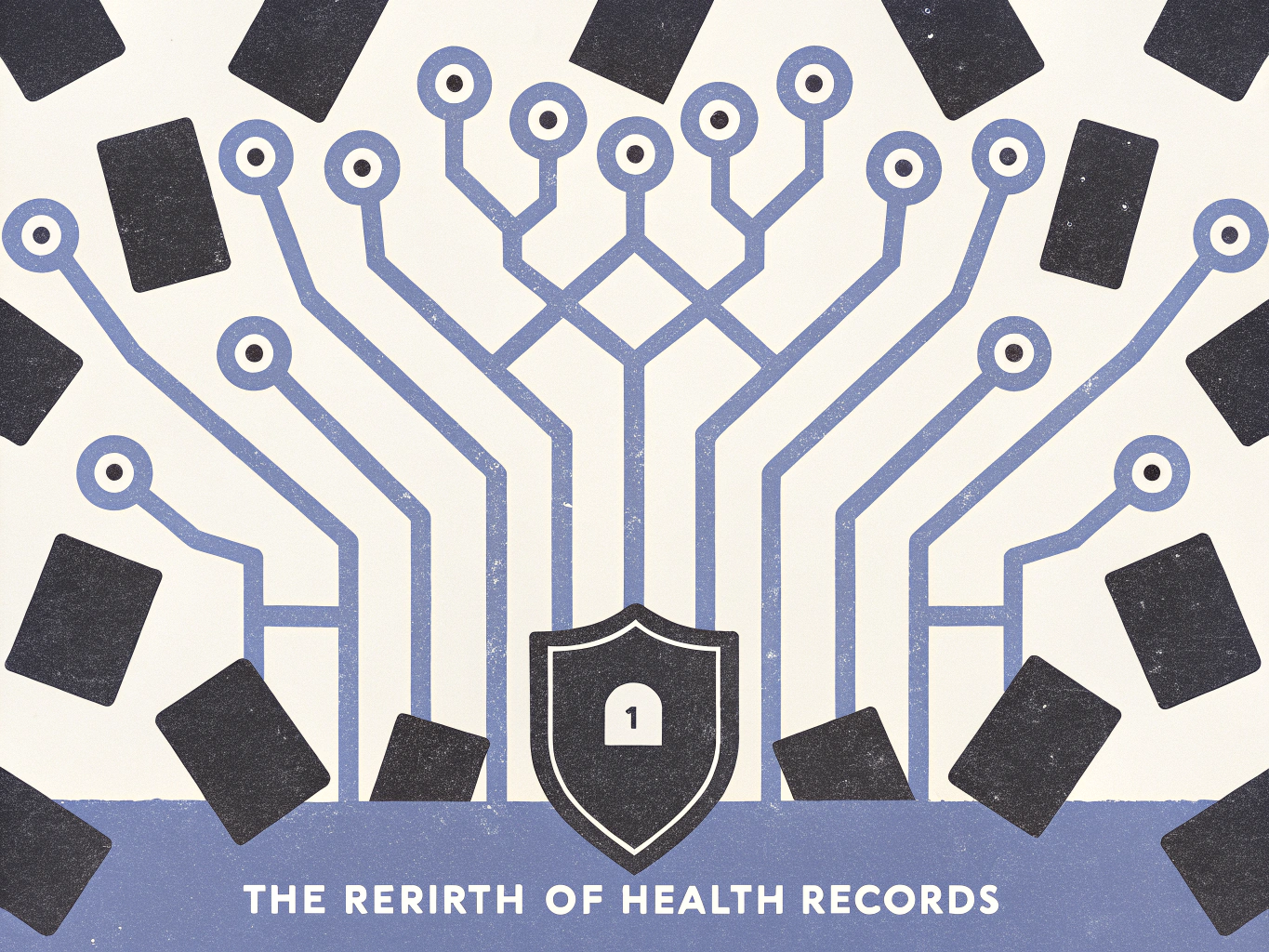
The ghost of healthcare past, it seems, is ready for a triumphant return.
Two decades ago, the tech titans of Silicon Valley, armed with boundless ambition and seemingly endless resources, tried to usher in a new era of personal health management.
Microsoft HealthVault and Google Health, names that once promised to empower individuals with their own medical data, ultimately faded into the digital ether.
They were casualties of an unprepared system and a disengaged public.
Yet, the dream of the Personal Health Record (PHR) has been resurrected, not just by a fresh wave of agile startups, but, perhaps most surprisingly, by the very institutions once seen as roadblocks to its realization.
The initial foray into PHRs was undeniably ahead of its time.
When Microsoft and Google launched their platforms in 2007 and 2008, the concept of a centralized, patient-controlled health hub was revolutionary.
Imagine, all your medical history, test results, and prescriptions, neatly organized and accessible at your fingertips.
The vision was compelling, but the reality was a stark reminder of healthcare’s labyrinthine nature.
Electronic Health Records (EHRs) were still in their infancy, barely digitized.
The government’s “Meaningful Use” policy, designed to nudge providers into the digital age, had just begun to take root.
Consumer wearables were niche curiosities, not ubiquitous data streams.
Crucially, as Estelle Giraud, co-founder and CEO of Trellis Health, keenly observes, these early platforms placed an undue burden on the user.
“They required so much work from the consumer,” Giraud explains.
“You had to upload your medical records manually, scan documents, log information constantly.
The average healthy person just isn’t going to do that.”
And so, despite the hype, the user base remained stubbornly small.
This led to Google Health’s demise in 2012 and HealthVault’s quiet sunsetting in 2019.
The PHR, it seemed, was consigned to the graveyard of overambitious tech dreams.
But the digital landscape has undergone a seismic shift.
Today, the foundational plumbing of healthcare is finally in place.
“Everything is digitized today,” Giraud confirms, highlighting a critical difference.
“We have global interfaces for wearables, insurance claims, and health systems.
Technologically, it’s a completely different environment.”
The laborious transition from paper charts to digital pixels is largely complete.
Parallel to this, a profound shift in consumer consciousness has occurred.
The proliferation of wearables like the Apple Watch and Oura Ring has normalized the collection and analysis of personal health data.
We track our steps, monitor our sleep, and scrutinize our heart rates.
This newfound engagement has naturally led to an expectation of similar visibility into our more complex medical data – our labs, diagnoses, and prescriptions.
Perhaps the most transformative element in this new equation is the advent of artificial intelligence.
Where early PHRs were little more than glorified digital filing cabinets, today’s AI-powered tools can interpret, contextualize, and surface actionable insights from raw data.
This crucial leap from mere data collection to intelligent decision support makes the effort invested by users genuinely worthwhile.
Trellis Health exemplifies this new breed of PHR.
Giraud’s company is not attempting to be a universal repository for all health data, but rather a sharply focused, AI-native platform designed specifically for women navigating the transformative periods of pregnancy and postpartum.
This strategic “wedge” into the broader market is deliberate.
“Pregnancy is often the first time a healthy woman engages deeply with the healthcare system,” Giraud notes.
“It’s a moment of heightened awareness and motivation.”
Trellis intelligently aggregates up to a decade of a woman’s health history from a staggering 50,000+ provider sites.
It re-architects the data around chronology rather than obscure billing codes.
It then overlays intelligent support, transforming itself from a mere logbook into a personalized guide.
For instance, Trellis addresses the significant gap in postpartum care, particularly for women with gestational diabetes or hypertension, who often receive inadequate follow-up despite elevated risks of future chronic conditions.
By sending at-home test kits before the standard six-week checkup, Trellis empowers women with critical data to discuss with their doctors.
It’s a consumer-first model, sidestepping the formidable bureaucracy of U.S. healthcare.
At an accessible $96 per year, payable out-of-pocket or via HSA/FSA, it’s designed to be an impulse buy for a highly motivated individual – “almost chemical,” as Giraud puts it.
Intriguingly, even the traditional EHR vendors, who once seemed to de-prioritize patient-centric data access, are now adapting.
Epic’s MyChart, a ubiquitous patient portal, now includes interoperability features allowing patients to pull records from various health systems.
This shift is partly a consequence of the 21st Century Cures Act of 2016, which mandated open interfaces and data portability.
Yet, these incumbent systems remain inherently fragmented.
“Even as a patient, you’re with Epic 60% of the time, and with Cerner or others the rest,” Giraud points out.
“They still don’t get everything that happens in between visits.”
Critical factors like wearables data, environmental influences, diet, and social determinants of health often fall through the cracks.
MyChart, while useful, fundamentally operates within the confines of the health system.
The persistent question remains: Why haven’t health plans or large providers, with their vast resources, solved this problem?
The answer, Giraud contends, lies in healthcare’s fundamentally misaligned incentives.
“Healthcare is a black hole,” she asserts.
“If you get too close, you get sucked in.
The incentives, contracts, and bureaucracy are just too strong.”
Payers, grappling with annual member churn, see little long-term incentive to invest in comprehensive health management when patients might switch plans next year.
Providers, meanwhile, are constrained by tech stacks and billing structures optimized for volume over value.
Nevertheless, the tide is turning.
Companies like Flexpa are empowering consumers with direct access to insurance claims data.
The ongoing legal standoff between Epic and Particle Health underscores the growing pressure for openness, even as legitimate concerns about data security and privacy persist.
Building a business in healthcare is not for the faint of heart, a lesson Estelle Giraud, a former population genetics researcher and Illumina executive, understands intimately.
Her blend of optimism and caution offers a vital lesson for aspiring entrepreneurs.
“You can’t just be a Silicon Valley entrepreneur in healthcare,” she warns.
“You have to understand the rules of the game, and which ones can be broken.”
She emphasizes the importance of studying history, noting that many past failures stemmed not from flawed ideas, but from a profound misunderstanding of the playing field.
Conversely, those too entrenched within the system often lack the perspective or courage to innovate.
The trick, it seems, is to embody both: a deep respect for the existing system, coupled with the audacity to challenge its limitations.
The promise of personal health records has indeed returned, not as a broad, unwieldy ambition, but as a series of targeted, consumer-centric solutions.
Companies like Trellis Health are betting that a focused entry point, intuitive design, and a robust modern infrastructure can finally realize the long-held dream of patient-centered data.
This is no longer the same game played two decades ago.
The players are different.
The tools are immeasurably better.
This time, it just might work.
-
Frank DiBernardo handles LNGFRM's Foodie and Miscellaneous writing tasks. He's always getting ideas from users, so don't be afraid to send an email to the editor.