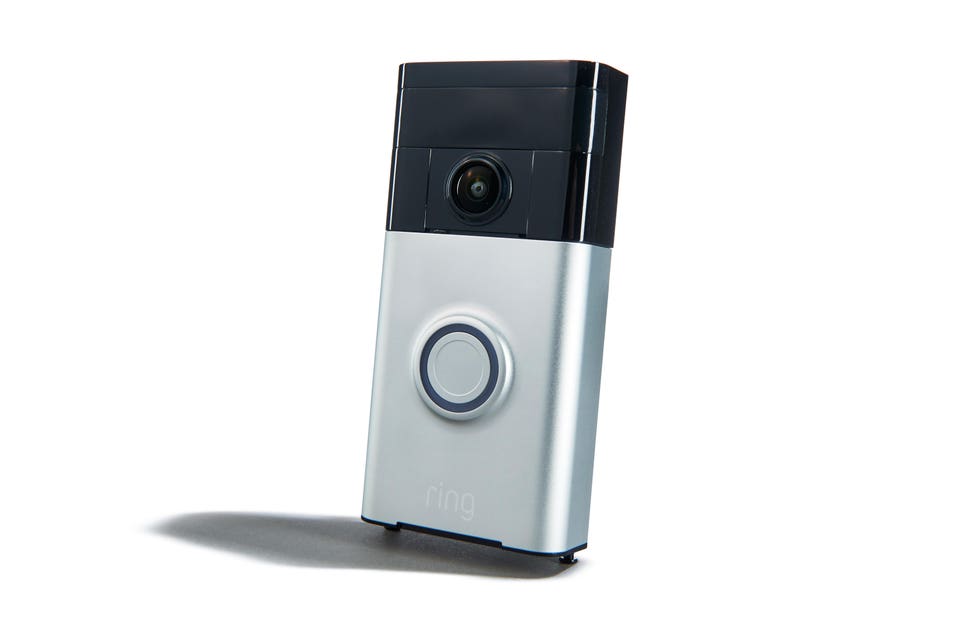
The digital age has brought us conveniences unimaginable just a generation ago, but it has also ushered in a new era of anxiety.
Nowhere was this more evident than in the recent flurry of panic that swept through the online communities of Amazon Ring doorbell users, fueled by viral claims of a mass hacking event on May 28.
It was a story tailor-made for our hyper-connected, often alarmist, times: a breach of the very threshold of our homes, orchestrated through the smart devices meant to protect them.
For a brief, unsettling period, the collective digital consciousness seemed to believe that millions of Ring doorbells, those ubiquitous sentinels of suburban peace, had been compromised.
The claims, fanned by the rapid-fire amplification of TikTok videos and Reddit threads, painted a grim picture: a coordinated, widespread intrusion that left users’ home security systems exposed.
Screenshots, purporting to show a litany of “unauthorized device logins” all conveniently timestamped May 28, served as the chilling “receipts” that lent an air of undeniable credibility to the growing panic.
It’s easy, in hindsight, to scoff at the speed with which such a narrative can take hold.
Not so long ago, the notion of a hacked doorbell would have been met with a knowing glance and perhaps a gentle suggestion to check for tinfoil hat residue.
Yet, the advent of the Internet of Things (IoT) has fundamentally altered our relationship with technology and, by extension, with paranoia.
Every smart device, from our thermostats to our refrigerators, is a potential vector for vulnerability, a new frontier for digital mischief or outright malice.
And Amazon, having just warned its 220 million Prime customers about ongoing account attacks, had inadvertently primed the pump for a public already on edge.
As the emails from worried readers began to trickle in, each citing the viral TikTok warnings, a journalist’s instinct initially leaned towards skepticism.
TikTok, after all, is as much a crucible for fleeting trends as it is for genuine information.
But the sheer volume of concern, coupled with the seemingly concrete evidence of those login screenshots, demanded a closer look.
Could an attacker, armed with stolen passwords or a zero-day exploit, truly have pulled off the hack of the century, breaching the digital perimeters of countless homes simultaneously?
The professional duty to investigate soon became personal.
A quick check of my own Amazon Ring doorbell account was in order.
And there they were: the same myriad logins, all bearing the ominous May 28 timestamp, mirroring the phantom connections reported across social media.
The knot in the stomach tightened.
Was this it? Had my digital doorstep, too, been compromised?
But then, a crucial detail emerged, one that began to unravel the narrative of mass intrusion.
As I meticulously scrolled through the list of “unauthorized” connections, a pattern began to emerge.
Device after device, though logged on May 28, was strangely familiar.
My old smartphone, a tablet I’d long since upgraded, a laptop that had been replaced months ago.
These were not the digital footprints of a shadowy hacker; they were ghosts of my own digital past.
Indeed, some of these devices couldn’t possibly have connected on May 28 because they were no longer in my possession or even operational.
The realization was a profound exhale.
What first appeared to be a sophisticated, widespread cyberattack began to look less like a malicious intrusion and more like a systemic hiccup.
The difference between my logs and the viral claims lay not in the presence of the May 28 entries, but in the recognition of the devices.
This wasn’t a hack; it was, in all likelihood, a backend update gone awry, causing historical or redundant login data to be inaccurately displayed as new activity.
And so it proved.
On July 18, Ring finally issued a statement, quietly confirming what many had begun to suspect.
“We are aware of an issue where information is displaying inaccurately in Control Center,” the Ring team posted.
“This is the result of a backend update, and we’re working to resolve this. We have no reason to believe this is the result of unauthorized access to customer accounts.”
The incident serves as a powerful parable for our times.
In an age where our homes are increasingly intertwined with the digital realm, the line between a genuine security threat and a software glitch can be terrifyingly thin.
The speed with which a technical misfire can morph into a full-blown viral panic highlights the precarious nature of public trust in technology, and the urgent need for clearer, more proactive communication from companies.
It underscores how easily fear can be amplified in the echo chambers of social media, turning a minor backend update into a perceived digital apocalypse.
While this particular alarm proved to be false, the underlying anxieties are very real.
Our smart homes are still vulnerable, and the need for strong passwords, two-factor authentication, and constant vigilance remains paramount.
The May 28 “mass hacking” may have been a phantom, but it offered a stark reminder that in the connected world, the tinfoil hat has evolved from a symbol of eccentricity into a metaphor for a legitimate, albeit often misdirected, digital anxiety.
The challenge for us, as users and as a society, is to discern the genuine threats from the digital phantoms, to navigate the complexities of our smart world with a healthy dose of skepticism, and an even healthier dose of informed caution.
-
Frank DiBernardo handles LNGFRM's Foodie and Miscellaneous writing tasks. He's always getting ideas from users, so don't be afraid to send an email to the editor.