In a grim testament to Mexico’s enduring crisis of disappearance, a new, unorthodox frontier of forensic science is taking shape, one where dead pigs are playing a pivotal, if macabre, role.
In the sun-drenched fields of Zapopan, Jalisco, scientists are meticulously observing the decomposition of swine, dressed in human clothes, wrapped, chopped, buried, or burned – all in a desperate bid to unlock the secrets of clandestine graves and offer a sliver of hope to families haunted by the specter of their missing loved ones.
This isn’t a scene from a macabre film, but a stark reality driven by the estimated 130,000 people who have vanished in Mexico, victims of a cartel violence that has spiraled out of control since then-President Felipe Calderón’s war on drugs began in 2006.
What started as a targeted campaign against cartel leaders inadvertently fractured organized crime, leading to a brutal multiplication of territorial disputes.
In a climate of near-complete impunity, often facilitated by official complicity or inaction, cartels discovered that making their adversaries disappear was a more effective and less traceable method of control than leaving bodies in the streets.
The scale of this humanitarian catastrophe is staggering; Mexico’s disappeared could populate a small city, a silent testament to a justice system overwhelmed and, at times, unwilling to confront the true scope of the horror.
For years, the burden of discovery has fallen almost entirely on the shoulders of the families themselves.
Mothers, fathers, siblings, armed with little more than raw courage, snippets of witness information, and metal rods, have ventured into cartel-controlled territories, plunging their makeshift tools into the earth, sniffing for the tell-tale scent of death.
Their tireless, agonizing searches have uncovered some 6,000 clandestine graves since 2007, unearthing tens of thousands of remains, many still unidentified.
Jalisco, home to the notorious Jalisco New Generation Cartel, bears the heaviest weight of this crisis, with 15,500 people reported missing.
It is this profound and ongoing agony that fuels the innovative mapping project launched in 2023.
A collaboration between Guadalajara University, Mexico’s National Autonomous University, the University of Oxford, and the Jalisco Search Commission, this initiative represents a unique blend of scientific ingenuity and urgent humanitarian action.
At its core is the meticulous study of pig decomposition, leveraging the animals’ uncanny physiological similarities to humans in size, fat distribution, and skin structure.
Scientists are deploying an array of high-tech tools previously reserved for other industries: hyperspectral cameras mounted on colossal drones, typically used in mining, measure the light reflected by substances like nitrogen, potassium, and phosphorus in the soil – key indicators of decay.
Thermal drones, laser scanners, and other advanced gadgets register subtle anomalies, underground movements, and electrical currents, painting a colorful, detailed picture of what lies beneath.
In one particularly chilling setup, a transparent acrylic pane offers a real-time window into the decomposition process of buried pigs, allowing for unprecedented observation.
Yet, this ambitious scientific endeavor is far from a purely academic exercise.
As José Luis Silván, a coordinator of the mapping project from CentroGeo, asserts, “This isn’t pure science. It is science and action. Everything learned has to be applied immediately, rather than wait for it to mature, because there’s urgency.”
This urgency is palpable, driving the integration of cutting-edge technology with the invaluable, hard-won wisdom of the searching families.
Maribel Cedeño, who has spent four years looking for her brother, finds herself an unwitting expert in the grim task of identifying remains, a testament to the raw education of grief.
Héctor Flores, searching for his son since 2021, echoes a common sentiment of frustration, questioning the investment in new methods when families have a proven, albeit harrowing, track record with minimal official support.
Indeed, the project openly acknowledges its limitations.
Derek Congram, a Canadian forensic anthropologist whose expertise inspired the Mexican initiative, cautions that technology is “not a panacea.”
He points out that “Ninety percent of searches are resolved with a good witness and digging.”
The research itself is a long game, with full understanding of the technology’s efficacy still years away.
While some disposal methods like lime are easily detectable, others, such as hydrocarbons, hydrochloric acid, or burned flesh, remain elusive.
But perhaps the most profound aspect of this project is the reciprocal flow of knowledge.
Researchers have learned that graves are often found under trees with vertically growing roots, providing shade for those digging.
Most strikingly, mothers invited to visit the pig burial sites were able to identify unmarked graves by sight alone, guided by subtle changes in plants and soil placement – an intuitive wisdom honed by years of desperate searching.
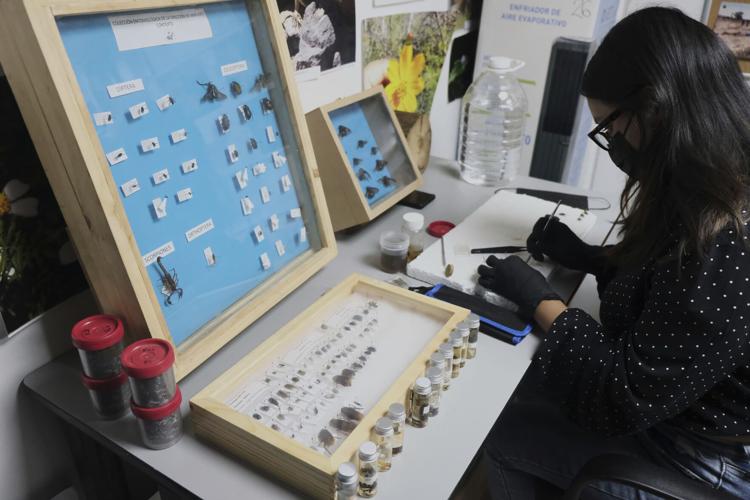
Tunuari Chávez, director of context analysis for the Jalisco commission, emphasizes that each grave is a living “micro ecosystem,” and the commission’s work involves comparing and analyzing everything from flies and beetles to plants and soil from both human and pig graves.
This fusion of empirical science with lived experience offers a fragile beacon of hope in a landscape of despair.
While questions linger about the widespread adoption and affordability of such high-tech aids across Mexico, the Jalisco Search Commission is already deploying thermal drones, laser scanners, and multispectral cameras in some cases.
The path forward is fraught with challenges, and as Congram notes, “you always have to try, fail, fail again and keep trying.”
For the countless families of Mexico’s disappeared, every attempt, no matter how unconventional, is a step towards truth, dignity, and perhaps, the elusive peace of knowing.
-
Frank DiBernardo handles LNGFRM's Foodie and Miscellaneous writing tasks. He's always getting ideas from users, so don't be afraid to send an email to the editor.