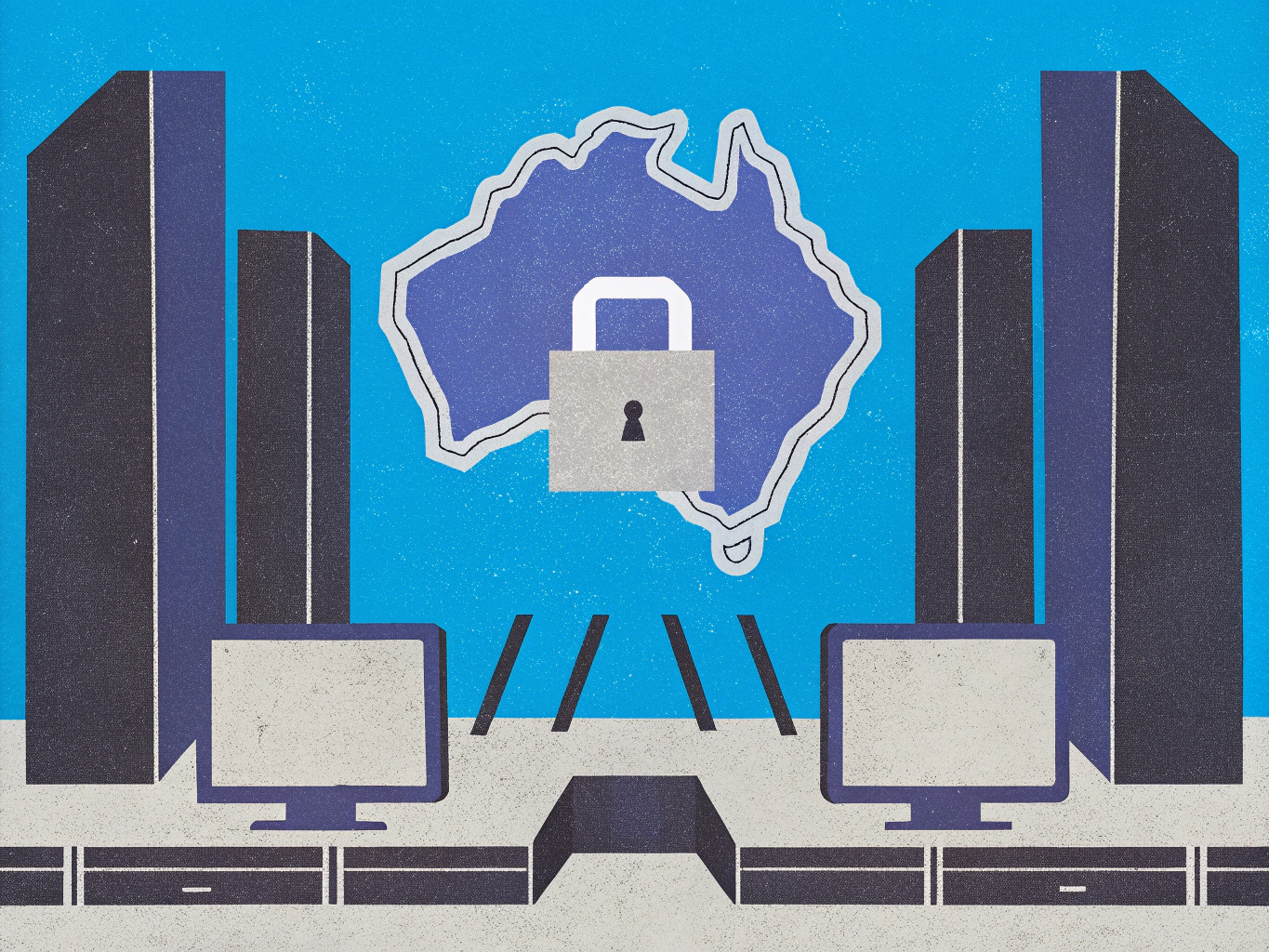
In a bold move that signals a growing global assertiveness against the unchecked power of Big Tech, Australia has drawn a line in the digital sand.
As a landmark ban on social media accounts for children under 16 looms on December 10, Canberra is issuing a stern warning to platforms like TikTok, Facebook, and Instagram: do not, under any circumstances, demand age verification from every single one of your users.
This isn’t merely a bureaucratic directive; it’s a strategic gambit, a test of wills, and a profound statement about data privacy and corporate responsibility in the digital age.
The world’s first such ban, enacted by Australia’s Parliament last year, carries significant weight.
Platforms face a hefty fine of up to 50 million Australian dollars ($33 million) for “systemic failures” to prevent underage access.
Yet, even with such a formidable stick, the Australian government is keen to wield a measured approach, particularly concerning the privacy implications for its adult citizens.
At the heart of Australia’s stance is a pointed question to the tech giants: if you know so much about us for advertising, why can’t you apply that same precision to protect children?
Australia’s eSafety Commissioner Julie Inman Grant, the architect of the new guidelines, articulates this sentiment with a dry, almost exasperated, clarity.
“We think it would be unreasonable if platforms reverified everyone’s age,” she stated, her choice of the word “reverified” a subtle but potent accusation.
It suggests that these platforms already possess a wealth of data, more than enough to ascertain if a user is over 16, without resorting to a blanket demand for fresh verification.
Indeed, the irony is not lost on regulators.
Social media companies have perfected “targeting technology” to an almost unnerving degree, capable of dissecting our preferences, habits, and demographics with “deadly precision” for commercial gain.
“They can target us with deadly precision when it comes to advertising,” Inman Grant observed. “Certainly they can do this around the age of a child.”
This isn’t just a rhetorical flourish; it’s a fundamental challenge to the industry’s narrative that age verification is an insurmountable technical hurdle requiring intrusive data collection from all users.
Communications Minister Anika Wells echoed this sentiment, emphasizing the government’s commitment to keeping platform users’ data “as private as possible.”
She pointed to the obvious: “If you have been on, for example, Facebook since 2009, then they know you are over 16. There is no need to verify.”
This highlights a crucial battleground: the fight for digital sovereignty and the right of nations to dictate terms to global corporations operating within their borders.
It’s a refusal to accept the tech industry’s default position that more data collection is always the answer.
Critics of the legislation have voiced concerns that banning young children from social media could inadvertently impact the privacy of all users, forcing everyone to jump through age verification hoops.
However, Inman Grant dismisses such claims as a “scare tactic,” suggesting that the platforms are attempting to deflect from their existing data capabilities and responsibilities.
The government’s guidelines aim to strike a delicate balance: protect children without needlessly compromising the privacy of adults.
The operationalization of this ban, however, remains the elephant in the digital room.
Inman Grant and Minister Wells are slated to travel to the United States next week, a diplomatic mission to engage directly with the owners of these powerful platforms.
The objective is clear: to ensure the platforms understand what “reasonable steps” mean in practice.
It won’t be about every single under-16 account vanishing precisely on December 10, Inman Grant conceded.
Instead, the focus will be on “systemic failures to apply the technologies, policies and processes.”
This pragmatic approach acknowledges the complexities of digital enforcement while still demanding genuine, demonstrable effort.
Yet, the definition of “reasonable steps” is where the real negotiation, and potential friction, will lie.
Lisa Given, an expert in information sciences from Melbourne’s RMIT University, points out that the government’s approach wisely acknowledges the inherent errors in current age verification technologies.
“It’s going to be up to each of the platforms to determine how they’re going to comply and it will be interesting to see if they test the limits of the definition of ‘reasonable steps,’” Given told the Australian Broadcasting Corp.
This observation hints at the ongoing cat-and-mouse game between regulators and regulated, where the precise contours of compliance are often explored, and sometimes exploited, at the margins.
Australia’s pioneering move is more than just a domestic policy; it’s a global bellwether.
It asks fundamental questions about the responsibilities of tech giants, the rights of digital citizens, and the capacity of governments to reclaim a measure of control over the digital lives of their populations.
As the December deadline approaches, the world will be watching to see if Australia can successfully compel the digital gatekeepers to prioritize child safety and user privacy over their perceived commercial imperatives, without demanding an unnecessary pound of flesh from every user.
The stakes are high, not just for Australian children, but for the future of digital regulation worldwide.
-
Frank DiBernardo handles LNGFRM's Foodie and Miscellaneous writing tasks. He's always getting ideas from users, so don't be afraid to send an email to the editor.