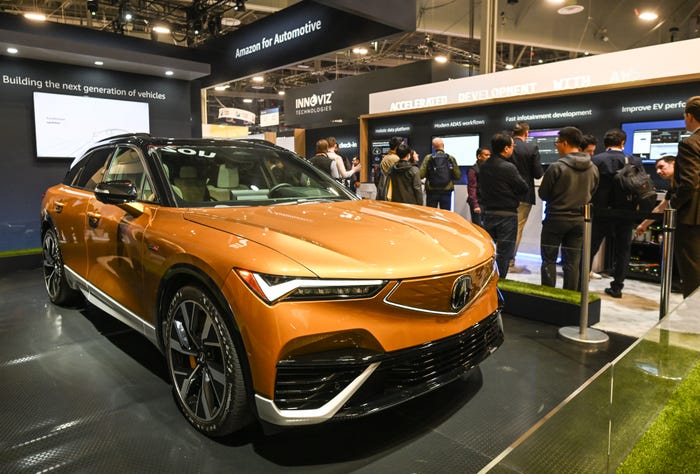
The automotive world, often a bellwether for technological and societal shifts, is once again signaling a recalibration, this time in the race towards an all-electric future.
Honda, a titan known for its pragmatic engineering, has quietly pulled the plug on US production of its Acura ZDX electric crossover, a vehicle General Motors was assembling, just days before a significant $7,500 EV tax credit is set to vanish.
This move, attributed by the automaker to a need “to better align” with “market conditions,” is more than a mere footnote in Honda’s ledger; it’s a potent symbol of the growing pains currently gripping the electric vehicle transition in North America.
The Acura ZDX, a sleek electric crossover, launched in May 2024 and managed to sell over 19,000 units across North America in its short production run.
While Honda spokespeople affirmed the ZDX played a “valuable role” and will lay a “foundation” for future electric and hybrid models – including the all-electric Acura RSX slated for 2026 production in Ohio – the immediate cessation of its current EV offering speaks volumes.
It underscores a strategic pivot, one that acknowledges the complexities of consumer demand and the economic realities of a still-evolving market.
Indeed, the “market conditions” Honda alludes to are multifaceted.
Earlier this year, Honda’s CEO had already announced a 30% cut in EV investment through fiscal year 2031, directly citing a “slowdown in EV market expansion.” This sentiment is echoed across the industry, particularly when observing regional sales data.
According to EV research firm Rho Motion, electric vehicle sales in North America saw a modest 5% increase in the first four months of this year.
This pales in comparison to the robust 25% growth recorded in Europe and a staggering 35% surge in China during the same period.
The disparity paints a clear picture: the enthusiasm for EVs is not uniform, and North America appears to be hitting a speed bump.
The impending expiration of the $7,500 federal EV tax credit on September 30, part of what the source material refers to as President Donald Trump’s “Big Beautiful Bill,” adds another layer of complexity.
This financial incentive has been a crucial propellant for EV adoption, effectively lowering the barrier to entry for many consumers.
Its removal is widely expected to cool demand further, even as August saw a temporary surge in sales as buyers scrambled to capitalize on the credit before it vanished.
This dependency on government subsidies highlights the nascent stage of the market; while proponents envision a future where EVs compete solely on merit, the present reality is that they often need a helping hand.
Honda is far from alone in its reevaluation.
The automotive landscape is littered with examples of ambitious EV plans being scaled back or outright scrapped.
Hertz, the rental car giant, notably paused its plans to acquire 65,000 EVs last year, citing operational challenges and lower-than-expected demand.
Ford, despite its significant investment in electrification, canceled plans for electric three-row SUVs, though it has since announced an electric truck.
Even at the pinnacle of luxury, the sentiment is shifting.
Just days ago, the CEO of Bentley, a brand that once declared an all-electric future by 2035, announced a renewed commitment to internal combustion engines, attributing the shift to a “dip in demand for luxury electric vehicles.”
These collective actions paint a picture not of outright abandonment, but of a pragmatic reassessment.
The initial, almost evangelical push towards an all-electric future is giving way to a more nuanced strategy, one that acknowledges the diverse needs and readiness levels of consumers.
Range anxiety, the availability and reliability of charging infrastructure, and the higher upfront cost of EVs remain significant hurdles for many buyers.
For an automaker like Honda, known for its meticulous attention to market trends and consumer satisfaction, a course correction isn’t a retreat; it’s a strategic maneuver to ensure long-term viability and relevance.
The future, as envisioned by Honda and others, appears to be a hybrid one – not just in terms of powertrains, but in strategy.
While fully electric vehicles remain a cornerstone of long-term vision, the immediate path involves a diversified portfolio.
This means continued investment in advanced hybrid-electric models, which offer a bridge for consumers wary of full electrification, alongside the development of next-generation EVs like the Acura RSX.
It’s a recognition that the road to an electric future might be longer and more winding than initially anticipated, requiring flexibility, adaptability, and a keen ear to the ground.
The abrupt halt of the Acura ZDX’s US production, therefore, isn’t an end to Honda’s EV ambitions, but rather a stark reminder that even in the pursuit of innovation, market realities ultimately dictate the pace and direction of change.
-
Frank DiBernardo handles LNGFRM's Foodie and Miscellaneous writing tasks. He's always getting ideas from users, so don't be afraid to send an email to the editor.