The grim reality unfolding within the United States military is not a scene from a dystopian novel, but a stark, present-day challenge revealed by a new government watchdog report.
In a move that sounds more like battlefield triage than routine maintenance, US Navy technicians are stripping vital components from their own advanced F/A-18 Super Hornet fighter jets and Virginia-class attack submarines, all to keep other assets in the fight.
This isn’t a temporary workaround for a minor hiccup; it’s a symptom of a deeper, systemic vulnerability that threatens the very readiness of America’s fighting forces.
At the heart of this troubling paradox lies a complex web of intellectual property rights, sole-source contracts, and a manufacturing base struggling to keep pace.
The US Government Accountability Office (GAO) report paints a disquieting picture across five critical defense programs – the F/A-18s, Virginia-class submarines, F-35 Lightning II stealth fighters, Littoral Combat Ships (LCS), and Stryker armored vehicles.
Each, in its own way, is being held hostage by a lack of access to crucial technical data, leaving the military dependent on the very vendors who designed the equipment.
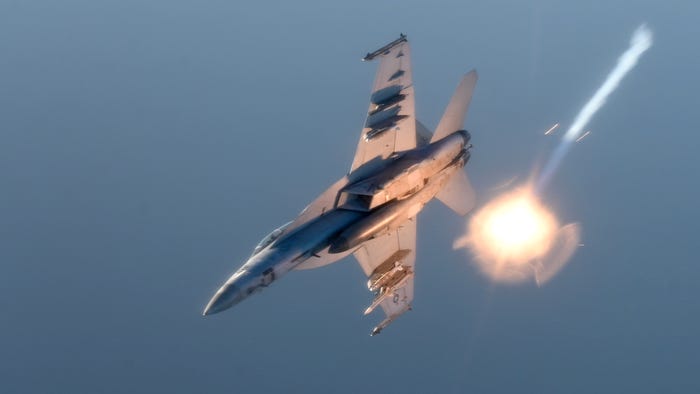
Consider the F/A-18 Super Hornets, the backbone of naval aviation.
Maintainers have spent over a decade fruitlessly attempting to acquire data rights for specific radio frequency cables.
Without this intellectual property, they are entirely at the mercy of the vendor’s schedule for repairs and replacements.
The alternatives—reverse engineering the part or contracting spares—were deemed too costly, forcing the Navy into the desperate act of cannibalization.
Imagine the meticulous process: grounding a multimillion-dollar aircraft, carefully removing a part, and transferring it to another, only to leave the first one incapacitated.
This isn’t just inefficient; it’s a profound drain on resources, increasing workload, escalating costs, and crucially, reducing the number of available aircraft for deployment.
The situation echoes in the silent depths where Virginia-class submarines patrol.
These sophisticated attack vessels, vital for undersea dominance, face similar hurdles.
When a critical component fails, and the original equipment manufacturer (OEM) holds the technical data rights, their schedule dictates the repair timeline.
If spare parts aren’t delivered promptly, the protocol is chillingly familiar: cannibalize another submarine.
This means one of the world’s most advanced underwater predators is rendered inert, awaiting a part that could have been produced or repaired internally had the military possessed the necessary design information.
This isn’t merely an issue of logistical bottlenecks; it’s a strategic vulnerability.
The GAO report underscores that this dependency extends far beyond just parts.
The F-35, a marvel of stealth technology, is plagued by significant corrosion issues.
Yet, without contractor support and access to technical data, the military cannot perform these critical repairs themselves.
Compounding the problem, there aren’t enough contractors to address the widespread corrosion, leading to protracted repair times for some of the nation’s most expensive and vital assets.
It’s a stark reminder that even the most advanced hardware is useless if it cannot be maintained.
The Littoral Combat Ship program offers another telling example.
A broken hydraulic motor on a crane, seemingly a minor fault, led to a two-and-a-half-week delay because the ship repair contractor refused to fix it without the OEM, who possessed the data rights.
Shipyard officials noted this was considered a “quick turnaround,” a chilling testament to the routine nature of such delays.
For the Stryker armored vehicle, the Army has been unable to secure unlimited data rights for the base vehicle, necessitating a staggering $534 million five-year technical support contract with a prime contractor.
This is taxpayer money spent not on new capabilities, but on the basic ability to sustain existing ones.
The dilemma is a complex one.
The GAO acknowledges that demanding too much data or data rights can drive up program costs or deter contractors from bidding due to intellectual property concerns.
Yet, the current reality demonstrates the severe consequences of too little.
Without the necessary data, maintainers are left in the dark, struggling with long-term issues that undermine operational readiness and inflate costs.
There are ongoing disputes and differing interpretations between Pentagon officials and companies regarding what data is truly essential for sustainment.
This isn’t just about nuts and bolts; it’s about sovereignty over our own defense.
A military that cannot independently maintain its equipment is a military whose operational tempo is dictated by external entities.
It raises profound questions about national security in an era of rapidly evolving global threats.
The United States prides itself on its technological superiority, but that edge is blunted if its cutting-edge equipment spends more time grounded or docked, waiting for a part that could be manufactured or repaired internally.
The path forward demands a delicate rebalancing act: fostering innovation while ensuring the nation retains the inherent ability to keep its warfighting machines ready, resilient, and fully operational.
The current situation, where our most advanced assets are being cannibalized, is an unsustainable and dangerous trajectory.
-
Frank DiBernardo handles LNGFRM's Foodie and Miscellaneous writing tasks. He's always getting ideas from users, so don't be afraid to send an email to the editor.