The tectonic plates of software development are shifting, not with a slow, grinding inevitability, but with a seismic jolt.
It’s a transformation so profound that it’s forcing companies to dismantle their long-held playbooks and re-imagine the very essence of creation.
At the heart of this revolution stands Artificial Intelligence, not merely as a new feature to be integrated into products, but as the architect of a radical new way to build them.
This isn’t just about what innovation looks like; it’s about the speed and methodology of its birth.
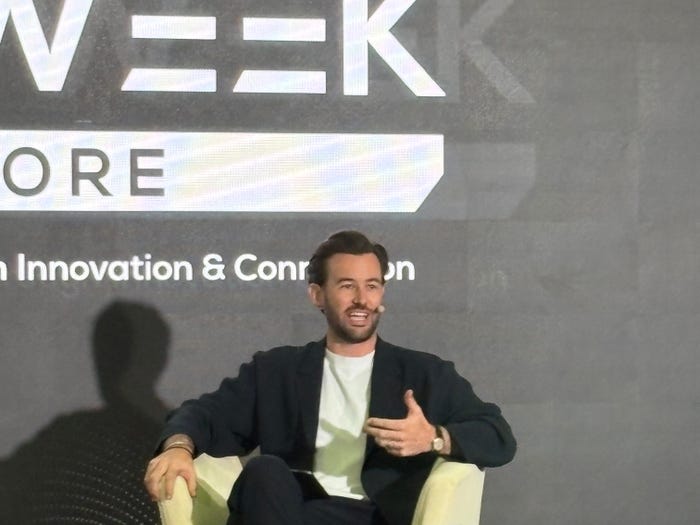
Andy Brown, OpenAI’s Asia-Pacific go-to-market lead, articulated this paradigm shift with stark clarity at Tech Week Singapore 2025.
He observed a fundamental re-evaluation among enterprise customers regarding their software engineering cycles.
Historically, project management has been anchored in “long sprint cycles,” meticulously planned and executed, with progress measured in achievable increments over weeks or months.
But that era, it seems, is rapidly fading into obsolescence.
Brown notes a decisive pivot towards a product-release cycle, a relentless, “always on” cadence that mirrors the breakneck pace of AI advancement itself.
This isn’t just an evolution of agile; it’s an acceleration into hyper-agile, where the concept of a ‘finished’ product is replaced by a continuous stream of iteration.
The implications for Chief Technology Officers and engineering leaders are immense.
The comfort of predictable, structured development phases is giving way to a volatile, yet exhilarating, landscape of continuous deployment.
The pressure to adapt is palpable, driven by a competitive environment where standing still is tantamount to falling behind.
Brown’s observations underscore a critical truth: the velocity of product updates, once a differentiator, is now the baseline expectation.
AI companies, including OpenAI, are setting a blistering pace, often rolling out multiple updates within a single week.
This isn’t merely about efficiency; it’s about a fundamental restructuring of how software is conceived, developed, and delivered.
Perhaps the most compelling evidence of this transformation lies in the very act of coding itself.
Brown offered a glimpse into OpenAI’s own internal processes, citing the development of Agent Builder.
This intuitive drag-and-drop interface, designed to empower anyone to create custom AI agents, was brought to life in an astonishing six weeks.
What’s more, approximately 80% of its underlying code was written by OpenAI’s own AI models.
This isn’t science fiction; it’s the present reality.
It shatters the traditional notion of software engineering as a purely human endeavor, suggesting a future where AI isn’t just assisting developers, but actively partnering with them, taking on substantial portions of the coding workload.
This begs the question: if machines can write the majority of the code, what then becomes the evolving role of the human engineer?
It shifts from rote coding to higher-level architecture, problem-solving, and creative direction – a profound redefinition of skillsets and value.
This internal capability translates directly into the industry-wide acceleration Brown highlights.
The “incredible compression” in AI model capabilities is no longer measured in years, or even a year, but in months.
“It used to be one to two years between major leaps at the frontier,” Brown remarked. “It’s closer to one to two months today.”
This dizzying pace is evident across the board.
OpenAI itself launched GPT-4o in May, swiftly following up with real-time voice features, in-chat image generation, and an app-store-style marketplace.
Google, not to be outdone, unveiled over two dozen new AI updates at its I/O developer conference, with CEO Sundar Pichai proudly declaring, “We are shipping faster than ever.”
Anthropic, another formidable player, released Claude Sonnet 4.5 just four months after its predecessor, Sonnet 4, underscoring the relentless cadence in this generative AI arms race.
For businesses grappling with this new reality, Brown’s message is unequivocal: it’s time to rethink how we are building technology inside our businesses.
The question is no longer *if* AI will impact development, but *how deeply* it will reshape foundational processes.
Are companies truly pushing themselves to change their fundamental ways of working, or are they merely layering AI tools onto outdated methodologies?
The imperative to experiment with AI tools is not a suggestion but a strategic necessity.
Those who hesitate risk being left behind in a rapidly accelerating innovation landscape.
This isn’t just a technological shift; it’s a cultural one, demanding a mindset of continuous learning, fearless experimentation, and an embrace of the unknown.
The future of software is not merely about smarter algorithms, but about smarter ways of building, driven by an AI-powered engine that demands agility, foresight, and an unwavering commitment to constant evolution.
The old playbooks are being rewritten, not by human hands alone, but by a collaborative symphony of human ingenuity and artificial intelligence, charting an exhilarating, albeit demanding, course for the next generation of innovation.
-
Frank DiBernardo handles LNGFRM's Foodie and Miscellaneous writing tasks. He's always getting ideas from users, so don't be afraid to send an email to the editor.