The tectonic plates of software development are shifting beneath our feet, not incrementally, but with the seismic force of artificial intelligence.
It’s a transformation that extends far beyond the dazzling new products AI enables; it’s fundamentally reshaping the very act of creation, forcing companies to tear up long-established playbooks and embrace a dizzying new pace.
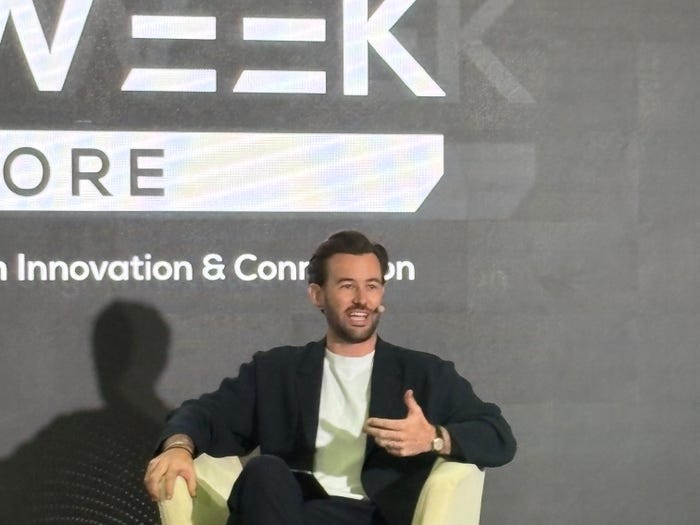
This stark reality, articulated by OpenAI’s Asia-Pacific go-to-market lead, Andy Brown, at Tech Week Singapore, suggests that the future of software isn’t just intelligent, it’s relentlessly agile.
Brown observes a profound re-evaluation among enterprise customers regarding their software engineering cycles.
The comfortable rhythm of long sprint cycles, where projects are meticulously structured around what can be achieved over weeks or months, is giving way to something far more dynamic.
What’s emerging, he notes, is a “product-release cycle” that feels “even more agile and ‘always on.'” This isn’t just a tweak to existing methodologies; it’s a paradigm overhaul, demanding a constant state of readiness and an unprecedented ability to adapt.
For chief technology officers and engineering leaders, the challenge is immense, requiring a fundamental reimagining of workflows, team structures, and even the very definition of “finished.”
The impetus for this radical acceleration is clear: the AI industry itself.
Companies like OpenAI, Anthropic, and Google are operating at a velocity that makes traditional development timelines seem glacial.
Brown points to OpenAI’s own cadence, capable of rolling out multiple product updates within a single week.
This isn’t merely a competitive advantage; it’s becoming the baseline for relevance.
Google CEO Sundar Pichai’s declaration, “We are shipping faster than ever,” at the company’s I/O developer conference, underscores this industry-wide sprint.
From OpenAI’s rapid deployment of GPT-4o with its subsequent real-time voice and image generation features, to Anthropic’s Claude Sonnet 4.5 arriving just four months after its predecessor, the generative AI arms race is defined by a relentless push for innovation and immediate deployment.
Perhaps the most startling insight into this new era comes from Brown’s example of OpenAI’s Agent Builder.
This drag-and-drop interface, designed to empower anyone to create custom AI agents, was built in a mere six weeks.
What’s truly revolutionary, however, is that approximately 80% of its underlying code was written by OpenAI’s own models.
This isn’t just AI assisting human developers; it’s AI actively participating in its own creation, blurring the lines between tool and architect.
It’s a profound shift that forces a critical question: if AI can build AI, what does that mean for the human-centric software engineering practices we’ve known for decades?
It’s a glimpse into a future where the efficiency gains are exponential, but the implications for human roles and skill sets are equally transformative.
This breakneck pace is fueled by an equally staggering compression in AI capabilities.
“For the last two years, I have just seen this incredible compression in the capabilities of AI models,” Brown remarked.
Where major leaps at the frontier once took one to two years, that timeline has shrunk to “closer to one to two months today.” This exponential advancement means that any company not actively experimenting and integrating AI tools risks being left behind in a rapidly evolving technological landscape.
The mandates for enterprises is unequivocal: start experimenting now.
Brown’s call to action isn’t just about adopting AI as a feature; it’s about “rethinking how we are building technology inside our businesses.” It demands an introspection into whether organizations are truly pushing themselves to change their fundamental ways of working.
This isn’t a minor adjustment; it’s a strategic imperative.
For companies entrenched in legacy systems and Waterfall-esque methodologies, the journey to an “always on” product release cycle powered by AI-assisted development will be arduous, requiring significant investment in new talent, training, and a cultural shift towards continuous iteration and risk-taking.
The implications ripple across the entire technology ecosystem.
What does an “always on” development cycle mean for the mental well-being of human engineers?
How will quality assurance evolve when AI is writing most of the code?
And critically, how will established enterprises, often burdened by technical debt and bureaucratic processes, compete with nimble AI-native startups that inherently operate at this accelerated pace?
The answers are still being written, but one thing is clear: the age of slow, deliberate software development is over.
In its place, a new era of hyper-agile, AI-driven creation has dawned, and companies that fail to adapt will find themselves on the wrong side of a rapidly widening technological divide.
The future isn’t just about what AI can do; it’s about how it forces us to rethink everything we thought we knew about building.
-
Frank DiBernardo handles LNGFRM's Foodie and Miscellaneous writing tasks. He's always getting ideas from users, so don't be afraid to send an email to the editor.