In an era where artificial intelligence promises to fundamentally rewire the fabric of work, from automating complex tasks to reimagining communication, a curious revelation emerges from the very heart of the AI revolution.
OpenAI, the company synonymous with groundbreaking advancements like ChatGPT, finds itself, by its own admission, tethered to a decidedly human-centric, and now rather “classic,” workplace tool: Slack.
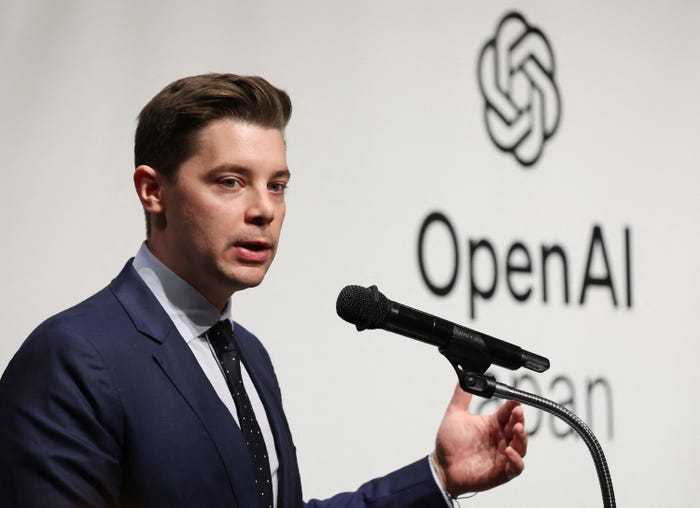
Far from displacing it, the AI giant is, according to its Chief Operating Officer Brad Lightcap, the “world’s most active users of Slack internally.”
This isn’t merely a casual endorsement; it’s a profound statement that ripples through the prevailing narrative of AI-driven disruption.
Lightcap, speaking on Fortune’s “Term Sheet” podcast, painted a picture of a company whose internal operations are so deeply embedded in Slack that it’s almost an extension of their corporate nervous system.
This sentiment was echoed and expanded upon by former OpenAI engineer Calvin French-Owen, who, in a July blog post, starkly stated, “An unusual part of OpenAI is that everything, and I mean everything, runs on Slack.
There is no email. I maybe received ~10 emails in my entire time there.”
The image of an AI powerhouse, a beacon of future technology, forgoing traditional email almost entirely in favor of a real-time messaging platform is compelling.
It speaks to a practical reality often overlooked in the grand pronouncements of technological shifts: the enduring power of tools that simply work, facilitating immediate, unvarnished human collaboration.
While OpenAI is busy developing and deploying its own suite of workplace AI tools—like an inbound sales assistant and a contract searcher—its internal operational bedrock remains firmly planted in established Software-as-a-Service (SaaS) platforms.
Beyond Slack, the company’s sales team, Lightcap noted, “runs on” Salesforce, the enterprise software giant that acquired Slack in 2020 for a staggering $27.7 billion.
This reliance on “canonical SaaS systems,” as Lightcap termed them, isn’t seen as a contradiction but rather a strategic integration.
“These are really, really important systems for OpenAI, and I think they’re going to be really, really enduring and important systems for a while,” he asserted.
The implication is clear: even as AI aims to revolutionize workflows, the foundational infrastructure of enterprise operations—the platforms that manage sales, projects, and, crucially, human communication—are not easily dislodged.
They represent the sticky, often messy, reality of how large organizations actually function.
So, where does OpenAI’s own AI suite fit into this heavily Slack-and-Salesforce-dependent ecosystem?
Lightcap offers an insightful vision: AI is designed to “live in the cracks” within these existing systems and their workflows.
It’s an augmentation strategy, not a wholesale replacement.
Rather than tearing down the established order, AI is positioned to enhance it, to make every interaction faster, every search more efficient, every decision more informed.
This perspective offers a valuable reality check for those who envision AI as a clean-slate disruptor.
Instead, it suggests a more nuanced, symbiotic relationship where AI acts as an intelligent overlay, optimizing the human-driven processes that these robust SaaS platforms enable.
The story of OpenAI and its Slack obsession is, in many ways, a microcosm of the broader journey of AI into the enterprise.
It underscores that even the most cutting-edge technology company still grapples with the fundamental human need for connection, for quick answers, and for a shared digital space where ideas can flow freely and informally.
Email, with its inherent formality and slower cadence, simply couldn’t keep up with the rapid-fire innovation and constant collaboration demanded by a company operating at the bleeding edge of AI.
Slack, with its channels, direct messages, and integrations, provides that dynamic, agile environment.
Ultimately, OpenAI’s embrace of Slack isn’t a sign of AI’s limitations, but rather a testament to the enduring power of well-designed human-centric tools.
It’s a pragmatic acknowledgment that while AI can amplify human capabilities, it doesn’t necessarily supersede the fundamental ways in which people communicate and collaborate.
The future of work, it seems, won’t be a stark choice between AI and traditional tools, but rather a sophisticated dance of integration, where AI enhances the “canonical systems” that have already proven their worth, making the human enterprise faster, smarter, and perhaps, a little more effortlessly connected.
The world’s most active Slack user, it turns out, is also crafting the future.
-
Frank DiBernardo handles LNGFRM's Foodie and Miscellaneous writing tasks. He's always getting ideas from users, so don't be afraid to send an email to the editor.