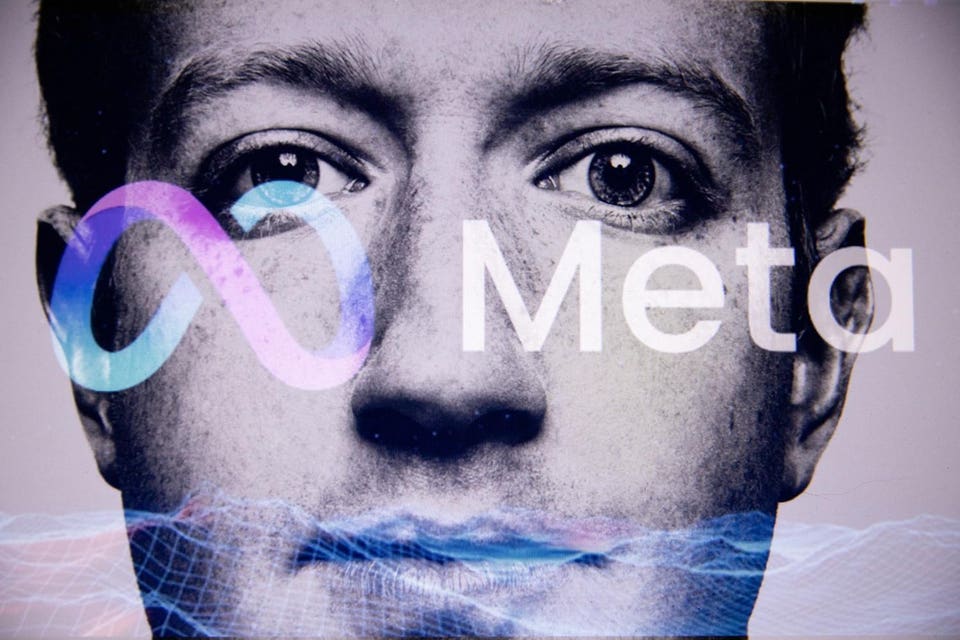
The stark reality of Meta’s recent layoffs — some six hundred roles within its vaunted Superintelligence Labs — serves as a chilling reminder.
Even in the epicentre of the artificial intelligence boom, human intelligence is no shield against corporate restructuring.
While the tech giant insists it’s not retreating from AI, but rather “doubling down” on its most elite units, the message reverberating through the industry is far more unsettling: humans are being re-sorted, not merely replaced.
An engineer who helped train a groundbreaking large language model might be handing in her badge this week, her digital ghost continuing to power Meta’s production systems.
This is the quiet, unsettling paradox of our AI age: the human exits, but the machine persists.
For years, a comforting narrative prevailed: AI would create a plethora of new, high-value jobs, especially for those building the algorithms.
The Meta cuts, however, expose the naiveté of that belief.
This isn’t just a tremor in tech’s endless cycle of optimization; it’s a gravitational pull, as Kyle Hollaway, Senior Vice President and Global Head of Identity at Acxiom, describes it, towards an efficiency that often sacrifices the very human variability once considered an asset.
Hollaway’s insight reframes efficiency not as a breakthrough, but as a relentless cycle, each wave eroding the qualities – loyalty, empathy, trust – that truly sustain an enterprise.
The quest for standardization, it seems, is dangerously eclipsing the need for connection.
This phenomenon is a hallmark of a post-growth tech culture, where the heady optimism of experimentation has given way to the cold calculus of risk management and defensive efficiency.
Meta’s leadership, framing the cuts as a move toward “fewer conversations” and “more load-bearing” individuals, isn’t just using corporate jargon; they’re articulating a worldview.
Here, decision density trumps human diversity, output outweighs dialogue, and speed is prioritized over depth.
Efficiency, disturbingly, has become the new morality of work.
Yet, efficiency without friction is sterility.
The constant drive to “streamline” every process, whether in software, marketing, or medicine, risks excising the very delays, debates, and digressions that are the lifeblood of human thought and creativity.
Friction, in this context, isn’t an impediment; it’s the hidden operating system of innovation.
It’s the pause before execution, the argument before consensus – the crucible where true judgment is formed.
When Meta celebrates “fewer conversations,” it inadvertently signals “fewer questions.”
And civilization, let us remember, advances by questions, not by throughput.
Friction, far from being the enemy of progress, is the essential instrument of meaning.
The public discourse around AI and employment is, therefore, too narrow.
The pertinent question isn’t merely, “Will AI take our jobs?” but rather, “Will our jobs still matter when it’s done?”
AI rarely eliminates roles outright; it flattens them, migrating critical decision-making into models and relegating humans to mere monitors or “fine-tuners.”
The existential threat is not unemployment, but alienation – a slow draining of purpose from our professional lives.
While Meta fortifies its elite TBD Lab with multimillion-dollar hires, hundreds of skilled engineers are deemed expendable.
This isn’t a mere reorganization; it’s a profound shift in the hierarchy of meaning, where those who question and explore are being supplanted by those who execute and maintain.
Jennifer Frieman Greenberg, Global Chief People Officer at Trailer Park Group, with two decades of experience in talent and culture, eloquently underscores this tension.
She highlights that true organizational growth is impossible if it erases the human conditions that enable it.
The rush to automate, she warns, risks jettisoning the creative friction inherent in experimentation, failure, and growth – the very elements that give work its purpose.
This isn’t a uniquely tech problem.
Across the Fortune 100-500, from insurance to manufacturing, similar trade-offs are being made.
Liz Eversoll, CEO of Career Highways, points to another insidious consequence: the hollowing out of long-term talent pipelines.
For generations, companies thrived by cultivating early-career employees, nurturing their growth, and promoting them into leadership.
These individuals developed deep cultural understanding, loyalty, and strategic intuition.
By automating these foundational roles, companies are inadvertently sabotaging the very system that once sustained their leadership.
The true cost won’t appear in quarterly reports, but years down the line, when organizations find themselves with immense scale but a glaring absence of stewardship.
When meaning migrates from the human to the machine, the algorithm becomes the new author.
If automation’s mission is to remove friction, then leadership’s paramount duty must be to intentionally preserve it.
This calls for an “agency-forward design” – building systems where humans retain vital moments of choice, curiosity, and authorship.
Imagine a marketing AI that proposes five campaign paths, but still demands a strategist to discern which truly aligns with brand truth.
The machine accelerates, yes, but the human decides what matters.
This means designing workflows that necessitate judgment and debate, and interfaces that invite co-creation, not blind acceptance of machine output.
The Meta layoffs, then, are not a corporate failure in isolation; they are a profound cultural test for every organization racing to build its AI stack.
Forbes’ recent report of “AI job cuts reaching new heights in September” only amplifies the urgency.
We’ve seen this script before.
The 1980s and 90s saw companies offshoring call centres in pursuit of efficiency, only to realize they’d sacrificed a priceless asset: direct human connection, a relationship engine building brand loyalty one conversation at a time.
The same short-sighted logic is now pervading AI adoption.
Speed without substance is not efficiency; it is erosion.
Smaller firms, lacking Meta’s computational moat and capital cushion, stand to lose even more.
Copying Meta’s structure without Meta’s scale is a dangerous misreading of the moment.
The lesson isn’t merely to reduce headcount, but to recalibrate purpose.
Companies must ask themselves: Where do humans still provide the crucial difference between accuracy and insight?
Which decisions demand to remain contested, even if it slows us down?
How do we design systems that learn from friction, rather than erasing it?
Businesses that consciously preserve interpretive roles – data strategists, ethicists, designers, translators between model and mission – will build AI programs that grow in wisdom, not just speed.
Those that cut to the bone will end up with brittle automation: fast, impressive, yet easily broken when data shifts or context changes.
Dr. Davit Khachatryan, Professor of data analytics at Babson College, emphasizes that technical mastery alone is no longer sufficient.
The next generation of builders must be prepared to question, interpret, and create.
The coming decade of AI leadership will demand as much moral bandwidth as computational skill.
The capacity to pause, interpret, and challenge machine output will define not just good employees, but entire cultures of innovation.
The Meta layoffs are a stark reminder that friction is not waste; it is wisdom.
It’s how humans deliberate, disagree, and collectively design meaning.
When organizations sand down every rough edge in the name of speed, they strip away the very texture that makes innovation possible.
We stand at a precipice: a frictionless future that may be efficient, but ultimately empty.
We can permit AI to relieve us of tedium, but we must fiercely guard our tension – the creative friction that defines our humanity.
A machine can tell us not to waste time.
Only a human can tell us what makes time worth wasting.
To forget this is to risk building flawless systems that ultimately serve no one.
-
Frank DiBernardo handles LNGFRM's Foodie and Miscellaneous writing tasks. He's always getting ideas from users, so don't be afraid to send an email to the editor.