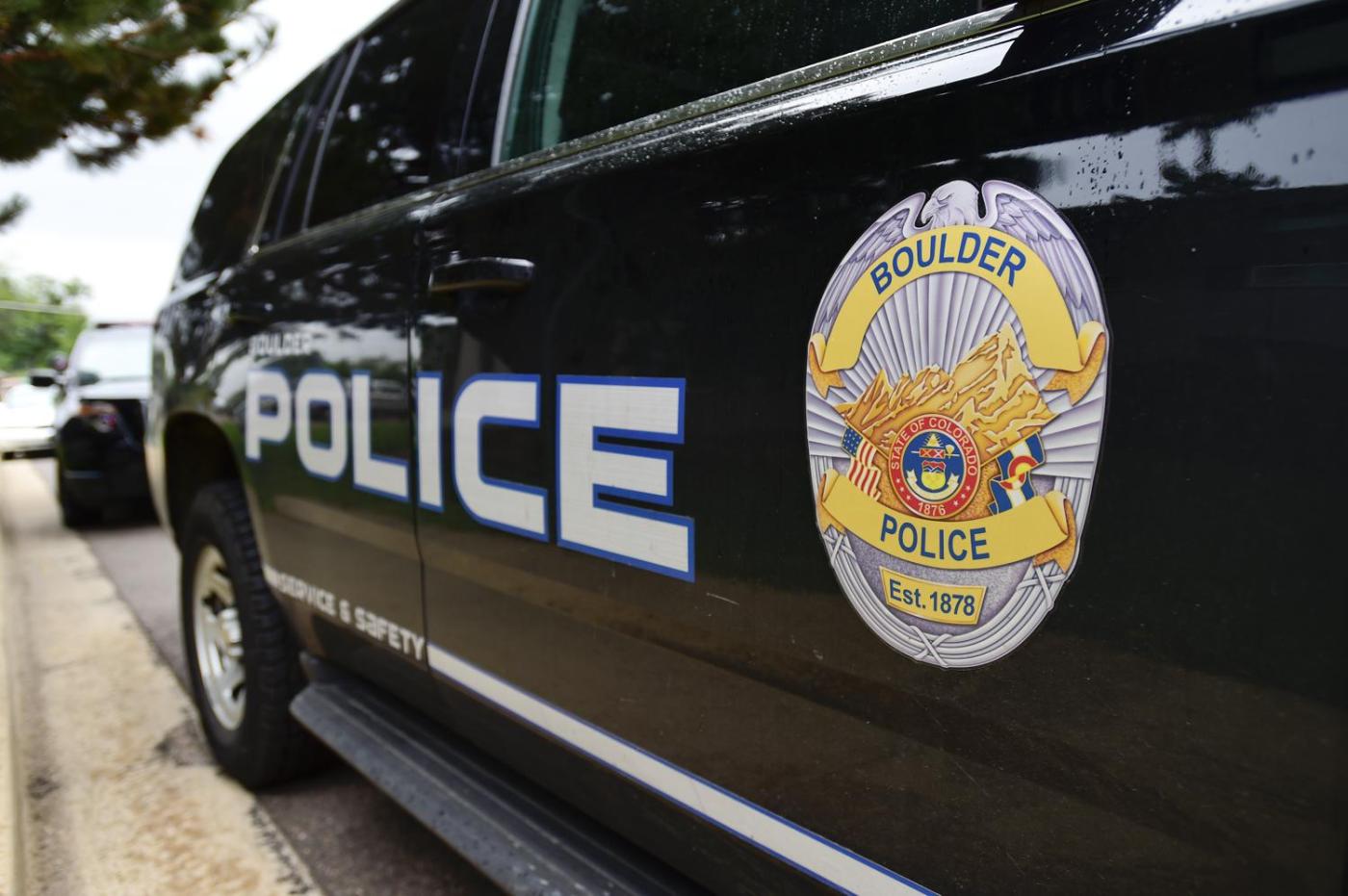
A digital curtain has fallen over Boulder, silencing a crucial, if sometimes chaotic, conduit of real-time public safety information.
As of Tuesday, the Boulder Police Department’s radio communications, once openly accessible to anyone with a scanner or an internet connection, are now encrypted.
What was once the unfiltered soundtrack of a city in motion – the urgent calls, the routine checks, the unfolding dramas – has receded behind a veil of digital silence, ushering in an era of heightened security for law enforcement, but also raising significant questions about public transparency and the future of local journalism. For more on the implications of this encryption, you can read this article on Colorado Sun.
For decades, the chatter on police scanners has been the lifeblood of immediate local news coverage, a vital, independent source for journalists and a window for curious citizens into the daily operations of their police force. Websites like Broadcastify, once bustling with Boulder’s police traffic, now carry only the static hum of absence.
The Boulder Police Department, through spokesperson Dionne Waugh, argues this shift is a necessary modernization, citing security concerns and the need for more efficient communication with partner agencies, many of whom already operate on encrypted systems. This can be contextualized further by looking at similar cases like Denver’s actions.
Waugh pointed to the strategic advantage of seamless information flow during large-scale events, from the international Sundance Film Festival to local emergencies, where coordinating with diverse entities like the Boulder County Sheriff’s Office and Boulder Valley School District security is paramount.
Yet, the department’s rationale, while framed around public safety and operational efficiency, also carries a distinct undertone of control.
Waugh suggested that the open channels posed a risk, allowing “bad actors” to monitor police movements and potentially compromise operations or victim privacy. However, when pressed for specific examples of security breaches or instances of victim information being unduly exposed due to public scanner access, Waugh offered none, stating only that the threat is ever-growing and waiting for an incident would be irresponsible. For a perspective on such risks, see the article on Truthout.
This reliance on anecdotal evidence and hypothetical dangers, rather than concrete examples, leaves a lingering sense that the perceived risks might be outweighed by the tangible loss of public oversight. Perhaps no entity feels this loss more acutely than the local press, particularly the Daily Camera.
For Camera reporters, the police scanner wasn’t just a tool; it was an early warning system, a primary source that often dictated the day’s news agenda. An active crime scene, a serious car crash, a developing emergency – these stories frequently began as snippets of conversation overheard on the scanner, prompting immediate investigation and verification.
The encryption effectively severs this direct line, pushing journalists into a more reactive, less immediate mode of reporting on public safety. For more on the broader journalistic implications, check out Oaklandside.
The Boulder Police Department did extend an olive branch to the Daily Camera, offering an encrypted radio. But this offer came tethered to a restrictive, ten-page contract that would have fundamentally compromised journalistic independence. The stipulations were stark: no payment for a scanner, no disclosure of information “prior to the conclusion of law enforcement operational activities,” and a blanket prohibition on sharing tactical information that “might lead to an officer’s harm.” Crucially, the contract also sought to hold the news organization liable for any damages arising from radio use.
John Vahlenkamp, Regional Editor for Prairie Mountain Media and Editor of the Daily Camera, unequivocally rejected the offer. His stance was rooted in a long-standing company policy against signing contracts to access unencrypted police radio traffic, a practice he deemed consistent with maintaining journalistic integrity. For insights into public access issues, see Cardozo Law Review.
Vahlenkamp emphasized the Camera’s decades-long track record of responsible reporting, asserting that their use of scanner traffic has never jeopardized officer safety. “We’ve kept safety at the top of our minds,” he stated, highlighting a shared concern that, in this instance, has led to a diverging path. The implications for Boulder’s community are profound.
While Vahlenkamp affirmed the Camera’s commitment to informing the public through other avenues – social media monitoring, official contacts, press releases – the loss of real-time, unfiltered access inevitably creates a vacuum. It shifts the power dynamic, making the public and press more reliant on official narratives and scheduled releases, rather than independent observation. Indeed, the BPD’s track record on proactive information sharing, particularly via social media, has been inconsistent. For more on these PR challenges, see NAACP.
While major traffic incidents and immediate crises like the Fairview High School lockdown saw swift updates, other significant events, such as a mountain lion killing a dog or a man wielding a machete in a neighborhood, experienced significant delays in public notification.
One incident, a car driving on a bike path, only came to light through an anonymous Reddit post, underscoring the potential for crucial information to be missed without the immediate, independent oversight provided by open scanners.
Boulder’s move mirrors a national trend, albeit with local variations. Denver Police Department, for instance, encrypted its radios in 2019, also offering news outlets a contractual agreement and a $4,000 radio, which the Denver Post declined. See more on that at Colorado FOIC.
In contrast, Longmont Public Safety, after an initial attempt at a similar contract, ultimately provided the Longmont Times-Call with a free radio scanner without any restrictive agreement, a “handshake agreement” that continues to this day, keeping Longmont’s police traffic a constant presence in the Times-Call newsroom.
This stark contrast highlights that while encryption may be a technical necessity for some, the terms of access for the press are clearly negotiable, and Boulder has chosen a path that prioritizes control over collaboration.
While Boulder Fire-Rescue and the Boulder County Sheriff’s Office radios remain publicly accessible online, the silencing of the city police signals a significant shift. The department insists it will continue to prioritize community safety and information sharing, adapting to “best practices.” However, in a world where transparency is increasingly valued as a cornerstone of public trust, the decision to unilaterally pull back a primary source of real-time information, without offering a truly independent alternative, inevitably invites scrutiny.
For Boulder, the coming days will test the department’s commitment to proactive communication and challenge the press to find new ways to keep the public informed, even as a vital source of immediate insight falls silent.
-
Frank DiBernardo handles LNGFRM's Foodie and Miscellaneous writing tasks. He's always getting ideas from users, so don't be afraid to send an email to the editor.