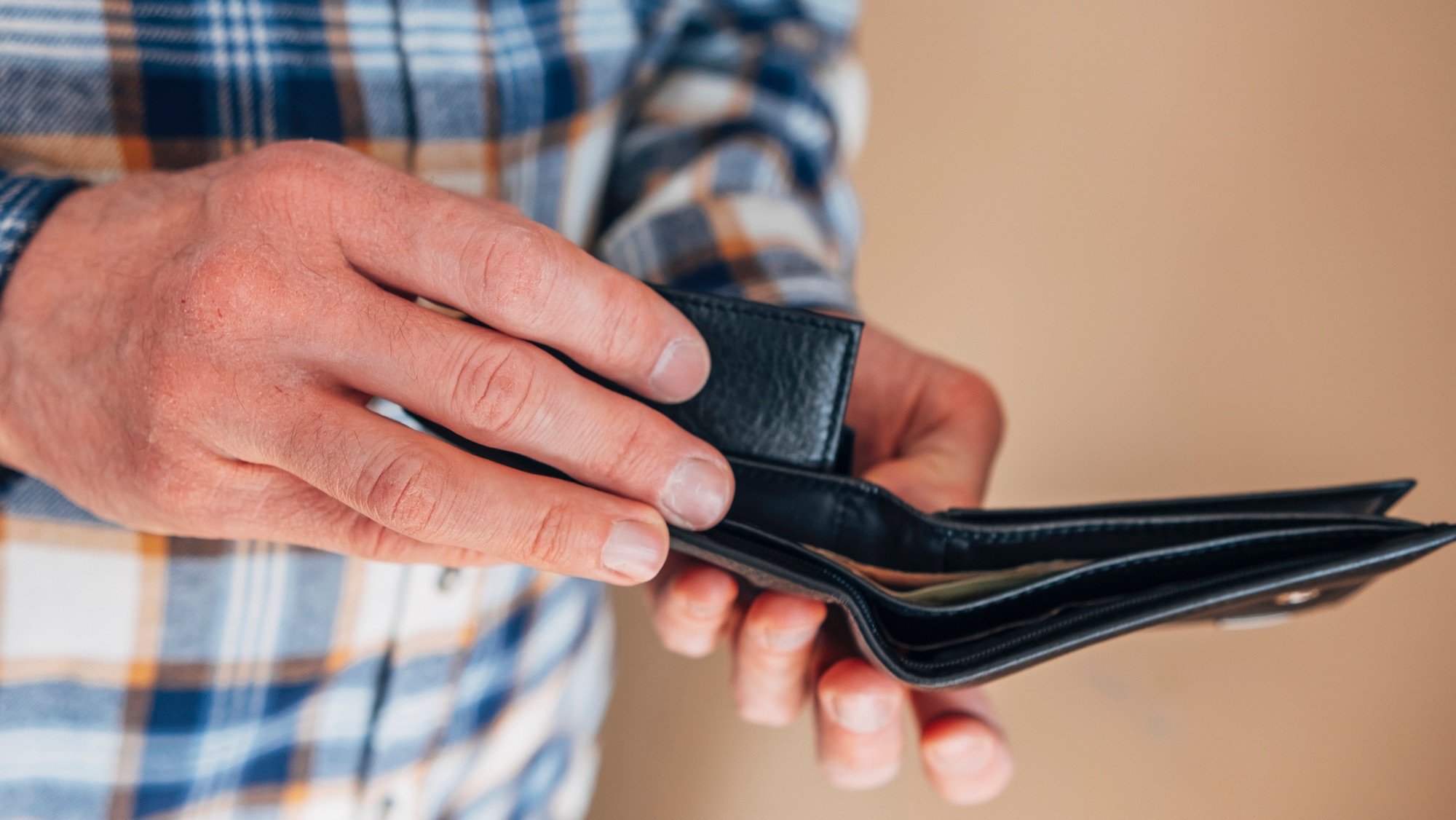
The venerable wallet, that unassuming leather or fabric companion in our pockets and purses, has long been a repository of identity and purchasing power.
For generations, it has held the tangible proofs of who we are: the driver’s license, the credit cards, the passport tucked away for future adventures.
But a quiet revolution is underway, spearheaded by tech giants, and it threatens to render this everyday artifact a relic of a bygone era.
Apple, in its latest move, has just delivered another significant blow, announcing “Digital ID” – a feature poised to transform the iPhone from a communication device into a comprehensive digital identity hub.
This isn’t merely an incremental update; it’s a profound leap towards a future where your physical wallet could become entirely superfluous.
Millions of Apple users can now upload a mobile version of their U.S. passport directly into their Wallet app, joining existing digital driver’s licenses, state IDs, and credit cards.
The implications are vast and immediate: imagine breezing through TSA security checkpoints at 250 U.S. airports with nothing more than your iPhone or Apple Watch.
The convenience is undeniable, a seductive siren song promising lighter pockets and smoother journeys.
The process itself is a testament to sophisticated digital engineering, mirroring the familiar setup of facial recognition.
Users photograph their physical passport, scan its embedded chip, and then perform a series of head movements for a selfie, a still frame of which is sent to the government issuer for verification.
This critical step, Apple assures us, is primarily automated, though human review can be invoked.
Once verified, the digital passport resides securely on the device, ready to be presented at a reader with a simple tap.
A quick selfie then confirms the device owner’s identity, establishing an end-to-end encrypted connection to transfer only the necessary data.
Crucially, Apple emphasizes that all Digital ID information is stored locally, beyond their own access, and users never have to physically hand over their device to an agent.
This commitment to user control and privacy, at least in theory, is a vital component of the system’s appeal.
Beyond airport security, Digital ID is also being positioned as a one-stop solution for online age verification.
Websites and apps requiring proof of identity will soon be able to present users with a consent sheet, outlining the specific data requested – perhaps just a date of birth.
Upon authorization, the device transmits an encrypted payload, digitally signed by the issuing authority, effectively serving as a “passport for the web.” It’s a vision of frictionless digital existence, where identity verification becomes as simple as a tap and a glance.
This digital migration isn’t happening in a vacuum.
Google and other players are pursuing similar initiatives, signaling a broader industry trend.
Digital wallets, as payment platforms, are already a global phenomenon, with Capital One estimating 4.3 billion users worldwide.
In the U.S., nearly half of adults used a digital wallet in the past three months.
The early adoption rates for mobile driver’s licenses are equally telling, with at least five million individuals in 11 states having already embraced them.
The momentum, it seems, is irresistible.
Yet, as with any technological advancement that touches the very core of our identity, the allure of convenience is tempered by a chorus of cautionary voices.
Privacy advocates, like Alexis Hancock, Director of Engineering at the Electronic Frontier Foundation, warn of a potential “privacy menace.” The concern isn’t just about the technology itself, but how its widespread adoption might fundamentally alter our relationship with personal data.
While a physical driver’s license might be presented a few times a week, a digital ID, integrated into countless online and offline interactions, could dramatically expand the scenarios in which businesses and government agencies request our sensitive information.
Hancock articulates a chilling vision: “Our personal data will be passed at more frequent rates than ever, via frequent online verification of identity per day or week with multiple parties.” This, she argues, is a far greater risk than the occasional glance at a physical ID by a bar bouncer.
The specter of cybercrime looms large, as a centralized digital identity becomes an even more tempting target for malicious actors.
Furthermore, critics raise accessibility concerns.
While pitched on convenience, what if these systems become so ubiquitous that they are effectively mandatory, leaving those without a smartphone, or those uncomfortable with digital interfaces, at a significant disadvantage?
The digital divide, already a pressing societal issue, could deepen considerably.
For now, the digital ID isn’t a complete replacement.
Physical passports remain essential for international travel and border crossings, and even where accepted, carrying a physical backup is still a wise precaution.
Users also cannot renew or make changes to their passport through the app, necessitating continued interaction with issuing authorities.
The feature itself requires an iPhone 11 or later, running iOS 16.1 or newer, with Face ID, Touch ID, and two-factor authentication enabled – not everyone meets these criteria.
Ultimately, the trajectory of technology often favors convenience above all else.
The chunky wallet, stuffed with plastic and paper, may indeed be on its way out.
But as we embrace this lighter, more integrated digital existence, we must remain vigilant.
The questions surrounding security, privacy, and equitable access are not minor footnotes; they are fundamental challenges that demand robust solutions and ongoing public discourse.
The future of identity is arriving, not with a bang, but with a tap – and we must ensure that in gaining unparalleled convenience, we do not inadvertently surrender invaluable control.
-
Frank DiBernardo handles LNGFRM's Foodie and Miscellaneous writing tasks. He's always getting ideas from users, so don't be afraid to send an email to the editor.