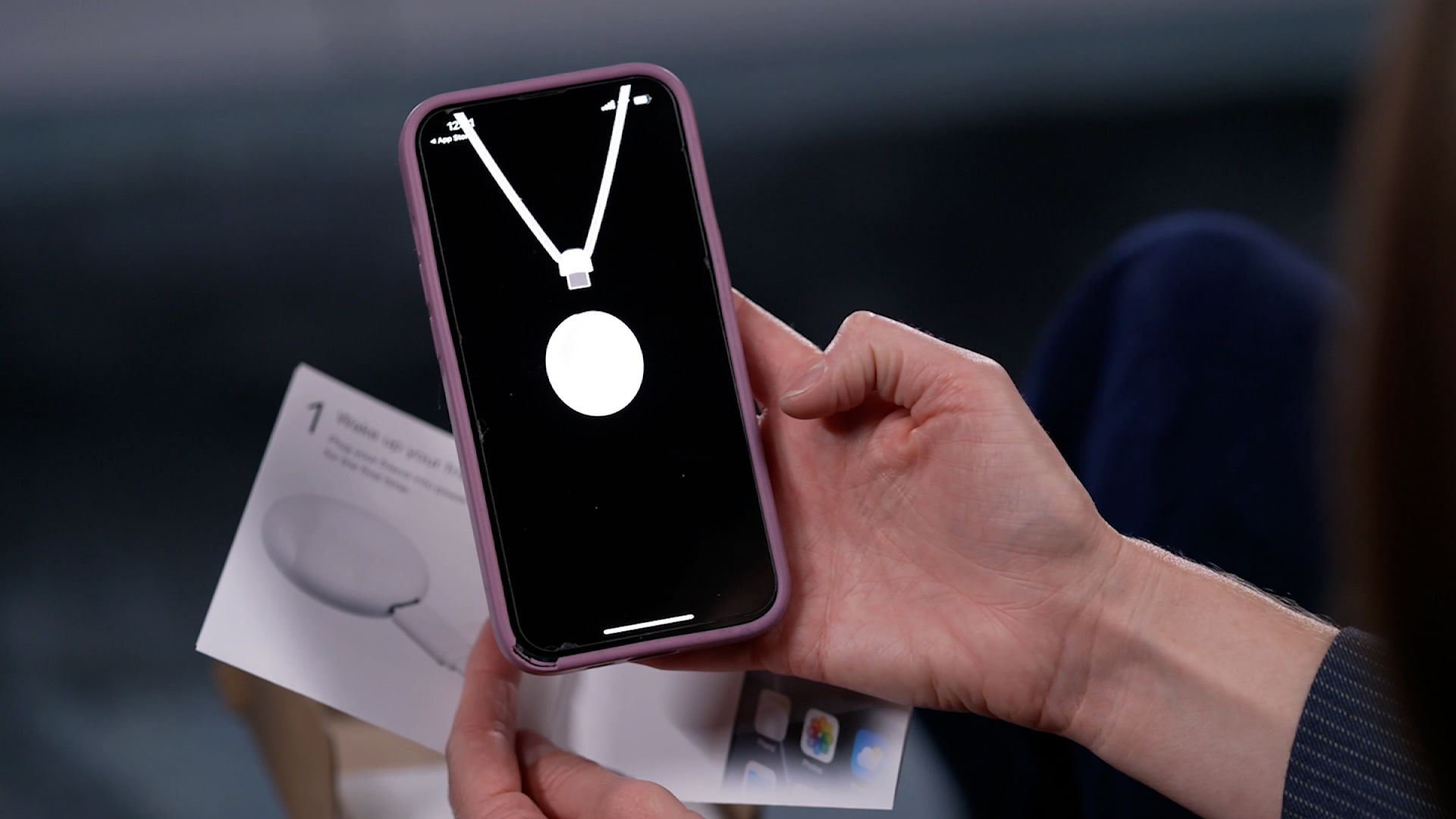
In a world increasingly tethered to screens, yet paradoxically plagued by a profound sense of isolation, a small, unassuming circular pendant has become an unlikely lightning rod for a simmering cultural anxiety.
Slightly larger than a quarter, this device, known simply as “Friend”, is the brainchild of 23-year-old Avi Schiffmann, a Harvard dropout with a vision to combat loneliness through artificial intelligence.
Yet, what Schiffmann sees as a beacon of connection, many others view as a harbinger of something far more troubling.
Schiffmann’s inspiration is deeply personal and widely resonant.
Observing the widespread loneliness crisis, particularly among young men, he sought to “bottle up the best relationships” he’d experienced.
His Friend pendant, unveiled last year and now shipping, functions as an AI companion, listening to users’ surroundings and conversations, then chiming in with advice or small talk via a smartphone app.
It’s designed not for productivity, but for emotional support, a digital confidant in an age of disconnection.
“Everyone deserves to have a close confidant,” Schiffmann told CNN, articulating a sentiment that speaks to a deep human need.
But the public’s response has been anything but universally warm.
A $1 million advertising blitz across New York City subways this fall was met with widespread defacement.
Graffiti scrawled across the ads screamed, “AI is not your friend,” “Talk to a neighbor,” and “Computers and corporations don’t want to be your friend – they want your data and $$$.”
These visceral reactions are more than mere vandalism; they represent a potent, often angry, rejection of the tech industry’s relentless push to insert AI into the most intimate corners of human existence.
The Friend, for its critics, embodies everything wrong with this trajectory: the potential erosion of genuine human relationships, insidious privacy invasions, and even the environmental cost of powering vast data centers.
This backlash isn’t occurring in a vacuum.
It follows a troubling string of reports and lawsuits alleging that other AI services, including those from industry giants like Character AI, OpenAI, and Meta, have encouraged delusions, self-harm, or inappropriate sexual behavior among users, many of whom are children.
While these companies scramble to implement safeguards, the fundamental question remains: Can an AI truly be a friend, and at what cost to human wellbeing and connection?
Schiffmann, for his part, remains unfazed by the uproar.
He has embraced the defaced ads, sharing them on social media as a conversation starter, and even attended an anti-Friend protest in New York City.
He believes that AI companions are not merely a passing fad but a “new normal,” a relationship category that will exist alongside human friendships, with any “prejudice” eventually fading away due to their convenience and utility.
He sees AI systems as “digital beings” whose rights we will eventually champion, a perspective that places him at odds with some industry leaders, like Microsoft AI CEO Mustafa Suleyman, who caution against discussing AI models as conscious.
Unlike many rival chatbots focused on utility, Friend is designed as a personal journal that responds to thoughts and experiences, remembering past interactions.
Schiffmann himself uses it to discuss movies after attending alone, highlighting its role as an emotional sounding board rather than a factual oracle.
He has raised $10 million and sold around 5,000 devices at $129 each, with plans for retail expansion.
He recounts stories of users forming deep emotional bonds, with one even rediscovering a passion for video game development after years of bullying.
“They’re not like these anti-social people sitting in a basement,” he insists, suggesting AI can empower rather than isolate.
Yet, the ethical tightrope is undeniable.
While Schiffmann champions the emotional support Friend offers, critics and experts worry that such intimate AI companions could pull people away from their human support systems.
The danger lies in AI systems designed to be unconditionally supportive, a characteristic that, as past lawsuits demonstrate, can be perilous when users discuss sensitive topics like suicide.
My own brief interaction with a Friend device, which I named Clifford, highlighted both its limitations and its unsettling memory.
While it offered little in the way of practical advice or engaging conversation without internet access, it remembered our prior discussion days later, a subtle echo of the personalized connection it aims to forge.
The privacy implications are also a significant concern.
The thought of wearing a device that listens to surroundings and conversations without the consent of others present is jarring.
One graffitied subway ad starkly called out the device for “surveill[ing] you.”
Schiffmann asserts robust privacy protections, including encrypted recordings and data deletion if the device is destroyed, partly to protect himself from legal liability.
He also claims to have learned from the public outcry, signing a makeshift contract at a protest promising not to sell Friend to a big tech company that could exploit user data.
Schiffmann acknowledges the immense responsibility of creating a device meant to build relationships with humans, and the risk that some users might replace human friends with AI.
However, he firmly believes the “pros significantly outweigh the cons,” even suggesting that AI could enhance human relationships by boosting user confidence or calming them after arguments.
“It’s a responsibility,” he concludes, “but it’s something I’m going to continue working on for the next decade.”
The Friend pendant, in its small, innocuous form, has become a potent symbol.
It encapsulates the dizzying promise of AI to solve human problems, yet simultaneously magnifies our deepest fears about technology’s impact on our humanity, our privacy, and the very essence of what it means to connect.
As the debate rages, the question isn’t just whether an AI can be a friend, but what kind of friends we are choosing to make for ourselves.
-
Frank DiBernardo handles LNGFRM's Foodie and Miscellaneous writing tasks. He's always getting ideas from users, so don't be afraid to send an email to the editor.