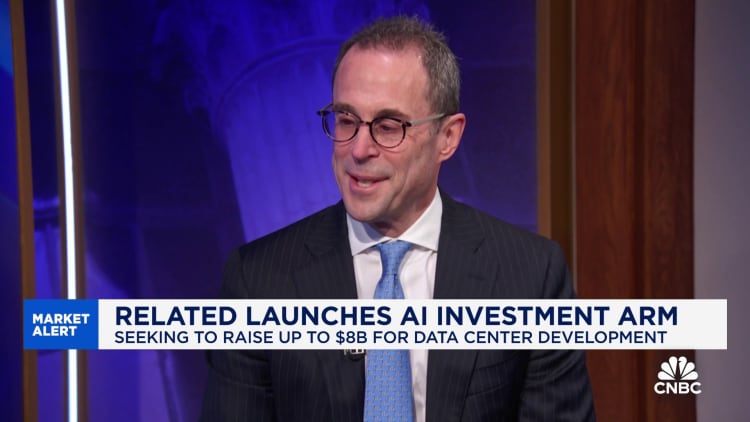
As the digital age races forward, the backbone supporting this technological momentum—data centers—faces an evolving landscape.
Recent headlines stirred concerns about the potential downturn in the data center industry, driven by major players like Microsoft and Amazon reconsidering certain projects.
However, a deeper dive into the industry reveals that, rather than a bust, we are witnessing a strategic recalibration of priorities and resources in an environment where massive spending continues unabated.
The sprawling data centers, once tucked discreetly on the outskirts of urban development, have become as common as shopping malls in some suburban areas.
Their insatiable hunger for power makes them both a boon and a bane, driving economic growth while straining local resources.
Microsoft’s recent decision to halt data center projects in Ohio, coupled with Amazon’s reassessment of its plans, raised eyebrows and the specter of a potential bubble burst.
Yet, industry insiders suggest that these moves are less about a dip in demand and more about a strategic pause to recalibrate in a rapidly evolving market.
Giordano Albertazzi, CEO of Vertiv, a key supplier in this sector, highlighted the relentless demand for AI deployments across data centers.
His confidence echoes through the market, as evidenced by a notable 22% increase in Vertiv’s shares.
Amazon and Nvidia also reaffirmed the robustness of the data center market, with Amazon’s Kevin Miller indicating no significant demand changes and projecting continued growth.
The strategic “pause” observed does not equate to a retreat but rather a reassessment.
The AI landscape is in constant flux, prompting companies to adapt to breakthroughs and market shifts.
This year alone, seismic developments like China’s DeepSeek and the U.S. administration’s $500 billion AI initiative have reshaped the strategic priorities within the industry.
Pat Lynch of CBRE sees this pause as temporary, with a significant project pipeline still in place, poised to meet the burgeoning demand for AI training models.
Microsoft’s recalibration in Ohio, where it had committed to a $1 billion investment in data centers, illustrates the company’s strategic realignment.
According to a UBS report, Microsoft’s extensive leasing spree over the past few years has led it to refine its focus on projects with immediate strategic value.
The company’s leased capital expenditures surged 6.7 times in two years, underscoring the speculative rush that characterized the initial AI boom.
This reassessment comes at a time when the cloud supply-demand environment is described as “tight” by Alphabet CFO Anat Ashkenazi, with variability expected in cloud revenue growth depending on capacity deployment each quarter.
Industry experts like John Carrafiell from BGO suggest that rather than withdrawing, major players like Microsoft, Google, Meta, and Amazon are collectively funneling over $300 billion into AI infrastructure this year.
This figure doesn’t even factor in contributions from other significant entities involved in the Stargate project, such as OpenAI and Oracle.
The energy requirements of data centers pose another layer of complexity.
As AI adoption scales up, the demand for low-latency, high-efficiency data centers near end-users will soar.
However, the power grid’s capacity to support such growth remains a concern.
Allan Schurr of Enchanted Rock notes that new data centers now require up to 500 megawatts of power—an increase that challenges the existing grid infrastructure.
This demand, compounded by other sectors like transportation electrification, pressures utilities to expand and innovate.
Despite these challenges, optimism persists.
CBRE’s data center portfolio has grown significantly, indicating sustained interest and investment in this sector.
Regions like Georgia, Texas, and Ohio are particularly attractive due to their power availability and infrastructure readiness.
Yet, the industry’s growth is not expected to be linear.
According to McKinsey’s Pankaj Sachdeva, the data center market is projected to grow between 20% and 25% over the next five to seven years, albeit with annual fluctuations.
Tariffs and trade tensions introduce additional variables, potentially impacting supply chains and procurement strategies.
Companies are expected to navigate these hurdles by renegotiating contracts and optimizing inventory in the short term, while pursuing geographic diversification and AI-driven supply chain analytics in the long term.
In conclusion, the narrative of a data center bust is premature.
Instead, what unfolds is a strategic reallocation and recalibration as the industry braces for a new era of AI-driven demand.
While some projects may pause, the overall trajectory remains upward, driven by an insatiable demand for connectivity and computational power.
As we stand on the cusp of this digital revolution, the need for innovative, sustainable solutions in data center operations has never been more critical.
-
Frank DiBernardo handles LNGFRM's Foodie and Miscellaneous writing tasks. He's always getting ideas from users, so don't be afraid to send an email to the editor.