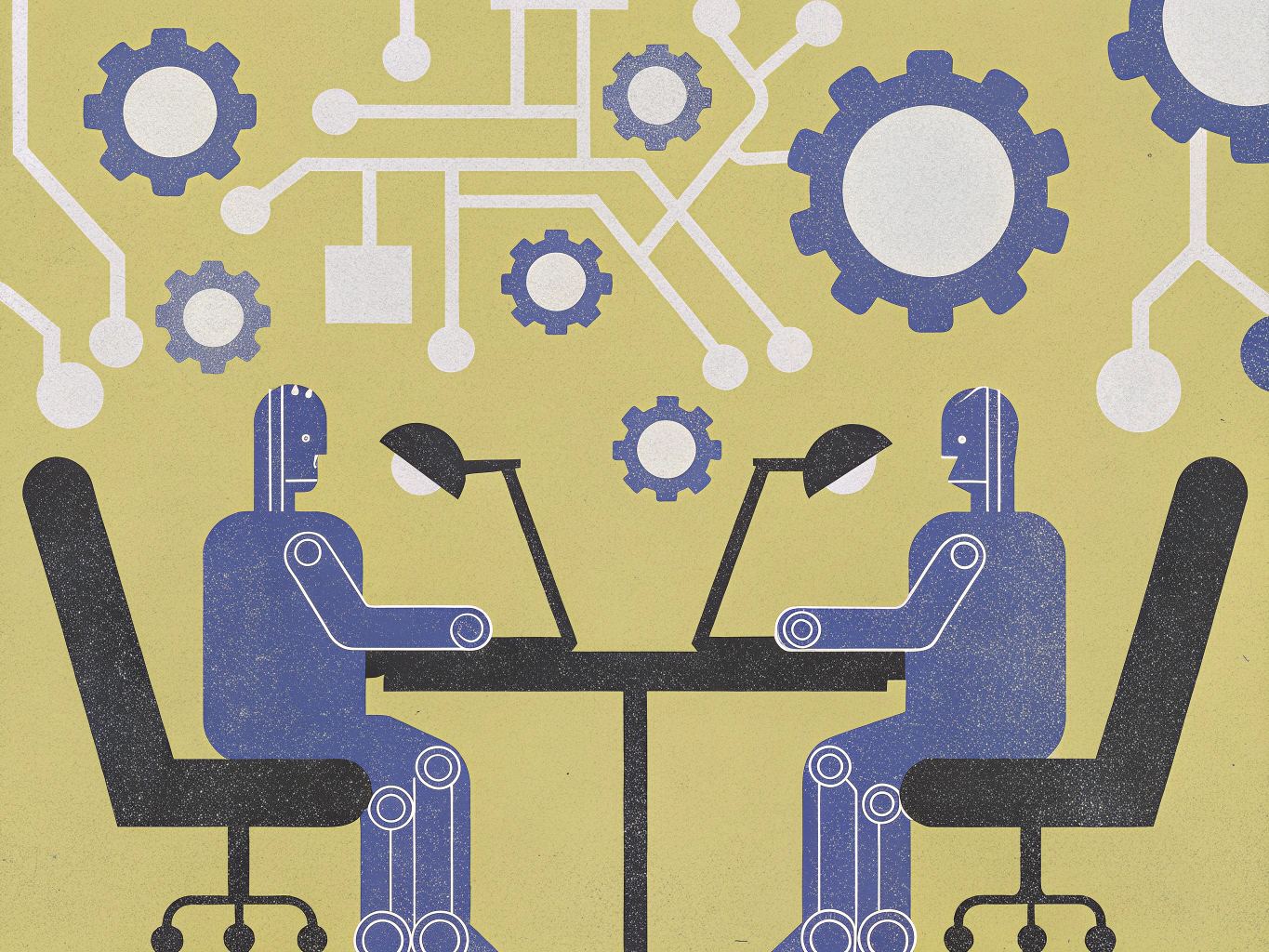
As the dawn of agentic AI looms on the horizon, organizations worldwide are grappling with the question of how best to integrate these autonomous systems into their workflows.
With AI agents poised to become the next frontier in generative AI, the potential for these systems to augment human decision-making is immense.
However, the road to effective collaboration between humans and AI is fraught with challenges that require thoughtful navigation and strategic planning.
The Boston Consulting Group’s AI Radar survey at the beginning of the year revealed that two-thirds of companies are already exploring the use of AI agents.
This statistic underscores a growing recognition of the transformative potential that AI holds.
Yet, as we edge closer to a paradigm where AI systems function like responsible employees, autonomously processing natural language prompts and making decisions, the need for a symbiotic relationship between humans and machines becomes increasingly apparent.
Contrary to dystopian narratives that paint AI as a replacement for human roles, agentic AI is more likely to serve as a virtual assistant, capable of sifting through data, providing real-time insights, and supporting decision-making processes across various industries.
However, just like onboarding a new employee, AI systems require extensive testing, training, and guidance.
Humans will inevitably assume a supervisory role, ensuring that AI agents adhere to governance frameworks, uphold ethical standards, and align with organizational goals.
One critical aspect of integrating AI into the workplace is the concept of “human-in-the-loop” mechanisms.
These control systems are essential for maintaining a balance between AI autonomy and risk mitigation.
Human oversight remains crucial in preventing errors and misuse of AI systems.
But how do organizations decide which mechanisms to implement and how to structure their collaborative frameworks?
The answer lies in empowering the workforce with AI fluency.
Despite the buzz around AI, less than one-third of companies have provided AI training to even a quarter of their staff.
This gap in education leaves employees underprepared and disempowered.
To harness the full potential of AI, organizations must prioritize AI upskilling, fostering a culture that embraces technological change.
Regular training sessions can highlight the strengths and weaknesses of agentic AI and promote successful human-AI collaborations.
Moreover, collaboration across departments is essential.
Engineers, AI specialists, and developers must share their knowledge to integrate AI effectively.
A mindset shift is necessary—employees should not view AI as a competitor but as a tool that complements and enhances their cognitive abilities.
Redesigning workflows around agentic AI is another crucial step.
A recent McKinsey survey indicates that such redesigns have the most significant impact on an organization’s financial performance.
Instead of spreading resources thinly, companies that focus on targeted AI initiatives often see the most substantial returns.
However, it is essential to note that constant human-AI collaboration may not always be the answer.
Research from the MIT Center for Collective Intelligence suggests that sometimes a combination of humans and AI, or even each operating independently, is most effective.
Humans excel in tasks requiring contextual understanding and emotional intelligence, while AI thrives in repetitive, high-volume, or data-driven tasks.
With the rise of AI, new supervisory roles are emerging.
While AI might not drastically affect workforce sizes in the short term, it will undoubtedly lead to an evolution in role titles and responsibilities.
From AI ethics to model validation positions, organizations need executives who understand the strategic implications of AI and can drive its adoption across the company.
Senior leaders must engage more actively, ensuring that AI integration is not confined to IT departments but is part of a broader business strategy.
In conclusion, the successful integration of agentic AI will depend on an organization’s ability to envision a workplace where humans and AI co-create.
Leaders must build collaborative frameworks that leverage AI’s strengths while empowering human creativity and judgment.
As the future unfolds, the organizations that thrive will be those that not only adapt to the new technological landscape but also actively shape it, ensuring that AI serves as a partner in progress rather than a competitor.
-
Frank DiBernardo handles LNGFRM's Foodie and Miscellaneous writing tasks. He's always getting ideas from users, so don't be afraid to send an email to the editor.