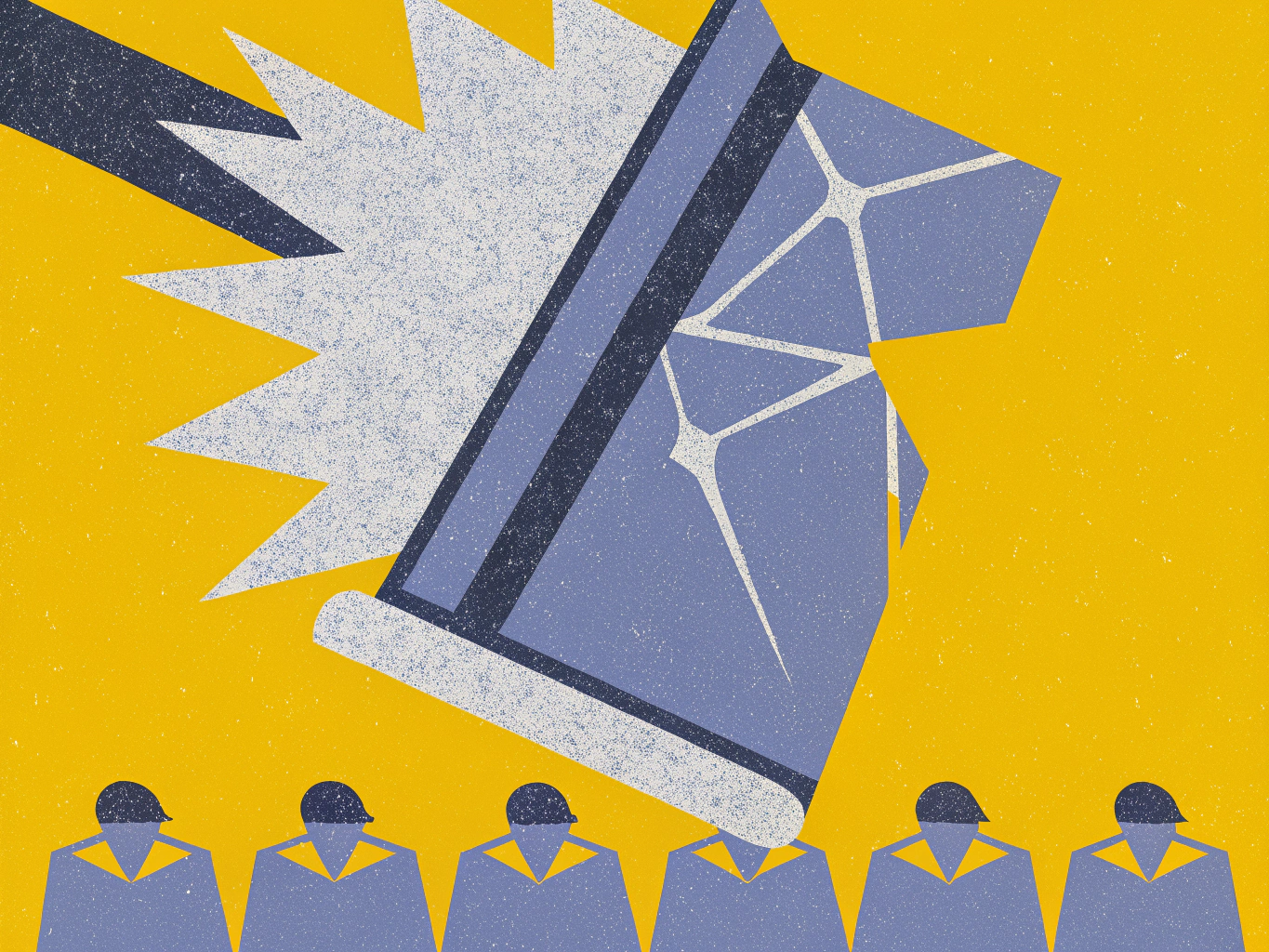
The whisper of artificial intelligence has grown into a roar, a pervasive hum that underpins our digital lives and increasingly, our economic futures.
For years, the conversation around AI’s impact on jobs has been a delicate dance between utopian visions of enhanced productivity and dystopian fears of widespread displacement.
Now, it appears, the abstract is solidifying into stark reality, particularly for the youngest members of the workforce.
A recent report by Wired, drawing on the rigorous analysis of economists at Stanford University, delivers a sobering message: the era of AI-driven job elimination is not merely on the horizon; it has arrived.
The Stanford researchers, according to Wired, have unearthed what they term the “strongest evidence yet” that artificial intelligence is actively starting to prune specific job categories, with young workers disproportionately feeling the bite.
This isn’t just a theoretical model or a predictive algorithm; it’s an observable trend, a tangible shift in the labor market that casts a long shadow over the aspirations of a generation.
The implications are profound.
For years, young people entering the workforce have been told to embrace technology, to become digitally fluent, and to prepare for a dynamic career landscape.
Yet, as they step into this supposed future, they find the very tools once hailed as enablers are now acting as gatekeepers, or worse, as direct competitors.
The “certain jobs” being eliminated are often those entry-level positions that traditionally served as foundational stepping stones.
These are the roles where new graduates and early-career professionals cut their teeth, learned the ropes, and gained the practical experience necessary to ascend.
Think of the administrative tasks, the data entry, the basic customer service interactions, or even rudimentary content generation – roles that, while sometimes mundane, were crucial for building a resume and understanding organizational dynamics.
AI, with its ever-growing capacity for automation, pattern recognition, and even creative synthesis, is proving remarkably adept at handling these tasks, often with greater speed and efficiency, and certainly without the need for a salary or benefits.
The vulnerability of young workers in this unfolding scenario is multi-faceted.
They often lack the deep, specialized expertise that might insulate older, more experienced professionals from AI’s encroachment.
Their skill sets, while modern, might be more easily replicated by sophisticated algorithms.
Furthermore, the sheer volume of new entrants into the job market means increased competition for fewer available roles, exacerbated by AI’s growing capabilities.
It’s a cruel irony: just as they are poised to contribute, the very structure of the economy is shifting beneath their feet.
Will Knight, a senior writer at Wired and the author of the insightful A.I. Lab newsletter, recently joined CBS News to delve into these findings.
His perspective, undoubtedly informed by his deep immersion in the world of artificial intelligence, likely underscored the urgency and complexity of the situation.
It’s no longer a question of if AI will impact jobs, but rather how and whom, and what proactive measures are needed to mitigate the disruption.
The conversation extends beyond mere job loss; it delves into the very fabric of social mobility and economic opportunity for an entire demographic.
This isn’t to say that AI is an unmitigated evil, or that it won’t create new jobs.
History is replete with technological revolutions that destroyed old industries while giving birth to new ones.
The industrial revolution, the advent of computers, and the rise of the internet all brought seismic shifts.
However, the pace and scope of AI’s development feel different.
Its ability to learn, adapt, and perform tasks traditionally associated with human cognition presents a unique challenge.
The question isn’t just about retraining for new roles, but about understanding what those new roles will be, and whether they can absorb the displaced workforce at a sufficient scale and speed.
For young people today, the landscape is one of unprecedented uncertainty.
The traditional pathways to a stable career are being redrawn by invisible algorithms.
The anxiety is palpable, a quiet hum beneath the surface of online résumés and networking events.
It compels a re-evaluation of educational priorities, a deeper dive into uniquely human skills that AI cannot easily replicate—critical thinking, complex problem-solving, emotional intelligence, creativity, and ethical reasoning.
Ultimately, the Wired report and the Stanford economists’ findings serve as a stark wake-up call.
It’s a signal that the abstract future of AI is now concrete, demanding immediate attention from policymakers, educators, and industry leaders.
The challenge is not to halt the progress of AI, an endeavor as futile as trying to stop the tide, but to intelligently navigate its powerful currents, ensuring that an entire generation isn’t left adrift in its wake.
The future of work, particularly for the young, depends on how swiftly and thoughtfully we respond to this evolving reality.
-
Frank DiBernardo handles LNGFRM's Foodie and Miscellaneous writing tasks. He's always getting ideas from users, so don't be afraid to send an email to the editor.