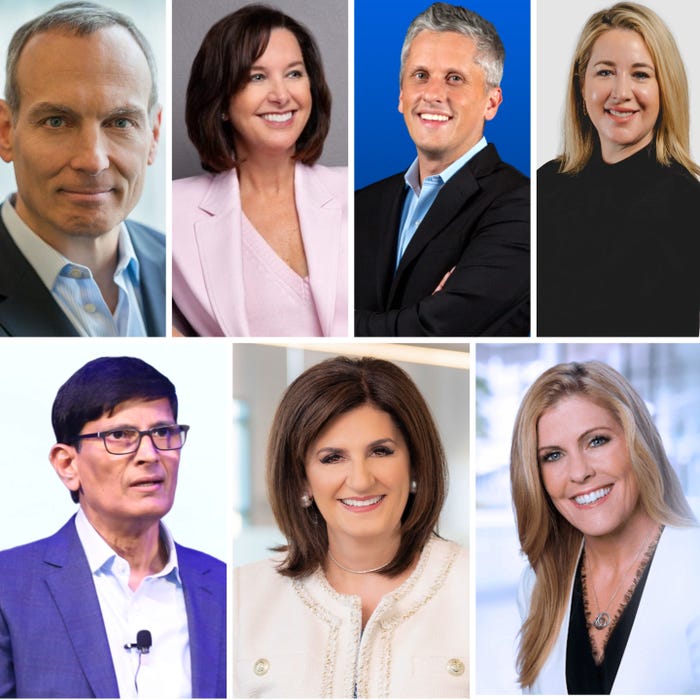
The mandate from the corner office is clear: embrace artificial intelligence.
Companies across the globe are urging their workforces to integrate AI into daily tasks, promising a future of unprecedented efficiency and innovation.
But what happens when the lens turns inward?
How are the very architects of this new directive, the C-suite executives themselves, leveraging AI in their own demanding, high-stakes roles?
A recent glimpse into the professional lives of seven top leaders reveals that AI isn’t just a tool for mundane automation; it’s rapidly becoming a sophisticated strategic partner, a personal coach, and an omnipresent research assistant for those at the pinnacle of corporate power.
These aren’t just executives experimenting with a new gadget; they are seasoned leaders, responsible for vast workforces and billions in revenue.
They are strategically deploying AI to refine their performance, streamline critical functions, and gain an edge in an ever-complex business landscape.
Their applications range from the surprisingly personal to the broadly systemic, painting a nuanced picture of AI’s ascent into the executive suite.
Consider the realm of personal leadership development, a domain traditionally reserved for human coaches and introspection.
Glenn Fogel, CEO of Booking Holdings, the parent company of travel giants like Booking.com and KAYAK, has turned to AI for an unexpected form of self-improvement: public speaking. Imagine the head of a global travel empire uploading a keynote video to a large language model, not for simple transcription, but to solicit granular feedback.
Fogel recounts receiving specific timestamps and suggestions, even flagging an unnoticed, awkward hand movement that might have distracted his audience.
This isn’t about outsourcing charisma; it’s about augmenting self-awareness and refining presence through an objective, tireless digital critic.
Similarly, Francine Katsoudas, Cisco’s chief people, policy, and purpose officer, taps into AI for coaching before “tricky conversations,” using it as a quick sounding board to strategize her approach and get into the right mindset.
For leaders whose schedules rarely allow for extended reflection, AI offers a rapid, private space for strategic thought.
Beyond personal refinement, AI is proving to be a game-changer in the critical human resources domain.
Donna Morris, Walmart’s chief people officer, presides over the largest private workforce in the United States.
She’s deploying AI tools like Perplexity and ChatGPT to identify potential candidates for leadership positions, bypassing traditional search methods with a speed and alignment that “surprises” even her.
This isn’t just about faster recruitment; it’s about strategically identifying talent with unprecedented precision.
IBM’s Corinne Sklar offers an even starker illustration of AI’s transformative power in HR.
She champions AskHR, IBM’s internal human resources agent, which has simplified previously bureaucratic processes like employee transfers.
Sklar notes that 94% of IBM’s HR tasks are now handled by AI, leading to a projected $4.5 billion in productivity gains by year-end. This demonstrates AI’s capacity to move beyond mere assistance to fundamentally restructure and optimize core organizational functions.
For executives drowning in data and information, AI acts as a vital navigational aid.
Aaron Levie, CEO of Box, a cloud content management company, uses a suite of AI tools daily.
Whether prepping for an earnings call, dissecting lengthy reports, or brainstorming pricing strategies, his AI assistants rapidly distill information, surface best practices, and even generate prototypes for new features.
This isn’t just about faster reading; it’s about accelerating comprehension and strategic decision-making.
Lisa Stevens, Aon’s chief administrative officer, echoes this sentiment, employing AI to rapidly arm herself with crucial insights before high-stakes meetings, transforming hours of traditional research into moments of synthesis. The subtle art of executive communication also finds an unexpected ally in AI.
Sravana Karnati, Walmart’s executive vice president of Global Tech platforms, admits to running “every important email” through ChatGPT, a testament to the AI’s ability to polish prose and ensure clarity.
This isn’t about outsourcing thought, but rather sharpening its delivery, ensuring that vital messages are conveyed with precision and impact.
Karnati, working closely with developers, also leverages AI to generate code or troubleshoot errors, highlighting its utility as a technical co-pilot.
Yet, this widespread embrace of AI isn’t without its caveats.
Karnati himself cautions against uncritical reliance, acknowledging instances where he’s had to spend additional time correcting AI-generated responses.
Lisa Stevens, despite her enthusiasm, insists on verifying the information AI provides, a crucial reminder that even the most advanced algorithms are tools, not infallible oracles.
The human element of judgment, discernment, and ethical application remains paramount.
These executives are not merely delegating; they are guiding, refining, and scrutinizing AI’s output, understanding that the technology’s power lies in its augmentation of human capabilities, not its replacement.
What emerges from these executive insights is a compelling portrait of AI not merely as a productivity tool for the masses, but as a sophisticated strategic partner for the C-suite.
These leaders aren’t just telling their teams to use AI; they are actively shaping its integration into the very fabric of leadership.
This demonstrates that in the age of intelligent machines, human ingenuity, augmented by AI, is poised to redefine the pinnacle of professional excellence.
The future of leadership isn’t just about understanding AI; it’s about strategically collaborating with it.
-
Frank DiBernardo handles LNGFRM's Foodie and Miscellaneous writing tasks. He's always getting ideas from users, so don't be afraid to send an email to the editor.