The corporate hallways of Meta are buzzing again, but this time, the seismic shifts aren’t just about layoffs; they’re about a strategic recalibration at the very heart of its multi-billion-dollar bet on the metaverse.
In a move that signals both continuity and a deepening commitment to artificial intelligence, Meta has announced a significant reshuffle within its Reality Labs (RL) unit, the engine room for its virtual ambitions.
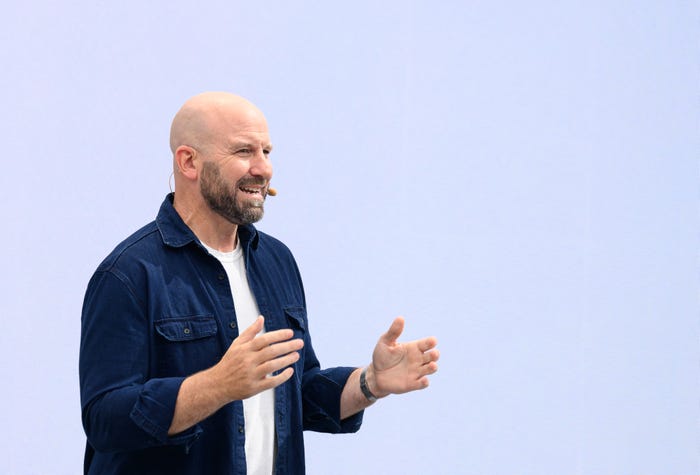
Vishal Shah, a veteran who has steered Meta’s metaverse product group for the past four years, is departing the virtual realm for the burgeoning landscape of Meta Superintelligence Labs (MSL).
His new mission: Vice President of AI Products, tasked with weaving AI’s transformative power across Meta’s sprawling empire, from its family of apps to, crucially, Reality Labs itself.
This isn’t just a personnel change; it’s a profound statement about where Meta sees its future, particularly given the eye-watering $100 billion investment slated for mixed and virtual reality this year alone.
On the surface, CTO Andrew Bosworth’s internal memo, swiftly followed by Shah’s own, presents a picture of unwavering resolve.
Bosworth insists the metaverse remains a “companywide priority,” a thesis “proved” by the burgeoning interest from competitors. Yet, beneath the corporate rhetoric, a different narrative might be unfolding.
Is this a confident stride forward, or a strategic pivot born of necessity and the harsh realities of public skepticism and colossal financial outlays?
Shah’s transition to MSL, reporting directly to Nat Friedman, isn’t happening in a vacuum.
Just last week, Meta’s AI division, MSL, was grappling with its own internal upheaval, shedding 600 jobs, with some roles explicitly “replaced by AI.” See more details on this here.
This juxtaposition is striking: a leader from the metaverse, a division synonymous with futuristic, human-centric interaction, now moving to a unit that is simultaneously expanding its capabilities and streamlining its human workforce through AI integration.
It begs the question: is Shah being tasked with accelerating this automation within the product sphere, or is he there to ensure that AI serves, rather than supplants, the human experience in Meta’s grand visions?
The official line from Shah himself, echoing CEO Mark Zuckerberg’s sentiments at Connect, is that “AI and the metaverse are deeply intertwined.” He envisions AI enabling “more personalized, context-aware, and meaningful experiences” in the metaverse, ultimately unlocking “personal superintelligence.” This vision, while compelling, has often felt abstract to a public still grappling with the practicalities and appeal of current VR offerings.
Shah’s new role, integrating MSL’s work into both the Family of Apps and Reality Labs, suggests a concerted effort to make this synergy tangible.
Meanwhile, back in the metaverse trenches, new leadership is stepping up.
Gabriel Aul will now helm the Metaverse Product Group, with a renewed focus on “creating high-quality experiences for both VR and mobile.” Ryan Cairns will continue to lead Horizon OS, the foundational software for Meta’s VR hardware, reporting directly to Bosworth.
This dual leadership, with Bosworth’s direct oversight of Horizon OS, underscores the critical importance of a robust, integrated hardware and software ecosystem.
The challenge for Aul and Cairns will be to translate Meta’s colossal investment into experiences that resonate beyond early adopters, attracting the “young social gamers” and broader audiences Bosworth hopes to capture.
The context of this reshuffle cannot be ignored.
Meta’s metaverse venture, particularly Reality Labs, has been a significant drain on its finances, consistently posting billions in losses. While Bosworth’s memo projects an image of leading the pack, the reality for many observers has been one of a company pouring vast sums into a futuristic vision that has yet to capture mainstream imagination or profitability. See more of the financial implications here.
The “hype has thankfully died down,” as Shah put it, offering a moment for serious building, but it also means the pressure to deliver concrete, compelling products is higher than ever.
This latest reorganization appears to be an attempt to sharpen Meta’s focus.
By moving a key product leader to AI, Meta is signaling that the future of its metaverse isn’t just about virtual worlds and avatars, but about intelligent, adaptive, and personalized digital experiences powered by advanced AI. It’s a gamble that the convergence of these two transformative technologies will finally unlock the elusive potential of the metaverse.
The question remains, however, whether this strategic pivot is the masterstroke Meta needs, or simply another expensive iteration in its quest to build a future that, for now, remains largely virtual. The Valley, it seems, is still very much in the experimental phase, and the grace it seeks might just be found at the intersection of AI and reality.
-
Frank DiBernardo handles LNGFRM's Foodie and Miscellaneous writing tasks. He's always getting ideas from users, so don't be afraid to send an email to the editor.