Barbra Streisand: “It’s the funniest thing that people still can’t get my name right”
I was always the neighborhood kid without a father but with a terrific voice. Streisand, Barbra Image: CBS/Getty Images/CBS Photo Archive The artist discusses the highs and lows of her early career, the challenging shift into pop, and how she overcame criticism of her looks in a rare interview on her music In order to […]
By
LNGFRM Team
Published October 24, 2022
I was always the neighborhood kid without a father but with a terrific voice. Streisand, Barbra Image: CBS/Getty Images/CBS Photo Archive
The artist discusses the highs and lows of her early career, the challenging shift into pop, and how she overcame criticism of her looks in a rare interview on her music
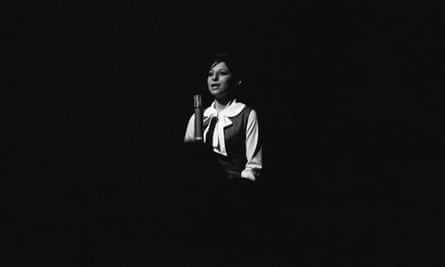
In order to perform her first paid solo act of her career on the evening of September 9, 1960, an 18-year-old Barbra Streisand traveled via Greenwich Village to a small club called the Bon Soir. She remembered the incident to the Guardian earlier this month: “I remember walking to the club wearing an antique vest from the thrift shop and antique shoes from the 1920s that I still have today.” I recall thinking, “This could be the start of a big change in my life,” while I was traveling.
That would be a vast understatement. The effect of Streisand’s performances at the Bon Soir, which began that evening and continued for the next two years, launched one of the most prosperous, long-lasting, and, in a way, implausible careers in the annals of popular music.
Streisand emerged as their chart challenger with albums that somehow managed to make decades-old songs feel like a revolution of their own at the same period as artists like the Beatles and Bob Dylan altered the world with shockingly new sounds. Columbia Records, the same label that had just signed Dylan, had enough faith in the singer to agree to a brazen clause in her contract that required her to maintain complete creative authority two years into her tenure at the Bon Soir. Columbia executives advised that Streisand make her first album a live recording from the club where she made her debut in order to capitalize on the hype she had generated in the Village. She anticipated being impressed by the recordings given the potency of the performances they captured. But she said that she was “very disappointed” after hearing them. “The quality didn’t appeal to me. That space was not intended to serve as a recording studio.
As a result, Columbia shelved the album and instead released a studio track as her debut. The end product was a huge success, earning her two Grammys, including the album of the year honor, and a top-10, platinum-selling song. Nevertheless, devoted followers have yearned to hear the fabled, lost Bon Soir tape for decades. Poor bootlegs have surfaced throughout the years, and in 1991, some of its tracks were included in Barbra Streisand’s box set, Just for the Record. But even there, the sounds of the instruments mingled. It would take another three decades for sound mixing technology to evolve to the point where a talented engineer, in this instance Joachim van der Saag, could achieve the right balance. After hearing Joachim’s mixes, Streisand commented, “I was very, very pleased.”
As a consequence, precisely 60 years after the original performances were captured, the Barbra Streisand at the Bon Soir CD will be made public in November. The four instruments that supported Streisand on those evenings may now find their proper place in the new mixes, but “Barbara’s vocals were left untouched,” according to the album’s co-producer, Jay Landers. She sang precisely what you can hear.
Barbra Streisand at the Bon Soir Photograph: Don Hunstein / Columbia Records
The singer discussed the inspirations for her early records in a nearly two-hour phone conversation — something she seldom does, in part because she is rarely asked. When you’re a mega-celebrity, people may ignore or take for granted the fundamental skill that first made you so well-known. Streisand was everything from a diva in conversation, despite her enormous popularity. She had a friendly demeanor and talked in a casual manner indicative of her Brooklyn upbringing. Streisand has spent the previous five years writing her book, which has sharpened her recall of her early Brooklyn years as well as her early musical influences. She stated, “I never had to evaluate my music before. For the book, I needed to recollect.
She can remember singing snakes from the age of five. She said, “I was always the child on the street with no father but a terrific voice. Streisand’s father passed away after an epileptic fit when she was just a year old. My Brooklyn hallway had a high ceiling, so when I sang there, it would echo, and I enjoyed singing there.
Streisand said that as a young child, she never listened to music. She laughed and continued, “I never even had a Victrola, as we called them back then. At age 16, she bought one and started listening to jazz CDs, praising Billie Holiday’s work in particular. She was also captivated to Johnny Mathis’ flair. She recalled thinking, “God, what a beautiful voice he has, and how handsome!” as she watched him on television.
She was interested in acting, but she had no desire to pursue her own career as a recording artist. Streisand began taking acting courses and worked in summer stock after viewing The Diary of Anne Frank at the age of 14—she was the same age and religion as the main character. She said that “playing characters was my life’s work, my goal, and my dream.”
Friends started to notice her singing voice’s size, depth, and beauty at the same time. The key to that was Barry Dennen, whose flat in the Village she would sleep in after acting class so she wouldn’t have to trudge home to Brooklyn. They were reportedly romantically connected, according to several reports. Streisand said, “That isn’t true. “We were not lovers, but we did love one other as persons. I was appreciative of his extensive record collection, which included several records by elderly artists and Broadway cast recordings. What a blessing!
She acquired a large portion of the songs that would make up her early set lists from his collection. The song A Sleepin’ Bee from the 1954 musical House of Flowers, with words by Truman Capote and music by Harold Arlen, perfectly encapsulated her goal as a singer. As an actor, she yearned for three acts of a play, and the song’s lyrics provided her those three acts. Harold was one of those authors who was able to create these incredible tunes. I got what I needed from it.
‘The lyrics to that song [A Sleepin’ Bee] gave me the three acts of a play that I longed for as an actress,” Streisand said. Photograph: Don Hunstein / Columbia Records
It’s understandable why she picked the song to perform in the singing competition Dennen encouraged her to participate at the Village gay club The Lion. Streisand won, and a friend encouraged her to audition for a role at the Bon Soir, which led to a string of appearances opening for comedian Phyllis Diller. Not that she had an easy time understanding things. When she went for an audition with The Village Vanguard, they rejected her. Even worse, Miles Davis reprimanded her during her audition. She was invited to audition by a friend who worked at the Vanguard, which infuriated jazz legend Miles Davis. Never do it again, he told him. recalled Streisand. “You forced my lads to perform for this girl? Never will I forget it.
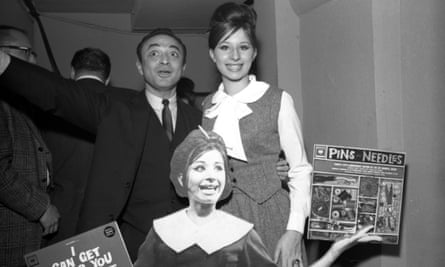
Beginning with the introduction of the Bon Soir CD, we hear her fiercest supporter at Columbia Records, David Kapralik, pronouncing her name as Barbra. “Strei-zand.” It’s Strei-sand, she quips sardonically. The fact that people still have trouble pronouncing her name amuses her, she added. I had to correct my new helper even today.
Following Kapralik’s introduction, the songs Streisand performs showcase her talent for discovering obscure musical artifacts. These include the 1938 Rogers and Hart song I’ll Tell the Man in the Street and the Disney ditty Who’s Afraid of the Big Bad Wolf?, a children’s song no adult had ever thought to cover. Some of the songs she sang in the play required her to sing at a speed that might be described as breath-defying, which was an early point of differentiation. One such song was 1928’s Lover, Come Back to Me. Streisand said, “I never gave breath control any consideration. “I never gave it any consideration! Technically speaking, I had no idea how to sing from the diaphragm or whatever the heck they were talking about.
She just had what appeared to be an intrinsic talent to hold notes for impossibly long periods of time. She said, “I hold the notes because I want to.
Streisand said that despite using phrases that cut like a Ginsu knife, she never worried about her language. She said, “If I do that, it’s probably because of the lyric.” “I want to use sound to emphasize the emotion.” Her attention was primarily drawn to the persona depicted in the song. She stated, “I was always wondering, ‘What is this person going through?'”
Cry Me A River, the first track from the Bon Soir album, serves as Exhibit A. Seven years before, Julie London’s intensely sensual rendition of the song had been a big hit. With each syllable she spoke, Streisand’s performance leaned into the character’s need for revenge. She stated, “I’m making the face of someone who made me cry a river.” “I’m telling you, you’ll weep a river over me now! It’s quite private.
However, her extensive dissection of Happy Days Are Here Again, a performance she continues to play to this day, received the biggest applause from the crowd at the Bon Soir. Her rendition changed the upbeat confession of love into a somber ballad full with sarcasm. She describes how she came to the song as the result of fate, or “bashert,” the Hebrew word for destiny. She was getting ready to appear on Gary Moore’s TV show when it happened. Every week, they would choose a year, and the performer was required to perform a song from that year, she said. They decided on 1929. So, I reasoned, why not slow down Happy Days? I could then use the song to discuss the stock market collapse.
She asked authors to include a stanza about a lady who lost her money in the crisis and went to a bar to barter her jewels for a drink in order to achieve that. She remarked, “That made it worthwhile for me to act the song.”
She sang A Taste of Honey, a song the Beatles also recorded one month later, in one of her most passionate debut performances. The Beatles and Bob Dylan were both performing nearby in the Village at the time, but Streisand was so preoccupied with her path that she paid neither of them any attention. She added, “I didn’t comprehend it then, but I respect them now. It didn’t affect me in any way.
Her tunnel vision paid off when she unexpectedly took the works of Oscar Hammerstein and Cole Porter to the mainstream charts. She joked, “It was so new, it was old.”
Streisand bucked musical trends at that time in her career, but she also defied preconceived conceptions of feminine beauty at a time when few did. Her paintings of herself by her friend, the makeup and illustration artist Bob Schulenberg, “made me aware of what was beautiful about my face, which I wasn’t at all aware of,” she said.
She drew attention from many people, including Schulenberg. Streisand’s appearance on the cover of Vogue, photographed by fashion icon Diana Vreeland with an emphasis on the singer’s big nose, marked a turning point in many women’s self-perceptions. I was ecstatic about it, the singer said. Before then, “I was called names that were embarrassing.” Her profile was likened to an anteater’s by one reviewer. Streisand chuckled, “Another reviewer claimed I resembled the Egyptian queen Nefertiti. “I questioned, really? I may be both!
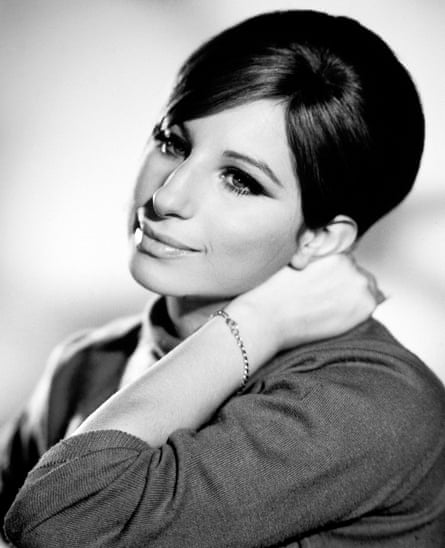
Streisand didn’t only go against the trends in music, she also challenged conventional notions of female beauty. Photograph: GAB Archive/Redferns
Streisand approached genre in a same audacious manner. She collaborated with musicians from Spain, Turkey, and Africa for her 1973 television spectacular, Barbra Streisand and Other Musical Instruments, helping to establish “world music” years before Paul Simon did. Clive Davis, the head of her company, advised her to start recording songs written by musicians like Lennon and McCartney and Paul Simon since at that point, new rock and pop had grown to be too popular to ignore.
Streisand acknowledges that the change was “very difficult”. After all, since the time she was raised, everything about songwriting had changed. On her 1969 album What About Today?, Streisand made her first effort at tackling such topics, which she later described as “unfortunate” at times. With the help of the dramatic sweep of the title tune, which was written by the Broadway-savvy composer Laura Nyro, her second attempt, Stoney End, fared far better. One of Streisand’s greatest singles came from it. Even though she referred to obtaining the hit as “a wonderful surprise,” she still had trouble understanding contemporary music. She responded, “Why do I have to? ” when her producer Richard Perry instructed her to sing on the beat. I’ve never done that. I spoke backward. I spoke out front. I took whatever action I could.
Despite this, she managed to amass even more successes in her “modern” phase than in her previous, wilder one, hitting a career high with the Barry Gibb-produced Guilty album in 1980. Worldwide, it sold over 12 million copies. She acknowledges, though, that she didn’t grasp Gibb’s lyrics in the song’s title. It wasn’t a lyric she was used to, she added, since it had consistency. “It was amorphous. I dislike abstract concepts.
When she released The Broadway Album in 1985, she did it because she felt more at ease going back to the classics. The singer claims that her record label didn’t even want to credit the Broadway idea toward her contract since they thought it was so uncommercial. Over 4 million copies were ultimately sold in the US alone. Even though the record was stunning and elegant, it diverged from the radicalism of her 1960s work. As a result, those early albums continue to be among her most daring.
Additionally, we can hear the development of her method in works going all the way back to the Bon Soir recording. Not that Streisand herself is able to describe this procedure in detail. She apologized, “So much of what I do is just something I hear in my head.” I have to share what I learn. I’m unable to describe how or why. It emerges from my throat or head before abruptly being at that place.
On November 4, Barbra Streisand at the Bon Soir will be released.
Thanks to Jim Farber at The Guardian whose reporting provided the original basis for this story.
Frank DiBernardo handles LNGFRM's Foodie and Miscellaneous writing tasks. He's always getting ideas from users, so don't be afraid to send an email to the editor.
Jodey (Zhihan) Yang’s approach to choreography begins with a discipline most artists skip: she arrives at a site before the movement does, listening to its soundscape, light, textures, and rhythms until the environment reveals what kind of work it can hold—and only then does she begin to choreograph with it rather than in it. Across site-specific performances, award-winning dance films, and public commissions at institutions like LACMA and New York Fashion Week, her practice offers a precise model for how movement, camera, and place can collaborate to make audiences see familiar environments as though for the first time.
Pushpika Fernando has built a career on a premise most large enterprises quietly accept as impossible: that the entrenched pricing power of dominant HR vendors isn’t a market reality to be managed, but a structural imbalance to be dismantled through analytical rigor, leverage creation, and disciplined commercial architecture. As a Global HR Services Category Manager, his work moves well beyond cost-cutting—redirecting the savings captured from renegotiated supplier economics into the employee benefits, learning platforms, and service accountability frameworks that define the workforce experience.