Television writers have come under fire for allegedly catering to the meme machine, as seen by lines like “I never joke about cake” from House of Dragon and most of the language from Succession. They are?
Princess Rhaenyra Targaryen makes the remark in the first scene of HBO’s Game of Thrones spinoff, House of the Dragon. “Inever joke about cake,” she says. With her head resting on her best friend’s knee, Rhaenyra delivers an apparently endearing phrase that contributes to the development of her persona as someone who doesn’t take herself too seriously. Additionally, the sentence is already prominently shown on fan-made merchandise since it is so easily quotable and hence T-shirtable.
But it sounded fake to several viewers. They were familiar with the pattern: show creates a scene that may become a meme; scene becomes a meme; rapid marketing; profit.
Zack Budryk, a writer for The Hill, tweeted, “Ugh, someone in the Game of Thrones prequel just said, “I never joke about cake,” so this is going to be part of the “mainly created with the epic gifs in mind” genre of shows.”
We have always shared and talked about TV shows and the funny lines afterward. Because Twitter and other social media are so extensively used, it seems sense that “relatable” words, events, or circumstances from television shows would be progressively turned into memes within its fans, shared widely, and ultimately transformed into other established jokes on the internet. However, considering that in our internet-saturated day, the online temperature can make or break a piece of media, it sometimes seems as if programs are being produced with the online response in mind.
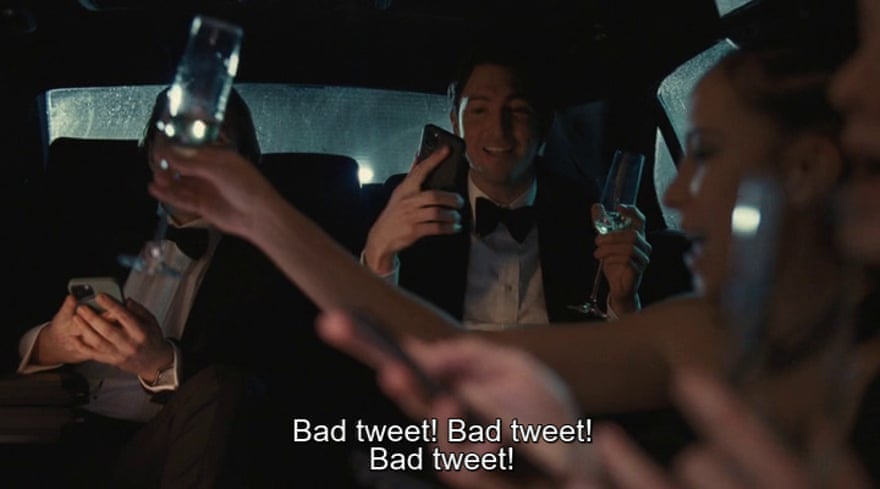
The ‘Bad tweet!’ scene in Succession. Photograph: HBO
Consider Succession, a well written program that really profited from its quotability. A few of the phrases seemed to have been written especially for the internet audience. One character counsels his PR, “I’d like my Twitter to be off the hook,” while another encourages them to “jump on the irono-cycle” in response to negative reviews of their girlfriend’s play in order to make it “a thing for the hipsters and the dipshits.” The politically patricidal Kendall Roy and his friends are shown in one episode from the third season reading through Twitter looking for unfavorable comments when they start to scream, “Bad tweet! Bad tweet!” Screenshots of the event were immediately circulated on Twitter by the throngs of watchers.
“Becoming a meme totally helps a show,” says James Capel, a screenwriter for series including ITV’s Cold Feet. “Seeing memes pop up online brings a whole new audience. It gets to the point where I have to watch a show because I get sick of not knowing what all the memes are about! It’s the same way we feel about having our shows make it on to Gogglebox: if it’s creating memorable moments that are quotable, funny, emotional, then we’re doing our job right.”
Some commenters argue that it’s not always a good idea to write a series with the intention of having its memes go viral. In addition, Budryk tweeted, “Tyrion would simply crop up to coin new Tyrionisms when they couldn’t really think of anything plot-relevant for him to do on the original [Game of Thrones]. This strategy may increase views, but it runs the danger of detracting from the plot and the characters’ well-developed personalities.
Some said, “Can’t wait for the coming era of screenwriting where people avoid saying anything at all memorable to avoid accusations of writing with gifs in mind,” while others disagreed.
These memorable quotes draw on a rich legacy of TV writing, in a way. Kelsey Kirvan, a writing professor at the Vancouver Film School, claims that writers have always tried to produce these “meme-able” moments. “Even before the invention of social media, sitcom writers would craft catchphrases for their characters that could easily be referenced by fans of the show, even if they didn’t always get the line quite right. From the early days of the media, “Lucy, you’ve got some explaining to do!” from I Love Lucy is an often misused example. If this is a trend, it has existed for a very long time.
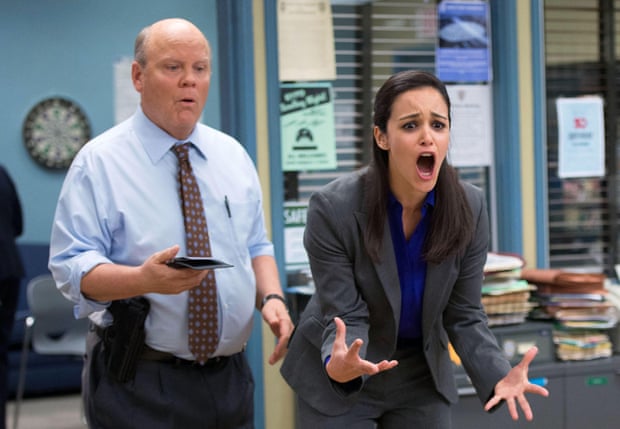
Dirk Blocker and Melissa Fumero in Brooklyn Nine-Nine. Photograph: Collection Christophel/Alamy
As a result, “no context” accounts like Out of Context House of the Dragon, No Context Succession, and No Context Brooklyn Nine-Nine have grown in popularity. These accounts publish screencaps from the series with amusing phrases, obviously taken out of context. A screencap of a figure saying or doing something absurd or relatable—the secret sauce of a meme—is the main component of a viral post from a No Context account. These sites are so well-liked that during the third season of the program, the official Sex Education Twitter account changed its name to a No Context page.
One such account, a No Context Succession page with more than 150,000 followers, is run by Anna. She believes that a scenario must meet a few criteria in order to qualify for inclusion in the Twitter meme canon.
“Nearly every line in Succession is worthy of being’memed,’ even if it’s just someone saying ‘fuck off’ or ‘bad tweet!’,” she claims. “Succession’s language is so specific, unique, and captivating.”
Writing Kendall as being obsessed with validation on Twitter is consistent with who he is as a character
Anna, who closely follows every episode, concurs that series like Succession may produce content expressly for their online audience, but only in the context of the characters and how they interact with the online community. “While it seems that the Succession authors are aware of current events on websites like Twitter, their writing doesn’t come off as as patronizing. Writing Kendall as having a Twitter validation obsession is both true to who he is as a character and serves as a humorous dig at anybody who spends too much time worrying about what the Extremely Online thinks.
However, Capel does not believe that we are moving in the direction of authors purposefully writing to appeal to readers online. According to him, jokes appear because television shows provide material that appeals to the individuals who create and circulate memes.
From a TV writer’s standpoint, he claims, “it hasn’t been given much thought.” “Of course, when we’re creating a show, we want to make hilarious, dramatic, or memorable moments, but most of the time, we’re thinking about it in terms of the larger plot. Memes and quotations are reactions, and each viewer has a unique response. Our main responsibility is to make it function. It’s not always our responsibility to predict their response.
Whether on purpose or not, TV shows and movies will inevitably make references to and fit into the digital world in which we live, where people’s friendships and jobs rely on their online connections. Nowadays, everything can become a meme, from politics to pets, so why should entertainment be any different, particularly because TV characters are often parodies of the exact individuals we know to be the worst online. Whether they make fun of cake or not, memes about our favorite TV series and films are here to stay.
Thanks to Jess Thomson at The Guardian whose reporting provided the original basis for this story.
-
Frank DiBernardo handles LNGFRM's Foodie and Miscellaneous writing tasks. He's always getting ideas from users, so don't be afraid to send an email to the editor.


