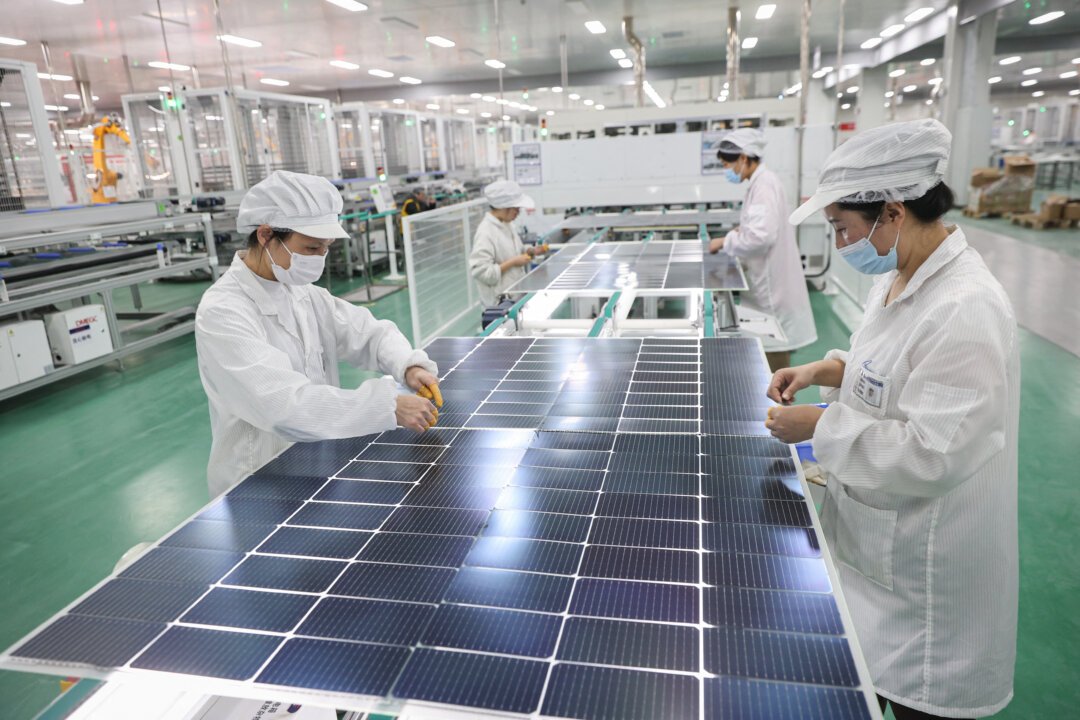
In a dramatic turn of events that could reshape the landscape of renewable energy investments in the United States, Chinese solar firms are confronting a potential exclusion from lucrative tax credits under the proposed One Big Beautiful Bill Act.
This legislative move, which has narrowly passed the House of Representatives, is part of a broader effort to recalibrate U.S. industrial policy and align with the political agenda spearheaded by former President Donald Trump.
The Inflation Reduction Act, heralded as a cornerstone of President Joe Biden’s climate strategy, opened the floodgates for international investment in the U.S. clean energy sector.
With its generous tax incentives, the IRA has been instrumental in propelling solar energy projects across American soil, particularly attracting significant capital from Chinese solar giants.
Since its enactment in 2022, Chinese companies have poured over a billion dollars into solar projects spanning states such as Ohio, Texas, Alabama, New Mexico, and Arizona.
However, the passage of the One Big Beautiful Bill Act threatens to upend these developments by excluding Chinese solar manufacturers from the tax benefits they have been leveraging.
The bill aims to curtail what critics see as a “double subsidy” scenario, where Chinese firms benefit from both U.S. tax breaks and subsidies from the Chinese government.
If the Senate does not alter the bill’s language, beginning in 2026, Chinese-made solar products will no longer qualify for 45Y credits, and by 2027, manufacturing cost write-offs under the 45x rule will cease.
This legislative pivot has sparked intense debate about its implications for the U.S. energy sector.
Abigail Ross Hopper, president of the Solar Energy Industries Association, expressed deep concerns over the potential fallout.
“These changes to the IRA are willfully ignorant of the fact that deploying solar is the only way the U.S. power grid can meet the demand of American consumers, businesses, and innovation,” Hopper asserted.
Her warnings paint a dire picture of higher electricity bills and potential blackouts across the nation if solar deployment slows.
The backdrop to this legislative shift is a growing tension between securing U.S. energy independence and navigating complex trade relations with foreign powers.
The proposed bill aligns with recent legislative trends, such as the CHIPS Act and the Bipartisan Infrastructure Bill, which have already set precedents by excluding “foreign entities of concern” from tax benefits.
This category includes companies from geopolitical adversaries like China, Russia, North Korea, and Iran, especially those with close governmental ties.
Yet, this move isn’t without its critics.
Detractors argue that the exclusion of Chinese firms could stifle competition and innovation in the U.S. solar market.
Chinese companies, such as Jinko Solar and LONGi Green Energy Technology, have been pivotal in driving down solar costs and accelerating technology adoption.
With their potential withdrawal, some fear a slowdown in renewable energy progress at a critical juncture for climate action.
The Senate’s response to this bill will be closely watched, as it could either cement or alter the trajectory set forth by the House.
There remains a possibility for adjustments in the timeline or the scope of exclusions, but the overarching message is clear: the U.S. is at a crossroads, weighing the immediate gains of foreign investment against long-term strategic autonomy in energy production.
As the legislative process unfolds, stakeholders from both the political and energy sectors will be keenly observing the Senate’s deliberations.
Should the bill be enacted as is, it could mark a significant shift in the U.S.-China dynamic within the renewable energy sector, heralding a new era of domestic-focused energy policies and potentially altering the global energy landscape.
In the meantime, Chinese solar firms find themselves in a precarious position, balancing optimism with uncertainty.
Their silence on future plans might soon break as they navigate the complexities of this potential legislative overhaul.
The coming months will be crucial in shaping not just the future of Chinese investments in American soil, but also the broader narrative of global cooperation in addressing climate change.
The world watches as the U.S. Senate holds the key to a pivotal decision that could redefine the renewable energy sector for years to come.
-
Frank DiBernardo handles LNGFRM's Foodie and Miscellaneous writing tasks. He's always getting ideas from users, so don't be afraid to send an email to the editor.