In the relentless digital currents that define our modern lives, a new kind of predatory wave is crashing ashore, insidious in its simplicity and devastating in its efficacy.
It’s not just the obvious phishing attempts or the blatant scam calls that threaten our digital sovereignty.
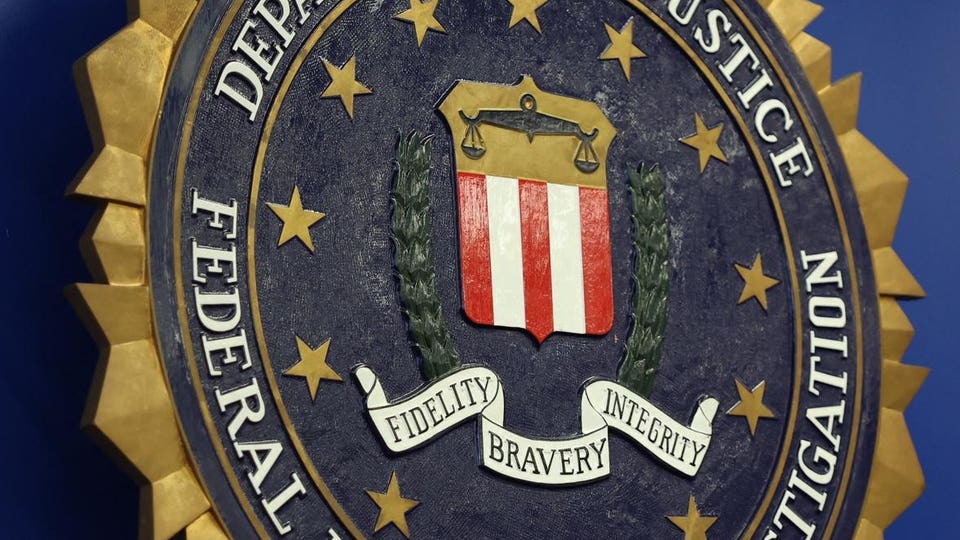
The latest warnings from the Federal Bureau of Investigation highlight a more nuanced, yet equally perilous, frontier: the seemingly innocuous text message.
We are, it seems, under siege not just from overt digital criminals, but from the very fabric of our interconnectedness being weaponized against us.
For years, the mantra has been clear: never reply to messages from unknown numbers, never click suspicious links.
This foundational advice remains critically important as “malicious actors” tirelessly send out billions of fraudulent texts and voice messages.
They masquerade as everything from undelivered packages to unpaid tolls or Amazon refunds.
Their objective is singular and ruthless: to pilfer your data, drain your bank accounts, and ultimately, steal your very identity.
But the FBI’s recent advisory casts a wider, more chilling net, revealing that even legitimate communications can become unwitting conduits for compromise.
The focus of this urgent warning zeroes in on a cornerstone of modern digital security: two-factor authentication (2FA).
The bureau rightly champions 2FA as an essential shield, urging everyone to enable it on every possible account and “never disable” it.
It’s a vital second lock on our digital doors, designed to prevent unauthorized entry even if a password is compromised.
Yet, herein lies the paradox: most 2FA codes arrive via text message.
And the fundamental flaw of a text message, unlike an authenticator app, is its inherent shareability.
The FBI’s stark directive: never, under any circumstances, share a 2FA code with anyone.
This might sound like basic common sense, a digital commandment so obvious it barely warrants repeating.
But the cunning of these “malicious actors” lies in their mastery of social engineering – the art of psychological manipulation.
They don’t just ask for your code; they trick you into giving it up.
Imagine this scenario, one that plays out with alarming frequency: a text message pops up, seemingly from a close friend or family member.
They claim their phone is broken, or they’ve lost service, and they’ve used your number to receive an important code.
They sound desperate, maybe even a little flustered.
The code arrives.
Your instinct, driven by a desire to help someone you know and trust, is to forward it.
In that fleeting moment of helpfulness, your digital life can unravel.
This is the insidious brilliance of the scam.
The attacker has likely already hijacked your friend’s messaging account, using it as a Trojan horse.
The request feels personal, urgent, and legitimate because it’s coming from a familiar source.
Jake Moore, a cybersecurity expert at ESET, echoes the FBI’s warning, emphasizing that “scammers often trick people into revealing them to bypass security checks and take control.”
Whether it’s a supposed bank representative, a trusted company, or even a family member, the message is unequivocal: “keep OTPs [one-time passcodes] to yourself.”
The efficacy of this scam lies in its exploitation of our empathy and trust, turning our very human connections into vulnerabilities.
The inherent susceptibility of SMS-based 2FA is a growing concern.
While it was a significant leap forward in security when first introduced, the digital landscape has evolved, and so too have the threats.
The ability to forward a text, the potential for SIM-swapping attacks, and the simple fact that a phone number can be spoofed, all contribute to its diminishing reliability as a standalone security measure.
The good news is that the digital security world is not static.
There are more robust alternatives available, and critically, major platforms are embracing them.
Authenticator apps, like Google Authenticator or Authy, generate time-sensitive codes directly on your device, making them far more secure than SMS.
These codes cannot be intercepted or forwarded in the same way, creating a much stronger barrier against intrusion.
Even better, the advent of passkeys represents the next frontier in digital authentication.
By securely linking your account to your physical device, passkeys make it virtually impossible for an attacker to steal and use a code, effectively rendering the traditional “code” obsolete.
This shift isn’t just theoretical; it’s already in motion.
Banks in Australia and the UAE are actively phasing out SMS 2FA codes, acknowledging their inherent weaknesses in the face of sophisticated cyber threats.
This move by financial institutions, the very custodians of our money, serves as a powerful testament to the urgency of adopting superior security protocols.
In an era where every tap, every message, and every click carries a potential risk, personal vigilance is paramount.
While the ultimate responsibility for digital security lies with the platforms and service providers, the immediate defense rests with the individual.
The FBI’s warning is a stark reminder that in the battle for our digital identities, trust can be a weapon wielded against us.
So, the next time a code arrives, whether it’s from a bank, an online service, or even your dearest friend, remember the golden rule: never share it.
Your digital life depends on it.
-
Frank DiBernardo handles LNGFRM's Foodie and Miscellaneous writing tasks. He's always getting ideas from users, so don't be afraid to send an email to the editor.