In an era where our smartphones have become indispensable, acting as the nexus of our personal and professional lives, the threat posed by cyber attackers is more pronounced than ever.
Whether it’s a casual scroll through social media, a critical business call, or even a moment of leisure, our phones are constantly at the center of our daily routines.
Given their central role, they are naturally prime targets for cybercriminals, especially those using advanced artificial intelligence (AI) techniques to perpetrate their attacks.
The realm of cyber threats has evolved dramatically, and today, one of the most insidious forms of attack comes in the form of AI-powered deepfakes.
These are not your run-of-the-mill phishing emails that have traditionally been the focus of online security warnings.
Deepfakes involve AI-generated videos or voice calls that impersonate someone you trust—be it a family member, a close friend, or a colleague.
These sophisticated impersonation scams are designed to exploit the trust you have in these individuals, often tricking you into making decisions that could have severe financial or personal repercussions.
Cody Barrow, a former U.S. government advisor and the current CEO of EclecticIQ, highlights the growing sophistication of these threats.
With AI technologies making it easier for criminals to create convincing deepfakes, Barrow advocates for a simple yet effective countermeasure: the use of a secret password.
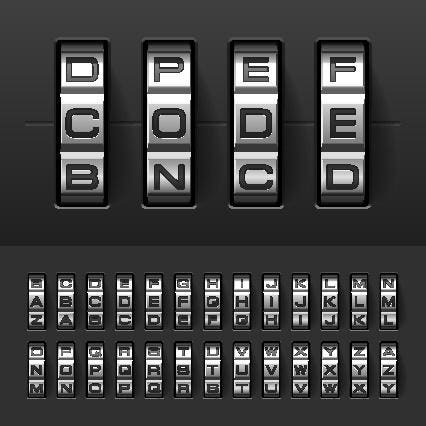
This is not a password you use for your online accounts, but rather a unique code shared only among your closest circles—family, friends, or colleagues.
The idea is that if you receive a suspicious call or video asking for personal favors or financial help, you can ask the caller to provide this secret code.
If they can’t, you’ll know it’s an AI-generated fraud, no matter how convincing it appears.
This advice echoes warnings from the FBI, which has also recommended that the public adopt similar strategies to safeguard against these kinds of scams.
The FBI’s guidance emphasizes the importance of staying vigilant, particularly during moments of high stress when attackers are most likely to strike.
By insisting on a secret code, you’re adding a layer of security that even the most advanced AI cannot breach—technology, after all, is not yet intuitive enough to guess a code that’s never been shared or stored digitally.
The sophistication of AI in creating deepfakes is both fascinating and frightening.
These AI systems can analyze vast amounts of data and mimic voices and appearances with astonishing accuracy.
The technology is advancing rapidly, and while there are legitimate uses for it in entertainment and other sectors, the potential for misuse is alarming.
It raises questions about the future of privacy, trust, and security in our increasingly digital world.
Yet, it is precisely this rapid advancement that mandates a proactive approach to personal security.
As deepfakes become harder to detect, the importance of having a robust verification system in place cannot be understated.
The secret code strategy is straightforward yet profound in its simplicity, offering a personalized barrier against this high-tech menace.
In a world where digital impersonation can be achieved with a few clicks, a shared secret could very well be your strongest defense.
This call to action is clear: create a secret code with your trusted contacts.
It’s a small step that requires minimal effort but offers significant peace of mind.
In an age where AI-driven attacks are becoming more common and more convincing, relying on traditional security measures is no longer sufficient.
We must adapt and innovate in our personal security practices to keep pace with the evolving threats.
In conclusion, while the threats from AI-driven deepfakes are real and growing, there are practical steps we can take to protect ourselves.
By adopting the advice of experts like Cody Barrow and the FBI, we can ensure our personal and professional lives remain secure against even the most sophisticated of cyber threats.
So, take a moment to gather your loved ones and discuss your shared secret code—because in today’s digital world, a little extra security goes a long way.
-
Frank DiBernardo handles LNGFRM's Foodie and Miscellaneous writing tasks. He's always getting ideas from users, so don't be afraid to send an email to the editor.