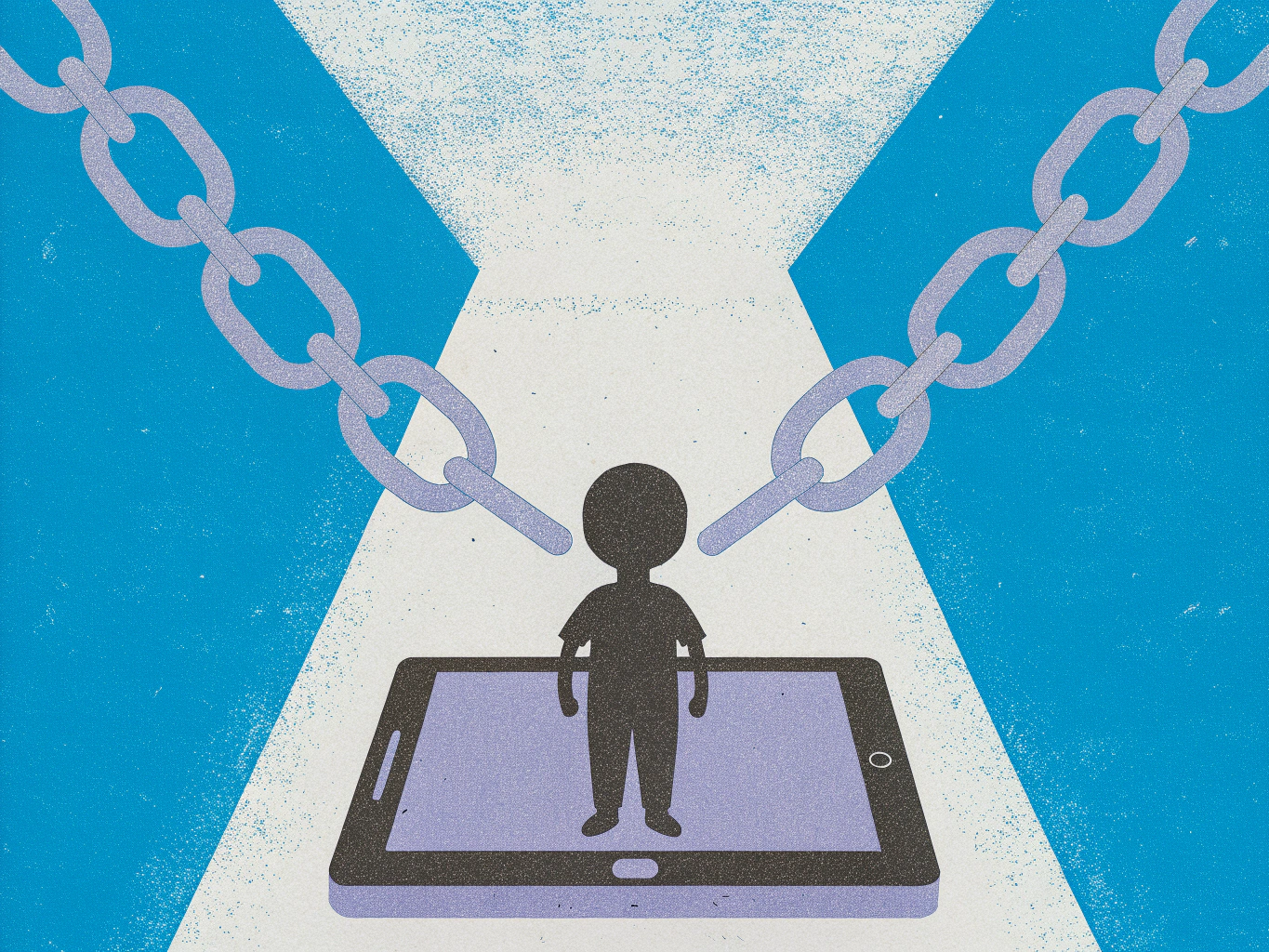
New York has long been a crucible for social and legal reform, and now the Empire State is drawing a new line in the digital sand, aiming to redefine the relationship between its youngest citizens and the ubiquitous, often insidious, platforms of social media.
The state’s Attorney General, Letitia James, has unveiled the proposed regulations for the landmark Stop Addictive Feeds Exploitation (SAFE) for Kids Act, a legislative gauntlet thrown down against the algorithmic architectures that have come to dominate the digital lives of millions.
This isn’t merely a tweak to terms and conditions; it’s a radical rethinking of the digital landscape for minors.
Under the SAFE for Kids Act, social media companies will be largely prohibited from serving up the hyper-personalized, algorithmically curated feeds that have become synonymous with apps like TikTok and Instagram to users under 18, unless explicit parental consent is obtained.
Absent that consent, the digital diet for young New Yorkers will be far simpler: a chronological stream of posts from accounts they already follow, devoid of the addictive, data-driven suggestions designed to keep eyes glued to screens.
Furthermore, the nocturnal tyranny of notifications will be curtailed, with a statewide ban on sending alerts to minors between midnight and 6 a.m., a small but significant step towards reclaiming sleep from the digital ether.
The proposed rules, currently open for a 60-day public comment period, delve into the nitty-gritty of implementation, particularly the thorny issues of age verification and parental consent.
Attorney General James’s office suggests a range of methods for age confirmation – from uploaded images to cross-referencing email or phone numbers – emphasizing that these methods must be effective while simultaneously safeguarding user data.
For minors who wish to re-engage with the algorithmic siren song or receive late-night pings, the onus will be on them to grant permission for companies to seek parental approval.
At the heart of this legislative push lies a profound and increasingly urgent concern: the escalating youth mental health crisis. Advocates for the SAFE Act, including Attorney General James herself, point to a growing body of evidence suggesting a direct correlation between the addictive features of social media and a surge in anxiety and depression among children and teenagers. For more insight, see Social Media and Youth Mental Health.
The argument is compelling: these curated feeds, meticulously constructed from user data, are not benign entertainment.
They are sophisticated psychological tools, engineered to maximize engagement, often at the expense of developing minds. The endless scroll, the dopamine hits of likes and shares, the fear of missing out – these are the unseen architects contributing to a generation struggling with unprecedented levels of emotional distress.
New York’s move is a clear declaration that the well-being of its youth outweighs the unchecked pursuit of engagement metrics. Yet, as with any foray into the complex intersection of technology, regulation, and individual liberty, the SAFE Act has not been met without resistance.
The burgeoning trend of online age verification laws across the U.S. – with more than 20 states having passed similar legislation, many now facing legal challenges – has drawn the ire of digital privacy and free speech advocates. For further reading on age verification laws, check Social media age verification laws in the United States.
Their concerns are legitimate: how can age verification be implemented without creating intrusive digital ID systems that could compromise data security or stifle anonymous expression?
The potential for overreach, for creating a digital dragnet that inadvertently ensnares adults or chills legitimate speech, remains a significant point of contention. Interestingly, the Attorney General’s office notes that social media giants themselves have begun to implement various forms of age assurance, a tacit acknowledgment of the growing societal pressure. Instagram and other platforms have, in recent months, rolled out their own age verification methods, demonstrating the technical and financial feasibility of such systems.
However, the New York AG’s office is unequivocal: voluntary adoption, while a positive step, has simply not achieved the level of protection mandated by the SAFE Act. This underscores a foundational tension: the market, left to its own devices, often prioritizes profit and engagement over the more abstract concept of public good, necessitating governmental intervention.
Once the 60-day public comment period concludes and the rules are finalized, social media companies will be granted a 180-day window to implement these sweeping changes.
This timeline sets the stage for a dramatic shift in how young people in New York interact with their digital worlds. It’s a bold experiment, a legislative endeavor that seeks to recalibrate the balance of power between powerful tech corporations and the vulnerable population of young users.
The ripple effects of New York’s initiative could extend far beyond its borders. Should the SAFE Act withstand inevitable legal challenges and prove effective, it could serve as a powerful blueprint for other states and even federal regulators grappling with the profound societal impact of social media.
It forces a crucial conversation: are we content to allow algorithms to dictate the emotional and psychological landscape of the next generation, or will we, as a society, assert our collective will to protect the fragile psyches navigating this increasingly complex digital wilderness?
New York is betting on the latter, and the world will be watching to see if this audacious experiment can truly make social media safe for kids.
-
Frank DiBernardo handles LNGFRM's Foodie and Miscellaneous writing tasks. He's always getting ideas from users, so don't be afraid to send an email to the editor.