As Nintendo gears up for the much-anticipated launch of the Switch 2 on June 5, an unexpected twist involving the physical game cards has left fans and industry insiders alike scratching their heads.
The recent leaks have unveiled a restrictive publishing framework that may explain why so many titles in the Switch 2’s launch lineup will not be available as traditional physical game cartridges.
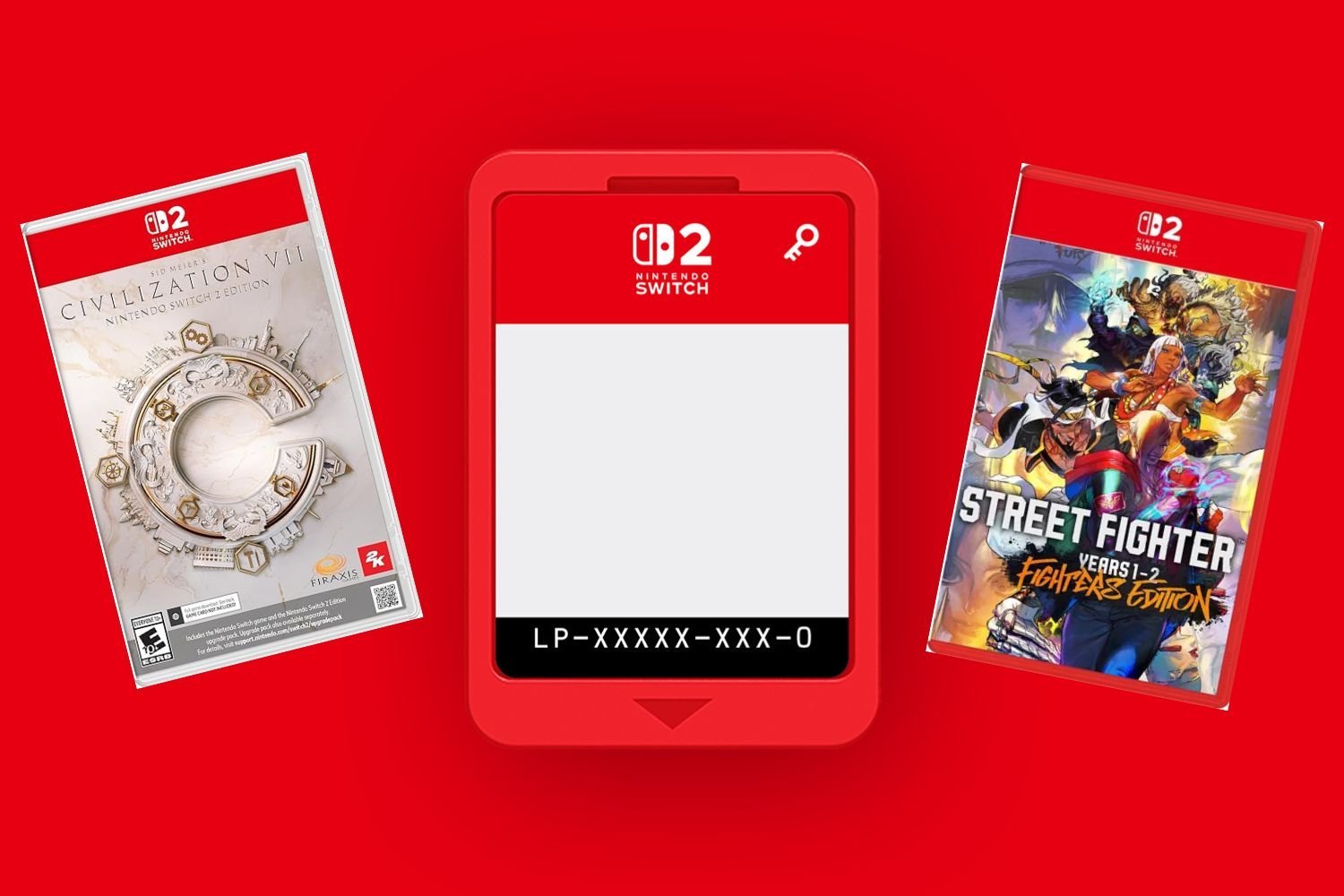
Instead, many of these anticipated games will come as digital downloads or game-key cards, sparking concerns over the future of physical media in gaming.
The leaks, stemming from a hack of Arc System Works, creators of the popular Guilty Gear Strive, indicate that Nintendo has drastically narrowed the options available to third-party developers.
According to the notorious Nintendo leaker Necrolipe, developers are constrained to just three formats for their games: digital download, “potion” (the internal codename for game-key cards), and 64 GB game cards.
The latter, with its higher storage capacity, comes with a price, potentially making it a less appealing option for many developers due to increased production costs.
This revelation dovetails with previous speculations from industry insiders, such as YouTuber Physical Paradise, who hinted that Nintendo was limiting publishing options for its partners.
As a result, the Switch 2’s lineup is heavily skewed towards digital and game-key card formats rather than traditional physical cartridges.
For many gamers, this move could be seen as a step back, especially given the nostalgia and collectibility associated with physical game cartridges.
The allure of having a tangible product—a beautifully designed game case and cartridge—has long been a staple of the gaming experience.
Now, with the dominance of digital formats, that experience is at risk of being diminished.
Among the eight confirmed launch titles for the Switch 2, games such as Yakuza 0, Hitman World of Assassination, and Street Fighter 6 will be available as digital downloads via game-key cards.
These cards, essentially empty shells, direct players to the Nintendo eShop for the actual game download.
Meanwhile, titles like Civilization VII and Split Fiction will only offer a download code in the box, bypassing even the game-key card format.
This trend raises significant issues for game preservationists, who worry about the long-term accessibility of digital-only games.
Past actions by Nintendo, such as shutting down the Nintendo 3DS eShop, have already highlighted the fragility of digital libraries.
Once servers are shut down, access to these games could be lost forever, making physical copies—when available—all the more valuable.
Additionally, the Switch 2’s limited internal storage of 256 GB further complicates matters.
With modern games often requiring substantial storage space, players may find themselves forced to expand their storage via microSD Express cards, adding another layer of expense to their gaming experience.
Interestingly, Nintendo’s first-party titles for the Switch 2 will continue to be available on physical game cards, with some, like the much-hyped Mario Kart World, requiring less than 24 GB of storage.
This suggests that Nintendo has reserved certain storage options for its proprietary games, a move that could be perceived as giving first-party titles a preferential status.
From a commercial perspective, the shift to digital formats has not deterred pre-launch sales.
Walmart’s best-selling list for Switch 2 includes both first-party juggernauts like Mario Kart World and third-party hits like Street Fighter 6 and Cyberpunk 2077.
However, it’s essential for consumers to understand that owning a game card does not equate to owning the game itself.
Nintendo’s end-user agreement clearly states that all software is licensed, meaning access can be revoked at their discretion.
As the gaming world eagerly awaits the Switch 2’s debut, these developments highlight the evolving landscape of game distribution and ownership.
While digital downloads offer convenience and immediacy, they also pose challenges for collectors and preservationists.
As Nintendo navigates this digital frontier, the balance between innovation and tradition will be crucial in shaping the future of gaming.
-
Frank DiBernardo handles LNGFRM's Foodie and Miscellaneous writing tasks. He's always getting ideas from users, so don't be afraid to send an email to the editor.