In a world where technology reigns supreme, the geopolitical chessboard is increasingly being influenced by the intricate dance of silicon chips and artificial intelligence.
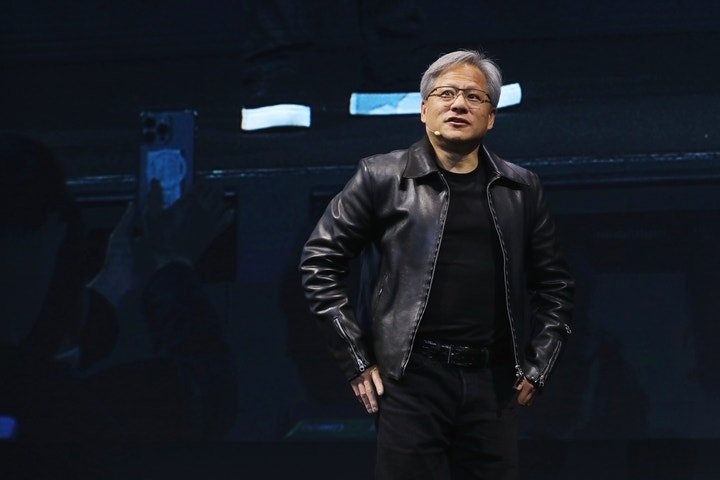
At the forefront of this technological ballet is Nvidia Corporation, a titan in the semiconductor industry, whose CEO Jensen Huang recently sounded the alarm to U.S. lawmakers regarding a potential unintended consequence of their recent policies.
In a series of closed-door meetings with the House Foreign Affairs Committee, Huang expressed concerns that U.S. export restrictions on AI chips might inadvertently bolster China’s Huawei Technologies, allowing it to gain a significant competitive edge in the global AI race.
Huang’s meeting with lawmakers highlights a critical tension between national security and economic growth.
The U.S. government’s measures to limit China’s access to advanced AI chips are intended to stifle the technological advancement of potential rivals.
However, the Nvidia chief warned that these restrictions might be backfiring, potentially fostering a new powerhouse in the form of Huawei.
This comes at a time when Huawei is reported to be ramping up its own AI chip production, ready to fill the void left by Nvidia’s constrained presence in the Chinese market.
The crux of Huang’s argument lies in the potential rise of a market demand for Huawei chips.
If AI models such as DeepSeek R1, or other future open-source Chinese models, are trained to be highly optimized on Huawei’s hardware, it could create a ripple effect, establishing Huawei chips as a global standard.
This scenario could tilt the technological balance, allowing China to leapfrog in the AI domain, a prospect that surely sends shivers down the spines of American policymakers.
Nvidia, a company synonymous with innovation and cutting-edge technology, finds itself in a complex predicament.
The U.S. decision to bar Nvidia from selling its H20 chip, tailored specifically for the Chinese market, has already impacted the company’s financial outlook, with an expected $5.5 billion hit due to inventory and purchase commitments tied to the chip.
While Nvidia’s market presence in China dwindles, Huawei seems poised to capitalize on the opportunity, preparing for mass shipments of its AI chips to meet surging demand.
In a statement following the committee meeting, Nvidia spokesperson John Rizzo underscored the strategic importance of AI as national infrastructure and emphasized the need for investment in U.S. manufacturing.
Rizzo reiterated Nvidia’s support for government efforts to promote American technology globally, yet the reality remains that the U.S. must navigate this delicate situation with utmost care and foresight.
Amidst these geopolitical tensions, Nvidia has not hesitated to call out other American firms, such as Amazon-backed Anthropic, urging them to channel their energies towards innovation rather than making exaggerated claims about AI chip export restrictions.
This call to action by Nvidia suggests a broader narrative—one where American tech companies must unite and innovate to maintain their edge in an ever-competitive global landscape.
Despite these challenges, Nvidia’s stock performance remains a beacon of resilience.
While shares have experienced a 19.30% decline year-to-date, they have surged by 34.41% over the past 12 months, a testament to the company’s robust growth trajectory.
As investors continue to keep a close eye on Nvidia’s stock, the company’s strategic decisions and its ability to adapt to geopolitical shifts will be crucial in determining its future success.
In the grand tapestry of global technology, Nvidia’s predicament with Huawei and U.S. export restrictions serves as a poignant reminder of the intricate interplay between policy and innovation.
As the world marches towards an AI-driven future, the stakes have never been higher.
The decisions made today by tech giants and governments alike will shape the technological landscape of tomorrow, defining not just market leaders, but also the geopolitical power dynamics of the 21st century.
-
Frank DiBernardo handles LNGFRM's Foodie and Miscellaneous writing tasks. He's always getting ideas from users, so don't be afraid to send an email to the editor.