In the latest twist of geopolitical chess, the potential thawing of relations between the United States and Russia could have far-reaching consequences for the corporate world.
As President Trump engages in discussions with Moscow, the possibility of Western companies retracing their steps back into the Russian market hangs in the balance.
It’s a tantalizing prospect, but one fraught with complexities.
The mass corporate exodus following Russia’s invasion of Ukraine in 2022 was not merely a knee-jerk reaction; it was a decisive stand against aggression.
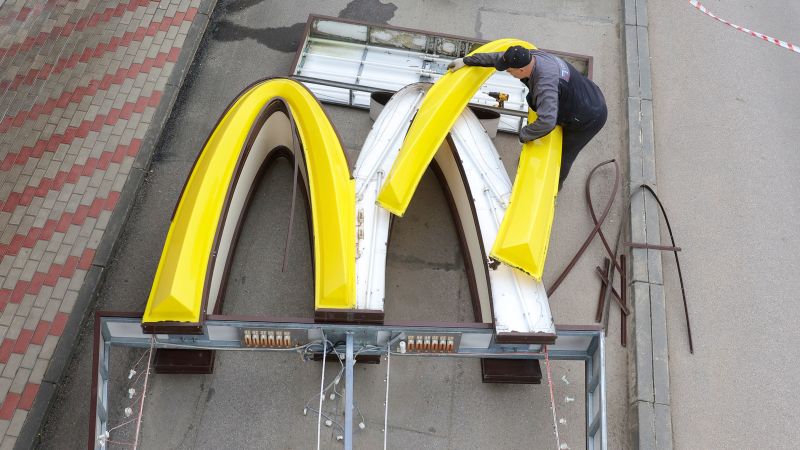
Companies like McDonald’s, Mercedes-Benz, and Renault waved goodbye to a lucrative market, leaving behind a $107 billion crater of lost revenue.
The irony? Kirill Dmitriev of the Russian Direct Investment Fund puts the US companies’ losses at a staggering $324 billion.
The numbers are dizzying, but the departure was more than just a financial calculation—it was a moral stance.
Yet, here we are, on the precipice of potential re-engagement.
Some companies, like Procter & Gamble and PepsiCo, never fully left, citing humanitarian grounds.
Their presence ensured Russian consumers continued access to essential goods.
But for the rest, the road back to Russia, should sanctions ease, is not without its potholes.
The most likely trailblazers in this potential reintegration are those operating outside the periphery of sanctions—retailers, food producers, and the like.
The energy and finance sectors remain the forbidden fruit, tainted by their dual civilian-military applications.
Visa and Mastercard may soon flick the switch back on for payment services, but skepticism prevails as both companies hold firm on their suspensions.
The real dilemma lies in the reputational quagmire companies face.
Returning to a market that trampled on international norms could erode the moral high ground they once claimed.
The narrative of condemning Russian aggression would ring hollow if the price is a slice of Ukrainian territory.
Moreover, the Russian market isn’t the same beast it was three years ago.
Western brands like Starbucks and Ikea have been ejected, replaced by domestic doppelgängers.
The more than 800 McDonald’s outlets now serve under the banner of “Vkusno & tochka,” translating to “Tasty & that’s it.”
Chinese car manufacturers have seized the opportunity, expanding their market share from a mere 10% to over half of the Russian auto industry.
It’s a transformation that might not easily reverse, especially given Russia’s burgeoning rapport with Beijing.
For Western companies contemplating a comeback, the question isn’t just one of feasibility but of necessity.
Moscow’s retaliatory grip on foreign assets has tightened, with asset seizures morphing into a new norm.
The allure of the Russian market is undeniable, but the risks are equally stark.
Re-entering Russia may not just be a business decision; it could well be a gamble with corporate integrity.
In the end, the potential reshuffling of the corporate landscape hinges on more than just diplomatic negotiations.
It’s a question of values, of navigating the murky waters of geopolitics without losing one’s compass.
As the world watches the unfolding drama, one thing is clear: the stakes have never been higher.
-
Frank DiBernardo handles LNGFRM's Foodie and Miscellaneous writing tasks. He's always getting ideas from users, so don't be afraid to send an email to the editor.