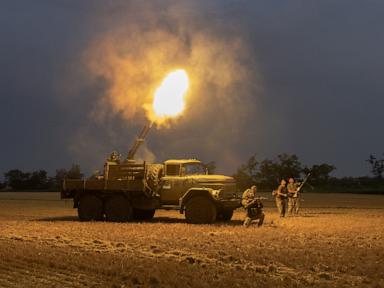
The rumble of distant explosions has become the grim soundtrack to life across Ukraine, a nightly lullaby of terror.
This terror drives millions into the unforgiving embrace of bomb shelters and metro stations.
More than three years into Russia’s full-scale invasion, this ritual of retreat is not just ongoing; it is intensifying.
It is pushing Ukrainians deeper into a crucible of aerial torment.
The summer of 2024 has ushered in a new, chilling benchmark for this relentless campaign, with Moscow unleashing an unprecedented deluge of drones and missiles.
Through July, the Ukrainian air force recorded a staggering 6,443 drones and missiles launched into the country.
This isn’t just a number; it is the highest monthly total since the war began.
It represents a stark 13% increase over June’s already elevated figures.
It speaks to a chilling escalation, a deliberate amplification of a strategy designed to grind down Ukrainian resolve and infrastructure, one inexpensive, buzzing projectile at a time.
Since the first bombardments shattered the pre-dawn quiet of February 24, 2022, the attacks have never truly ceased.
But the nature of the threat has evolved.
The Iranian-designed Shahed strike drone, enthusiastically adopted by Russia and rebranded as the Geran, has become the undisputed workhorse of Moscow’s nightly harassment.
These “flying mopeds,” so named for their distinctive, almost agricultural drone, are more than mere weapons.
They are a pervasive symbol of the Russian threat, a constant reminder that no corner of Ukraine is truly safe.
Their terror is palpable, their lethality undeniable.
June, a month that preceded this latest surge, already saw the highest level of Ukrainian civilian casualties in over three years, with 232 lives extinguished and 1,343 people injured. For more information on civilian casualties, see Human Rights Watch.
Each siren wail, each overhead buzz, carries with it the potential for such devastation.
The statistical reality of this aerial onslaught paints a grim picture.
July witnessed 6,245 attack and decoy drones – an average of 201 per day – alongside 198 missiles.
While Ukraine’s air defense maintains a remarkable interception rate, downing approximately 89% of drones and 61% of missiles in July, the sheer volume ensures that a significant number find their mark, leaving a trail of destruction and despair.
This represents a marked increase from previous months; May saw an average of 124 drones daily, climbing to 181 in June, before surging to July’s 201.
“Right now, Ukraine sees around 300 to 400 drones attacking civilian targets every day — these types of numbers were unheard of in 2023 or 2024,” noted Yuriy Boyechko, founder and CEO of the Hope for Ukraine charity, underscoring the unprecedented nature of the current threat.
Moscow’s resolve shows no sign of wavering.
Indeed, Russian state media proudly showcases the nation’s burgeoning drone production capabilities. For more details on Russian drone production, see Reuters.
Reports from channels like Zvezda offer glimpses into facilities like the Geran factory in Alabuga, Republic of Tatarstan, where dozens of these “flying mopeds” are reportedly churned out daily.
The design of these drones is not static; it is a testament to an adaptive, brutal ingenuity.
Early models were light gray, slow, and low-flying.
Newer variants are black, coated with radar-evading materials, armed with thermobaric warheads, armored, jet-powered, and even reportedly incorporate AI targeting systems.
This technological creep means Ukraine’s defenders are fighting not just a war of attrition, but a constant, evolving technological arms race.
The future outlook is even more unsettling.
Warnings from the Institute for the Study of War think tank and German Maj. Gen. Christian Freuding suggest that Russian forces could soon be capable of launching 1,000 to 2,000 drones per day.
Pasi Paroinen, an OSINT analyst at the Finland-based Black Bird Group, echoes this concern, believing 1,000 drones per night is a feasible reality.
This grim calculus is driven by the cost-effectiveness of these weapons.
Domestically produced Gerans are estimated to cost between $10,000 and $50,000 each.
While Western sanctions aim to hobble Russia’s military procurement, components from Western companies are still routinely found in downed Gerans, a frustrating reality for Kyiv officials.
This mix of strike and decoy drones presents a “very nasty” problem for Ukraine’s thinly-stretched air defenses. For more on air defense challenges, see United24 Media.
As Paroinen explains, while Ukraine’s interception rates are commendable, the continuous barrages tie up vital manpower, forcing mobile anti-aircraft groups to constantly crisscross the countryside.
“The general consensus among analysts is that this is going to be a major problem,” Paroinen asserted, highlighting the enduring nature of this threat. This threat will persist even if the war ends, allowing Russia to stockpile these weapons in “pretty intense numbers,” with implications for the rest of Europe.
Even the occasional interventions from figures like former President Donald Trump, who has expressed his disappointment in Vladimir Putin’s continued escalation, calling him someone who “talks nice and then bombs everybody,” appear to have little impact on the ground reality.
Ukraine, for its part, has not been idle.
It has actively used its own fast-evolving drone arsenal to target Russian drone production facilities deep inside Russia.
Moscow’s Defense Ministry reported downing over 3,000 Ukrainian drones in July alone, an average of 97 per day.
Yet, these efforts, while significant, offer little apparent respite.
The sheer distance of these production complexes from the front lines, coupled with their robust industrial nature, renders them largely impervious to Ukraine’s current capabilities.
“To take down a big industrial complex really takes a lot more firepower and explosives than they can deliver,” Paroinen explained, adding that any damage sustained can usually be repaired with alarming speed.
As the summer wears on, the skies over Ukraine remain a battleground, a canvas for Russia’s escalating aerial terror campaign.
The numbers speak volumes, but the human cost, measured in sleepless nights, shattered homes, and rising casualties, tells an even more poignant story of a nation enduring an ever-intensifying storm.
-
Frank DiBernardo handles LNGFRM's Foodie and Miscellaneous writing tasks. He's always getting ideas from users, so don't be afraid to send an email to the editor.