The digital frontier, once a distant horizon, is now very much here, reshaping the contours of American life and work.
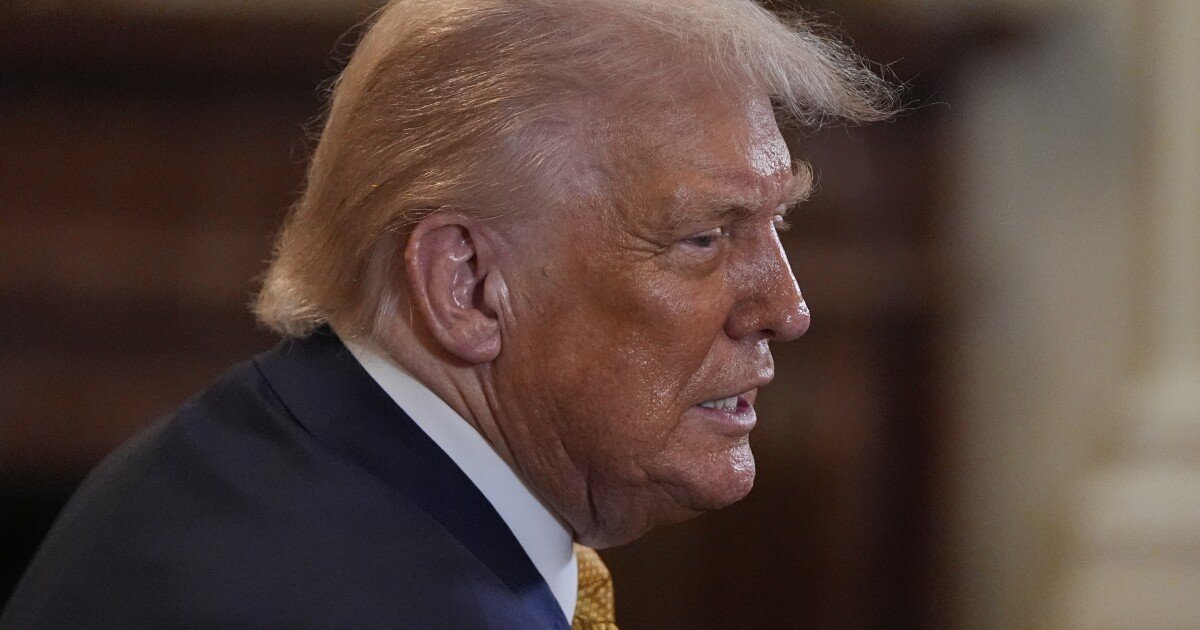
Against this backdrop, President Donald Trump is poised to make a significant artificial intelligence-related announcement, a prelude to a broader speech that promises to unveil his administration’s vision for AI in the United States.
This impending reveal comes at a moment of palpable public unease, as the promise of technological advancement collides head-on with profound anxieties about economic stability and the very nature of future employment.
Indeed, a recent Pew Research survey laid bare the nation’s conflicted soul regarding AI in the workplace.
A striking 52% of Americans confessed to being worried, while another 33% admitted to feeling overwhelmed by the technology’s advance.
Only a cautious 29% expressed excitement, a stark illustration of the trepidation that now shadows the discourse around innovation.
This isn’t just about abstract technological progress; it’s about livelihoods, about the bedrock of the American dream, and the very real fear that machines might soon do what humans once did, only faster and cheaper.
For a leader who once candidly admitted that AI might not be his “specialty,” President Trump’s recent embrace of the topic marks a notable pivot.
What was once a peripheral concern seems to have ascended to the top tier of his policy agenda, with increased frequency in his public remarks and a flurry of new executive orders.
These directives, as reported by NextGov, offer a clearer glimpse into the administration’s evolving priorities.
On one hand, there’s a pragmatic push to streamline the permitting process for new data centers, a move designed to grease the wheels for the massive computational infrastructure that AI demands.
This signals an intent to foster growth, to ensure that the U.S. remains a fertile ground for technological development, ostensibly creating the conditions for a new wave of digital prosperity.
Yet, intertwined with this push for infrastructure is a more ideologically charged directive: a crackdown on what the administration describes as potential “woke” bias generated by emerging AI tools.
This particular emphasis introduces a cultural battleground into the heart of technological policy, suggesting that even algorithms are not immune to political scrutiny.
It reflects a broader conservative concern about perceived ideological leanings within tech development, framing AI not just as an economic engine, but as a potential vector for narratives or values deemed undesirable.
This approach, while distinct, adds a layer of complexity to the administration’s AI strategy, signaling that the future of technology will be shaped not just by economic imperatives, but also by cultural and political considerations.
But as Washington grapples with the nuances of AI policy, a chorus of economists and former officials warns that the current pace of legislative action might be woefully inadequate.
Bharat Ramamurti, who served as Deputy Director of the National Economic Council under the Biden administration and now writes extensively on AI’s economic footprint, offers a sobering assessment.
“I don’t think they are doing enough when it comes to A.I. on people’s jobs,” Ramamurti stated, his words echoing the anxieties felt by millions.
He painted a stark picture of potential displacement, citing estimates that suggest AI could replace a staggering 10, 12, or even 15 million American jobs within the next decade alone.
Such a seismic shift would not merely be an economic tremor; it would be a societal earthquake, demanding far more than incremental policy adjustments.
Against this backdrop of looming job losses, the Trump administration has been keen to highlight its own proactive measures.
Earlier this month, a significant announcement heralded the launch of a new AI hub in Pennsylvania, a strategic move positioned as a catalyst for a “wave of AI-related jobs.”
This initiative, along with a promised “big, beautiful bill” that includes grants and tax incentives, aims to encourage private sector investment in AI development while simultaneously fostering job creation.
The administration’s narrative is one of proactive investment, of transforming potential threats into opportunities, and of ensuring America leads the global AI race.
The challenge, however, lies in reconciling these two vastly different visions of the future.
Can the promise of new AI jobs truly offset the potential displacement of millions?
Will tax incentives and data center permits be enough to navigate a technological revolution that threatens to upend entire sectors of the economy?
The answers remain elusive, shrouded in the complexities of an accelerating digital age.
What is clear is that the upcoming announcements from the White House are not merely about technology; they are about the future of work, the resilience of the American workforce, and the very fabric of society in an era where intelligence, both artificial and human, is rapidly redefining what is possible.
The nation watches, with a mixture of hope, trepidation, and a deep-seated desire to understand what this brave new world will mean for them.
-
Frank DiBernardo handles LNGFRM's Foodie and Miscellaneous writing tasks. He's always getting ideas from users, so don't be afraid to send an email to the editor.