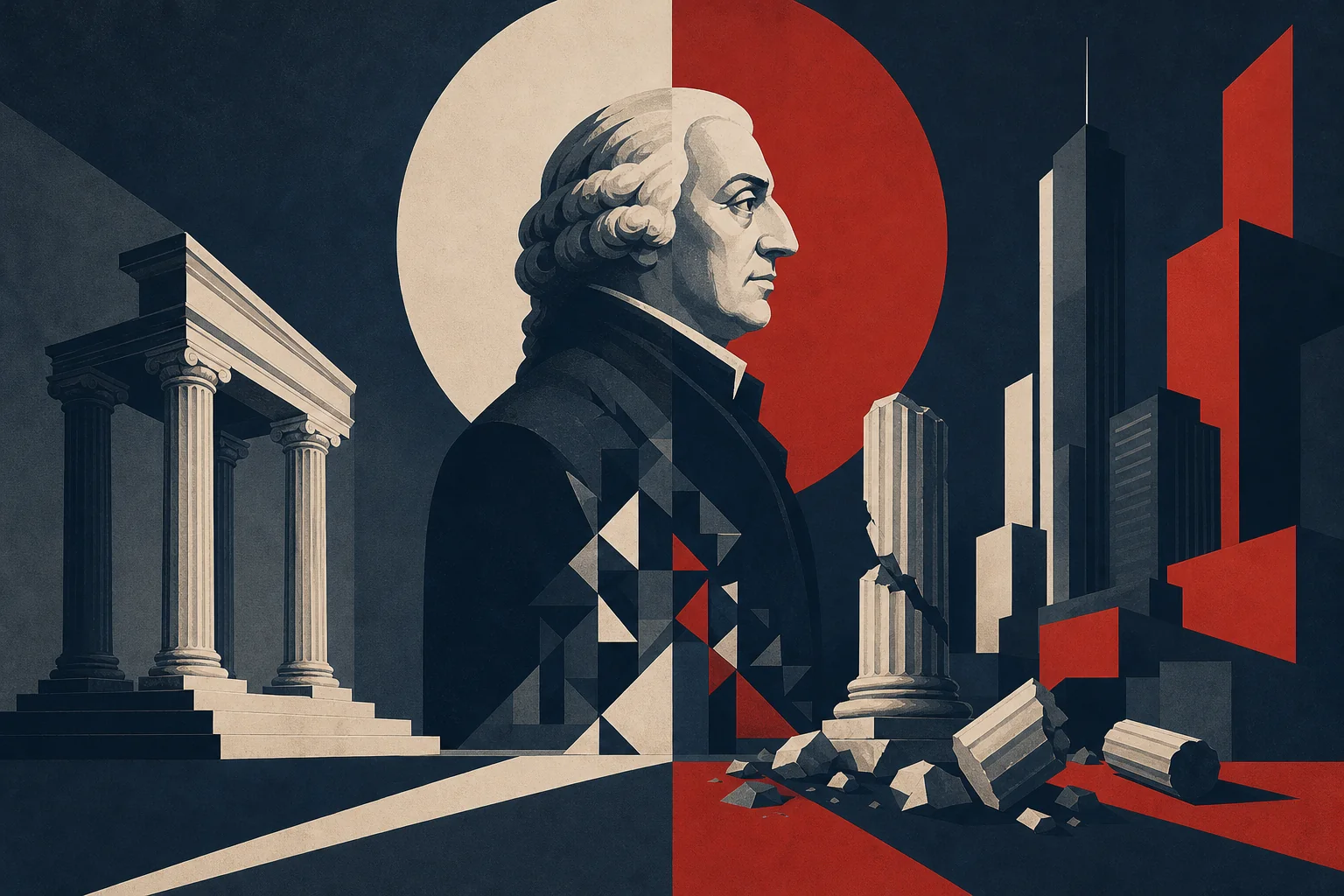
In an age where the mere mention of artificial intelligence often conjures images of sleek, minimalist startups or clandestine Silicon Valley labs, a more profound transformation is quietly unfolding within the hallowed halls of companies built not on venture capital, but on centuries of accumulated wisdom.
Consider Unilever, a consumer goods titan with a lineage stretching back to the Victorian era, whose products touch the lives of 3.4 billion people daily.
This isn’t a story of a nascent firm embracing the new; it’s a testament to how deep-rooted legacy, when paired with a bold willingness to learn, can unlock the true, transformative power of AI.
For over a hundred years, Unilever’s engine of progress has been its Research and Development arm.
From the pioneering days of soap and margarine to today’s complex challenges in sustainable packaging and personalized skincare, science has been the bedrock.
Now, that very engine is being re-engineered, not by a wrench, but by algorithms.
AI, for a company sitting on a century’s worth of scientific data, is not merely a tool; it’s a fundamental shift in thinking, a paradigm-altering lens through which to view an unparalleled archive of human ingenuity.
The prevailing narrative often champions agility and disruption, implying that only the nimble can adapt.
Yet, Unilever’s journey offers a compelling counter-narrative: the real opportunity for legacy companies lies not in discarding their past, but in meticulously mining their institutional memory.
Decades of research, countless product development cycles, and an ocean of consumer insights often sit untapped, siloed across departments, or buried deep within physical archives.
The challenge, and indeed the triumph, is in extracting this latent value.
This requires a unique blend: profound domain expertise, rigorous data stewardship, and a corporate culture that values continuous learning as much as it reveres its own history.
When these elements coalesce, AI becomes less an external imposition and more an internal catalyst, revealing the full, untapped potential of what has come before.
Unilever’s evolution has always been a reflection of societal shifts.
From developing products for mid-century kitchens adorned with novel materials like Formica to responding to contemporary demands for skin microbiome support and eco-friendly cleaning solutions, their scientific endeavors have consistently been in service of real life.
The questions posed today are exponentially more complex than those of yesteryear.
How does one clean a home without disrupting its microbial ecosystem?
How can formulations be personalized for diverse skin types and environmental stressors, while remaining sustainable?
These are not simple inquiries, and they demand a new frontier of scientific inquiry.
This is precisely where AI steps onto the stage.
With machine learning, patterns that would elude human researchers for generations can be unearthed in moments.
Unilever is leveraging AI to decode the intricate interactions between microbes and products, to understand how skin reacts to environmental pressures, and to precisely tailor formulations for specific needs across the globe.
But what truly distinguishes their approach is a profound understanding that they are not starting from a blank slate.
While many newer companies are laboriously building their foundational datasets, Unilever stands upon a meticulously constructed edifice of a century’s worth of R&D.
Every formulation, every trial, every consumer insight from the past hundred years is a data point, providing context that is incredibly rare and invaluable to AI models.
This deep historical context allows Unilever scientists to unlock proprietary knowledge that was once fragmented or inaccessible.
A century of skincare expertise, for instance, can now be structured, searched, and applied with unprecedented speed.
AI connects the dots across decades of research, accelerating the discovery of new materials and simultaneously optimizing existing formulations.
The traditional, sequential pipeline of research, discovery, design, and refinement is collapsing into a single, integrated process.
This enables Unilever to respond to evolving consumer needs with unparalleled speed and precision.
Crucially, this is not a narrative of human obsolescence.
It is, instead, a powerful endorsement of human augmentation.
Agentic AI systems are not replacing scientists; they are empowering them, transforming them into “super-scientists.”
By providing the capacity to ask better questions, explore a multitude of possibilities, and extract insights from vast datasets, AI amplifies human creativity and empathy.
It frees scientists from the drudgery of manual data analysis, allowing them to dedicate their unique talents to what they do best: imagining, experimenting, and designing products that genuinely meet human needs.
The implications extend far beyond Unilever’s corporate walls.
This case study illustrates what is truly possible when legacy companies embrace continuous learning with open arms.
In an era where AI promises to reshape every industry, the winners will not simply be the newest or the most vocal.
They will be the organizations with the wisdom to adapt, to learn, and to build upon the foundations they have painstakingly laid.
AI rewards data maturity, it rewards an insatiable curiosity, and it rewards those who perceive technology not as a threat to cherished traditions, but as a dynamic pathway to reimagine them.
Unilever’s journey is a powerful reminder that staying relevant for a century demands a “learn-it-all” mindset, not a “know-it-all” one.
AI, in this context, becomes a tool for curiosity at scale.
The next century of innovation, they believe, will be driven by a symbiotic partnership between human talent and agentic AI—hybrid systems that elevate creativity, empathy, and scientific intuition.
This is more than just a story about technology; it is a profound narrative about enduring legacy, relentless learning, and the timeless power of science to shape our everyday lives, now brilliantly amplified by the intelligence of machines.
-
Frank DiBernardo handles LNGFRM's Foodie and Miscellaneous writing tasks. He's always getting ideas from users, so don't be afraid to send an email to the editor.