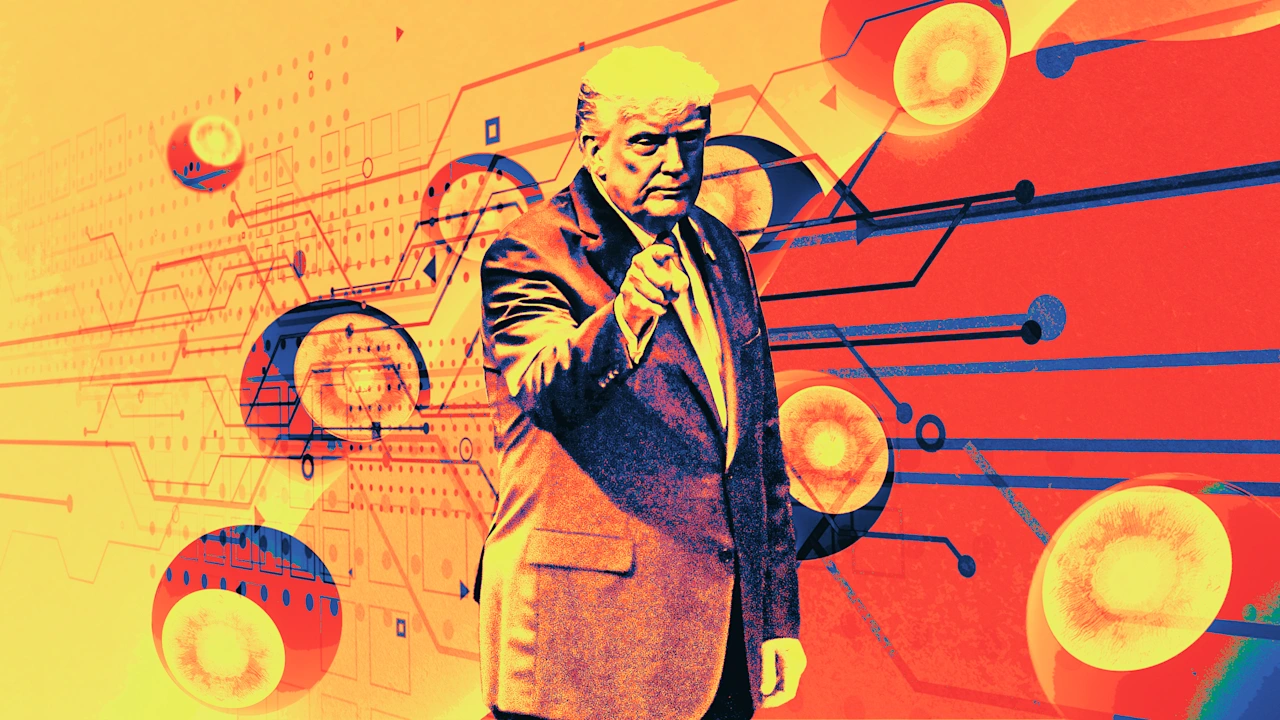
The hallowed halls of the United Nations General Assembly this week became the unlikely arena for a profound ideological clash, one that will undoubtedly shape the future of artificial intelligence.
As the world grapples with a technology accelerating at breathtaking speed, a near-unanimous international consensus emerged for a unified global governance framework – a consensus, critically, that did not include the United States.
Washington’s emphatic rejection of centralized international control has set it on a divergent path from virtually every other nation, including its primary geopolitical rival, China, underscoring a deep philosophical divide over how humanity should manage its most transformative creation.
The Security Council debate, a landmark event, marked the first occasion for all 193 UN member states to formally weigh in on AI governance.
This dialogue unfolded against the backdrop of an August 2025 UN resolution, unanimously endorsed, which had already implored the global body to lay the groundwork for comprehensive AI oversight and urged governments to collaborate in safeguarding human rights in the wake of widespread AI adoption.
This resolution was born from a growing sense of urgency, powerfully articulated by UN Secretary-General António Guterres.
Guterres minced no words, warning that AI is no longer a distant horizon but a “real and present risk to humanity.”
He painted a stark picture of a world where AI-fabricated audio and video threaten information integrity, fuel polarization, and could potentially trigger diplomatic crises.
His chilling summation – “humanity’s fate cannot be left to an algorithm” – resonated deeply across the vast majority of member states, solidifying the call for collective action.
Yet, into this chorus of caution and calls for global cooperation stepped Michael Kratsios, the director of the U.S. Office of Science and Technology Policy, with a strikingly dissonant message.
Washington, Kratsios declared, “totally” rejected all efforts by international organizations to “assert centralized control and global governance of AI.”
This was more than a mere quibble over regulatory details; it was a fundamental repudiation of the very premise of a global, bureaucratic approach to managing a technology widely considered to be of potentially existential consequence.
The American stance is rooted in a deeply ingrained belief that the “responsible diffusion of AI” is the genuine pathway to a “flourishing future.”
This vision, as articulated by Kratsios, promises increased productivity, empowered individuals, and revolutionary scientific advancements.
He posited that progress is best fostered not through “bureaucratic management,” but rather through “the freedom and duty of citizens, the prudence and cooperation of statesmen, and the independence and sovereignty of nations.”
This perspective champions a decentralized, nation-centric model, where individual countries, driven by their own values and innovative spirit, develop and deploy AI within their borders, presumably under their own distinct regulatory frameworks.
It is a testament to the enduring American ideal of innovation thriving best when unburdened by perceived external constraints – a philosophy that has historically propelled technological leaps, but one that now begs crucial questions about global accountability and shared responsibility.
This independent streak was further emphasized by President Donald Trump, who, a day prior, informed the General Assembly that the U.S. was already diligently developing its own robust safety measures.
He proudly announced that the White House is “pioneering an AI verification system that everyone can trust,” specifically tailored to enforce the Biological Weapons Convention.
While Trump acknowledged a hope for the UN to play a “constructive role,” his remarks firmly positioned the U.S. as a leader in self-governance, rather than an equal participant in a globally orchestrated effort. The implication is clear: Washington believes it can and should chart its own course, perhaps setting an example, but certainly not submitting to a collective mandate.
The starkness of the U.S. position is amplified by the direct contrast with other major global powers, most notably China.
On the very same day Kratsios delivered his rejection, China’s Vice Minister of Foreign Affairs, Ma Zhaoxu, expressed unequivocal support for the UN’s proposed governance framework. Ma’s commentary, advocating for a “jointly foster[ed] open, inclusive, fair and nondiscriminatory environment for technological development” while firmly opposing “unilateralism and protectionism,” serves as a pointed counterpoint to the American narrative.
It frames the debate not merely as one about AI, but about the very nature of global power dynamics and the preferred modus operandi for international cooperation in an era of rapid technological change.
China, often accused of technological protectionism itself, here strategically positions itself as a champion of multilateralism, a subtle yet significant diplomatic maneuver on the world stage.
This profound divergence raises critical questions about the future trajectory of AI development and its far-reaching global impact.
Can a technology that inherently transcends national borders – from data flow to algorithmic influence – be effectively managed through a fragmented patchwork of sovereign regulations?
Or will the absence of a unified framework inevitably lead to a chaotic, “wild west” scenario, where differing national standards create dangerous vulnerabilities, foster a race to the bottom in ethical considerations, and potentially exacerbate geopolitical tensions?
The US vision, while extolling the virtues of freedom and national sovereignty, risks creating a disjointed landscape where the very global risks highlighted by Secretary-General Guterres become harder, not easier, to mitigate.
The UN’s initial unanimous resolution spoke to a universal recognition that AI’s challenges are inherently global and demand a collective, coordinated response.
The U.S. counter-proposal, while championing innovation and national self-determination, introduces a significant obstacle to that collective aspiration.
As AI continues its relentless march into every facet of human existence, this fundamental disagreement at the highest levels of international diplomacy sets the stage for a critical and potentially perilous period, where the pursuit of technological advancement clashes with the imperative of global responsibility. The world watches anxiously to see if a common path can yet be forged, or if the promise and peril of AI will be navigated through a series of independent, and perhaps conflicting, national voyages.
-
Frank DiBernardo handles LNGFRM's Foodie and Miscellaneous writing tasks. He's always getting ideas from users, so don't be afraid to send an email to the editor.