The artificial intelligence revolution isn’t just reshaping industries; it’s fundamentally rewriting the rules for career advancement.
Forget the well-trodden paths of yesteryear, the neatly packaged résumés boasting degrees from prestigious institutions and a linear progression of corporate experience. In the dynamic, often chaotic, world of AI, the old playbook has been tossed out, and a new, more experimental guide is being penned in real-time.
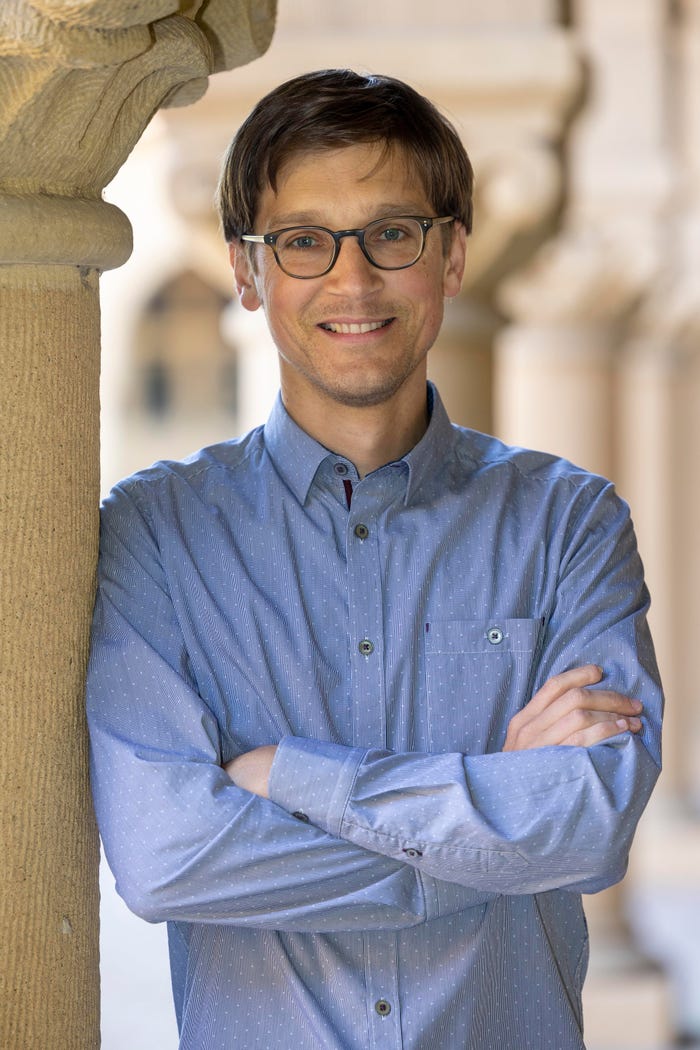
This radical shift is perhaps best articulated by Jure Leskovec, a computer-science professor at Stanford University and cofounder of AI startup Kumo.
His insights offer a stark, yet hopeful, blueprint for those aspiring to navigate the burgeoning AI job market. The core message is clear: demonstrable capability, relentless curiosity, and a distinctly human touch now trump traditional credentials.
“There’s no playbook for AI,” Leskovec asserts, a statement that should resonate deeply with anyone feeling overwhelmed by the field’s rapid evolution.
This isn’t merely an observation; it’s a foundational principle dictating what hiring managers, particularly at innovative AI firms, truly seek. In an environment where the most cutting-edge tools and frameworks of today could be obsolete tomorrow, a fixed skill set is far less valuable than the agility to acquire new ones. J.P. Morgan notes the impact of AI on job growth.
What, then, does it take to stand out? Leskovec champions the power of practical application.
Forget theoretical mastery confined to textbooks; the real differentiator lies in launching tangible projects.
He advises aspiring AI professionals to leverage public datasets, deploy working demos, showcase their code on GitHub, or even blog about their technical explorations. Participating in hackathons, he urges, not just as a proving ground for skills, but as a demonstration of initiative, problem-solving under pressure, and the ability to collaborate effectively. Even failure in these endeavors is a win, signaling a proactive and curious mind.
Consider the recent hire at Kumo who distinguished himself by building a generative AI tool for analyzing customer purchase data.
This wasn’t merely a technical feat; it was a testament to ambition, curiosity, and a proactive approach to problem-solving – qualities Leskovec’s firm deeply values. It’s a powerful reminder that in the AI space, showing is infinitely more effective than simply telling.
Beyond hands-on projects, adaptability and an insatiable curiosity are paramount. The role of adaptability in generative AI is becoming increasingly clear as Leskovec observes that the best candidates are those who are constantly experimenting with new tools and frameworks, from PyTorch to JAX to the ever-expanding universe of LLM tooling. Staying current on areas like GenAI, multimodal models, diffusion, and reinforcement learning isn’t just good practice; it’s a survival mechanism in a field that redefines itself almost daily.
The message here is profound: a fixed set of skills is a liability, while a flexible, learning-oriented mindset is an asset of immeasurable value.
This emphasis naturally diminishes the singular power of traditional academic credentials.
While a degree from a top university might get an application noticed, it’s the proven ability to build, adapt, and learn that secures the job. Leskovec notes that during interviews, it’s easy to spot candidates who are merely trying to shoehorn new ideas into old frameworks versus those who are genuinely engaging with the novel challenges of AI. The academic journey might provide a robust foundation, but the real learning, it seems, happens out in the wild, at the bleeding edge of discovery.
The “no playbook” philosophy extends to problem-solving itself. At Kumo, interviews delve deep into an applicant’s thought process, often valuing the reasoning behind an answer as much, if not more, than the answer itself. This encourages a radical departure from conventional thinking.
“Think outside the box,” while a corporate cliché in other domains, becomes a vital directive in AI.
Leskovec encourages individuals to question assumptions, experiment with unconventional tools, and deliberately expose themselves to new domains. The practice of brainstorming multiple solutions, even seemingly impractical ones, sharpens the mind and cultivates the ability to spot possibilities others might overlook.
Finally, and perhaps most crucially, Leskovec reminds us not to “forget to be human.” In a world increasingly shaped by algorithms, it might seem counterintuitive that the human touch is more vital than ever.
Yet, effective communication, seamless teamwork, empathy, and a keen awareness of the ethical and social implications of AI are non-negotiable. Knowing how to code is fundamental, but understanding the societal impact of that code, and collaborating effectively to build responsible AI, elevates a technologist to a true innovator. Awareness of bias, for example, isn’t just a soft skill; it’s a critical component of ethical AI development that can prevent widespread harm. For further reading, explore ethical considerations in AI.
In essence, the AI job market is not just looking for coders; it’s seeking pioneers. It demands individuals who are not afraid to experiment, to fail, to learn, and to think critically about the world their creations will inhabit.
The journey into AI is less about following a map and more about navigating uncharted territory, armed with curiosity, adaptability, and a strong moral compass. For those ready to embrace this challenge, the opportunities are boundless.
-
Frank DiBernardo handles LNGFRM's Foodie and Miscellaneous writing tasks. He's always getting ideas from users, so don't be afraid to send an email to the editor.