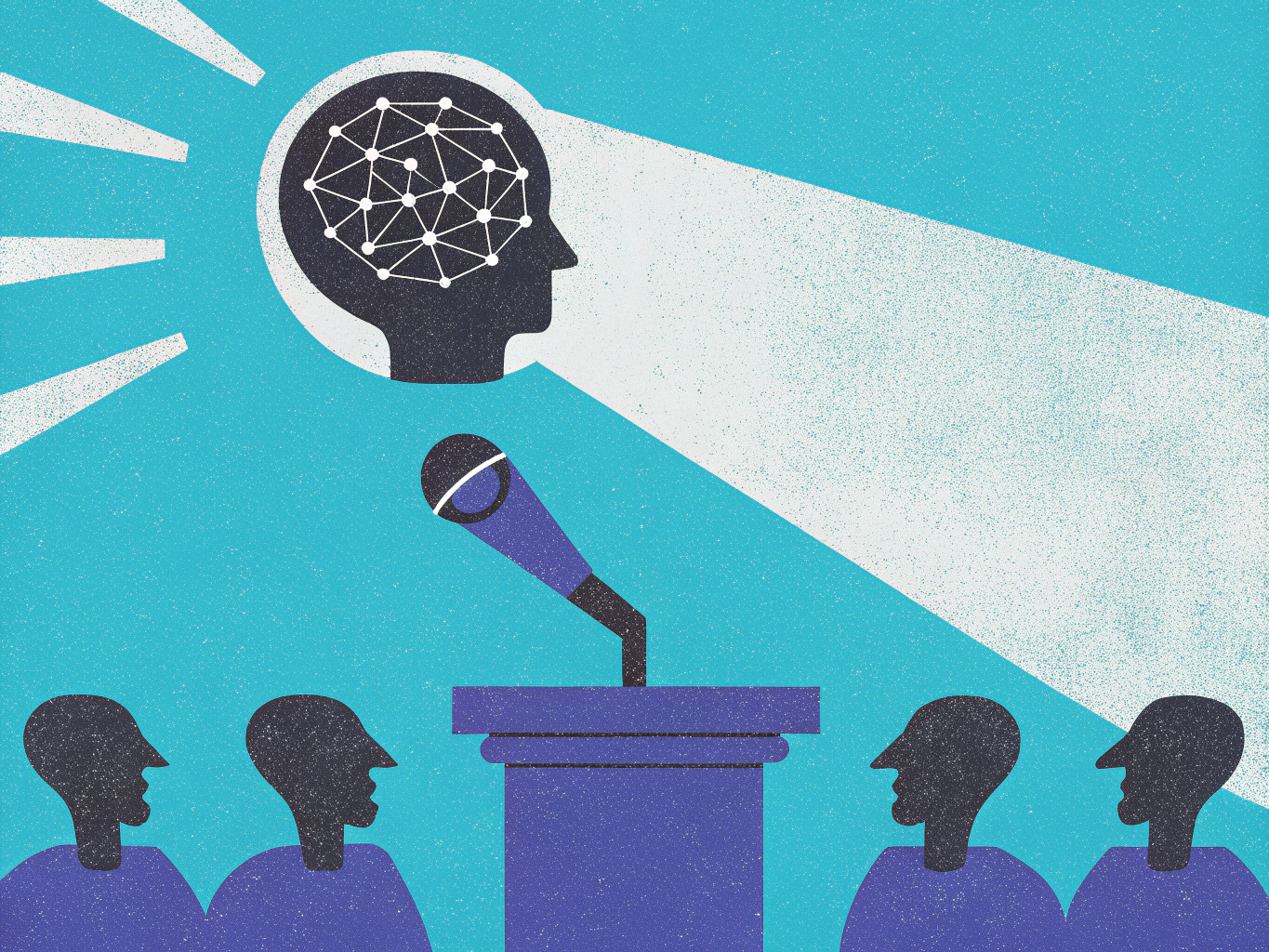
The political playbook, it seems, has a new, formidable chapter.
Forget the nuanced apology or the carefully worded retraction; a more audacious strategy is taking hold, one where the nebulous realm of artificial intelligence offers a convenient, almost irresistible, scapegoat.
This isn’t merely a technological shift; it’s a fundamental reordering of how power interacts with truth, threatening to dissolve the very bedrock of shared reality.
At the vanguard of this emerging trend stands former President Donald Trump, who, with characteristic bluntness, has not only embraced the tactic but actively championed it.
Asked recently about a widely circulated video appearing to show something being tossed from an upper-story White House window – a video his own press team had reportedly confirmed as authentic – Trump dismissed it with a wave of a hand: “No, that’s probably AI.”
Not content to leave it there, he declared his full commitment to this new paradigm.
“If something happens that’s really bad,” he mused to reporters, “maybe I’ll have to just blame AI.”
This isn’t a slip of the tongue; it’s a calculated, public endorsement of a strategy that analysts warn is rapidly becoming the new “fake news”.
AI, after all, is not a person.
It cannot be subpoenaed, it cannot leak information, nor can it file a lawsuit.
Its very nature, prone to generating convincing but false images, audio, and video, creates a credibility vacuum where fact and fiction become increasingly indistinguishable.
And in this murky landscape, the untruthful thrive – a phenomenon aptly dubbed “the liar’s dividend.”
The dividend, as described by legal scholars Danielle K. Citron and Robert Chesney in their 2019 research, is a chilling prospect.
“If the public loses faith in what they hear and see and truth becomes a matter of opinion, then power flows to those whose opinions are most prominent—empowering authorities along the way,” they wrote in the California Law Review.
A deeply skeptical public, primed to doubt the authenticity of any visual or auditory evidence, becomes a malleable electorate, where reality is not discovered but declared.
This isn’t just an American phenomenon.
On the very same day Trump made his pronouncement, Venezuelan Communications Minister Freddy Ñáñez cast doubt on a U.S. administration video purporting to show a strike on a vessel targeting a gang in the Caribbean.
Ñáñez, speaking via Telegram, described the video as featuring “almost cartoonish animation” and concluded it was “very likely that it was created using Artificial Intelligence.”
The message is clear: when inconvenient truths emerge, the AI alibi is now a global go-to.
The insidious nature of this trend lies in its capacity to erode accountability.
Hany Farid, a digital forensics expert and professor at the University of California, Berkeley, has long warned about the escalating capabilities of deepfakes.
But the technological prowess, he argues, masks a deeper, more existential threat.
“I’ve always contended that the larger issue is that when you enter this world where anything can be fake, then nothing has to be real,” Farid explained.
“You get to deny any reality because all you have to say is, ‘It’s a deepfake.’”
This represents a stark departure from a not-so-distant past.
A decade or two ago, politicians, when caught on tape, were often forced to confront the evidence.
Donald Trump himself, in 2016, issued a rare apology (albeit qualified with “if anyone was offended”) for his notorious “Access Hollywood” comments.
Hillary Clinton, his opponent, admitted she was wrong to label some of his supporters “a basket of deplorables.”
While these apologies were often grudging, they acknowledged a shared reality that could not be simply wished away.
Today, the very concept of “being caught on tape” risks becoming obsolete, replaced by a convenient shrug and a murmured accusation of algorithmic trickery.
Toby Walsh, chief scientist and professor of AI at the University of New South Wales, paints a grim picture of this trajectory.
“It leads to a dark future where we no longer hold politicians (or anyone else) accountable,” Walsh warned.
“It used to be that if you were caught on tape saying something, you had to own it.
This is no longer the case.”
The public, it seems, is not entirely oblivious to these dangers.
Polling data reveals a palpable unease.
An August 2024 Pew Research Center poll found that about half of U.S. adults felt “more concerned than excited” about the increased use of AI in daily life, a concern that has grown in recent years.
Furthermore, a Quinnipiac poll from April indicated widespread distrust of AI-generated information, with three-quarters of adults trusting it only “some of the time” or “hardly ever.”
Crucially, about six in ten Americans expressed being “very concerned” about political leaders using AI to distribute fake or misleading information.
Their concerns are well-founded, and Trump’s recent embrace of AI-blaming is merely an evolution of a long-standing strategy.
Before AI became a household term, Trump famously popularized “fake news” as a broad-brush dismissal of critical media reports.
Leslie Stahl of CBS’s “60 Minutes” recounted Trump admitting off-camera in 2016 that his aim was to “discredit” journalists so that their negative stories would be disbelieved.
The AI accusation is simply a more technologically advanced iteration of this foundational distrust-sowing.
Indeed, Trump had already deployed this tactic in 2023, claiming the anti-Trump Lincoln Project used AI in a video that he said made him “look bad.”
The Lincoln Project, for its part, denied the use of AI.
This new rhetorical weapon, wielded by those in power, is more than just a political maneuver; it is an assault on the very foundation of an informed citizenry.
When the line between the real and the fabricated is intentionally blurred, when inconvenient truths can be dismissed as digital phantoms, the fabric of democratic discourse begins to unravel.
The “liar’s dividend” isn’t just a theoretical concept; it’s a tangible threat to accountability, trust, and our collective ability to distinguish fact from the convenient fiction generated by a powerful new technology.
The question is no longer whether AI can fool us, but whether we will allow those in power to use it to fool us into relinquishing our grasp on reality itself.
-
Frank DiBernardo handles LNGFRM's Foodie and Miscellaneous writing tasks. He's always getting ideas from users, so don't be afraid to send an email to the editor.