The digital age, propelled by the relentless march of artificial intelligence and expansive cloud services, is creating an energy demand of unprecedented scale.
As data centers hum and algorithms learn, the question of how to power this future sustainably has become paramount.
Enter Amazon, a company synonymous with e-commerce and cloud infrastructure, now making a bold foray into an energy source often viewed with a mix of apprehension and hope: advanced nuclear power.
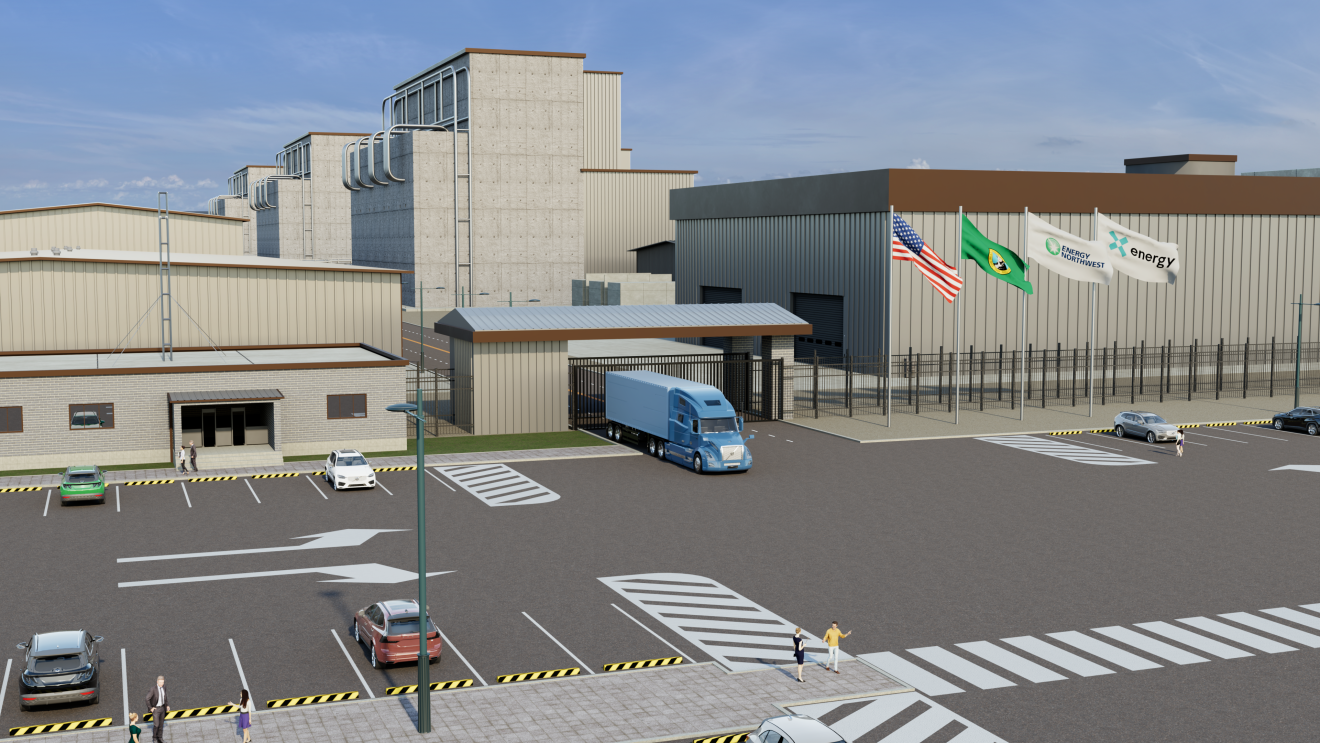
In a move that signals a significant shift in corporate sustainability strategies, Amazon is partnering with Washington state utility Energy Northwest and SMR developer X-energy to construct the Cascade Advanced Energy Facility.
This state-of-the-art project, slated for development outside Richland, Washington, near Energy Northwest’s existing Columbia Generating Station, isn’t just about adding another power plant to the grid; it’s about establishing one of the United States’ first modular nuclear reactor facilities, designed specifically to fuel the next generation of digital innovation.
At the heart of this endeavor are Small Modular Reactors (SMRs), a next-generation nuclear technology that promises to redefine the landscape of carbon-free energy.
Unlike their gargantuan predecessors, SMRs are designed to be smaller, simpler, and more efficient, boasting a significantly reduced footprint.
The Cascade facility, for instance, will comprise three 320-megawatt sections, culminating in a 960-megawatt plant that can fit within a few city blocks – a stark contrast to traditional gigawatt-scale nuclear plants that often sprawl across a square mile or more.
This modularity offers tantalizing prospects for faster deployment and lower construction costs, addressing two of the most significant hurdles faced by large-scale nuclear projects in the past.
For Amazon, the motivation is clear: to meet its ambitious sustainability goals and provide a reliable, around-the-clock source of carbon-free energy for its burgeoning AI and cloud operations.
“This project isn’t just about new technology; it’s about creating a reliable source of carbon-free energy that will support our growing digital world,” noted Kara Hurst, Amazon’s chief sustainability officer.
Her excitement underscores a pragmatic acknowledgment that while renewable sources like solar and wind are vital, their intermittent nature necessitates a consistent, always-on baseline power that only nuclear energy can currently provide on a large, carbon-free scale.
The partnership with X-energy, in which Amazon has made a capital investment through its Climate Pledge Fund, will leverage X-energy’s Xe-100 advanced nuclear reactor design.
The initial phase of Cascade will involve four SMRs with an initial capacity of 320 MW, with the flexibility to expand to 12 units and a full capacity of 960 MW.
Construction is targeted to commence by the end of this decade, with operations expected to begin in the 2030s.
This isn’t merely a local initiative; it’s part of a broader commitment by Amazon to help bring over 5 gigawatts of new nuclear energy to the U.S. grid by 2039 – enough to power 3.8 million U.S. homes.
Beyond the technological marvel, the Cascade facility represents a substantial economic boon for the Pacific Northwest, as noted in the clean energy transition.
The project is projected to create over 1,000 jobs during construction and more than 100 permanent, high-paying positions in nuclear operations, engineering, and specialized fields.
Recognizing the need for a skilled workforce, Columbia Basin College in Pasco, Washington, has secured Department of Energy funding to launch an Energy Learning Center.
This center will house a sophisticated education simulator replicating the Xe-100 control room, essentially a flight simulator for nuclear operators.
Bob Schuetz, CEO of Energy Northwest, highlighted the significance: “Investing in advanced training simulators prepares future operators and builds the foundation for a clean energy workforce that will power our region for decades to come.”
This initiative not only provides a valuable educational pathway but also solidifies the region’s role at the vanguard of America’s sustainable energy transition.
J. Clay Sell, CEO of X-energy, articulated the transformative nature of this collaboration: “Over the past year, the support of Amazon has enabled us to accelerate progress on our technology, grow our team with world-class talent and expertise, and position the Cascade Advanced Energy Center at the forefront of energy innovation.”
This sentiment reflects a growing recognition that large-scale, private-sector investment is crucial for de-risking and accelerating the deployment of advanced nuclear technologies.
Amazon’s venture into nuclear energy should be viewed within its larger, multi-faceted clean energy strategy.
While already the world’s largest corporate purchaser of renewable energy, with over 600 projects globally, the company’s embrace of nuclear demonstrates a pragmatic understanding of the diverse energy needs of a rapidly evolving digital economy.
This strategy includes other nuclear projects, such as an agreement with Talen Energy in Pennsylvania to build a data center next to existing nuclear plants to fuel their operations.
The combination of intermittent renewables and reliable, carbon-free nuclear power provides a robust pathway to decarbonization that many energy experts advocate.
This audacious step by Amazon isn’t just about reducing its carbon footprint; it’s about shaping the future of energy infrastructure for an AI-driven world.
It signals that for some of the world’s largest tech players, the pursuit of truly carbon-free operations may necessitate looking beyond traditional renewables to embrace the proven, albeit often controversial, power of the atom.
The Cascade Advanced Energy Facility is more than a construction project; it’s a testament to a future where innovation and pragmatism converge to power our digital lives sustainably, one SMR at a time.
-
Frank DiBernardo handles LNGFRM's Foodie and Miscellaneous writing tasks. He's always getting ideas from users, so don't be afraid to send an email to the editor.