In a move that signals a profound shift in corporate sustainability strategies and the future of energy, Amazon is quietly, yet unequivocally, ushering in a new era of power procurement.
The tech giant, renowned for its sprawling cloud infrastructure and insatiable demand for computing power, is throwing its considerable weight behind a pioneering project: one of the United States’ first small modular reactor (SMR) facilities.
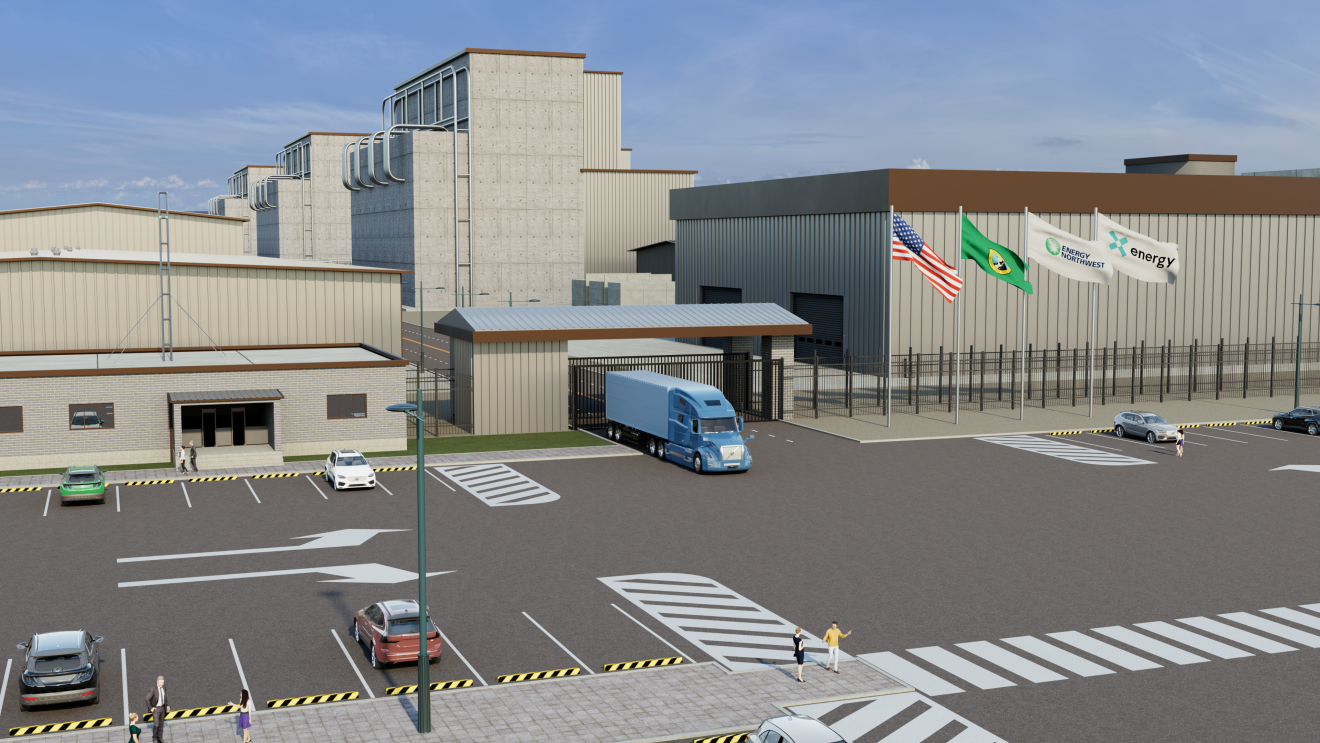
Named the Cascade Advanced Energy Facility, this ambitious undertaking in Washington state is more than just another green initiative; it’s a strategic bet on advanced nuclear energy as the bedrock for the artificial intelligence revolution and the ever-expanding digital world.
This isn’t merely a corporate initiative; it’s a statement about the escalating energy needs of modern technology, particularly the burgeoning field of AI.
As algorithms grow more complex and data centers multiply, the quest for reliable, carbon-free power becomes paramount.
Amazon’s answer, in partnership with Washington state utility Energy Northwest and SMR developer X-energy, is to build up to 12 SMRs, utilizing X-energy’s advanced Xe-100 reactor design, outside Richland, Washington.
This facility promises to deliver a staggering 960 megawatts (MW) of continuous, carbon-free energy, starting with an initial 320 MW phase.
The implications are profound.
Traditional nuclear power plants, with their gargantuan footprints and multi-decade construction timelines, have often been viewed with a mixture of awe and apprehension.
SMRs, however, represent a paradigm shift.
As their name suggests, they are significantly smaller, designed for modular construction off-site and faster, more cost-effective deployment.
Kara Hurst, Amazon’s chief sustainability officer, encapsulates this vision, stating, “This project isn’t just about new technology; it’s about creating a reliable source of carbon-free energy that will support our growing digital world.
I’m excited about the potential of SMRs and the positive impact they will have on both the environment and local communities.”
The Cascade facility, for instance, will occupy just a few city blocks – a stark contrast to the square miles often consumed by conventional gigawatt-scale plants.
Amazon’s commitment to this venture is not an isolated act but a cornerstone of its broader climate pledge.
Having invested billions in carbon-free energy and standing as the world’s largest corporate purchaser of renewable energy since 2020, the company is now making a definitive statement: intermittent renewables alone may not suffice for the relentless, round-the-clock power demands of AI and cloud services.
Nuclear power, with its proven track record of scalability, reliability, and safety, is emerging as a critical piece of the decarbonization puzzle.
The tech behemoth’s Climate Pledge Fund has made a capital investment in X-energy, signaling deep confidence in the Xe-100 technology.
The economic ripple effects of the Cascade project are equally significant.
Beyond the promise of clean energy, the facility is projected to create over 1,000 jobs during its construction phase and more than 100 permanent positions in highly specialized fields like nuclear operations and engineering.
This isn’t just about importing talent; it’s about cultivating a local workforce.
Columbia Basin College in Pasco, Washington, has already secured Department of Energy funding to launch an Energy Learning Center.
This center will feature a sophisticated simulator replicating X-energy’s Xe-100 control room, essentially a flight simulator for nuclear operators, expected to be operational by late 2025.
This proactive approach to workforce development ensures that local students can step into high-paying, future-proof careers, solidifying the Pacific Northwest’s role in America’s clean energy transition.
Bob Schuetz, CEO of Energy Northwest, underscores the transformative nature of this educational pathway: “Investing in advanced training simulators prepares future operators and builds the foundation for a clean energy workforce that will power our region for decades to come.
This interactive experience helps demystify nuclear energy and goes beyond the textbook, showing students that a viable, meaningful career in clean energy is within reach—and that they can be part of something transformative.”
The timeline for this ambitious project sees construction commencing by the end of this decade, with operations targeted for the 2030s.
This long-term vision highlights the strategic foresight required to address future energy needs.
J. Clay Sell, CEO of X-energy, articulates the scale of this collaboration: “One year ago, we set out with Amazon to reimagine the way in which we advance new energy projects in the United States, and how we power technologies like AI that are driving our economy forward.
The scale of this work is historic, and we are privileged to have world-class partners like Amazon and Energy Northwest in this effort.”
Amazon’s investment in X-energy extends beyond Cascade, aiming to bring over 5 gigawatts of new nuclear energy to the U.S. grid by 2039 – enough to power 3.8 million homes.
For communities in Washington state, the Cascade Advanced Energy Facility signifies not just a new source of carbon-free power, but a robust economic engine, expanding the tax base and cementing the region’s leadership in advanced nuclear technology.
As Amazon continues to expand its global footprint, its strategic embrace of SMRs marks a pivotal moment in the energy transition.
It’s a bold declaration that the path to a truly sustainable, digitally-driven future will likely be powered by a diverse portfolio of carbon-free sources, with advanced nuclear energy playing an increasingly indispensable role.
-
Frank DiBernardo handles LNGFRM's Foodie and Miscellaneous writing tasks. He's always getting ideas from users, so don't be afraid to send an email to the editor.