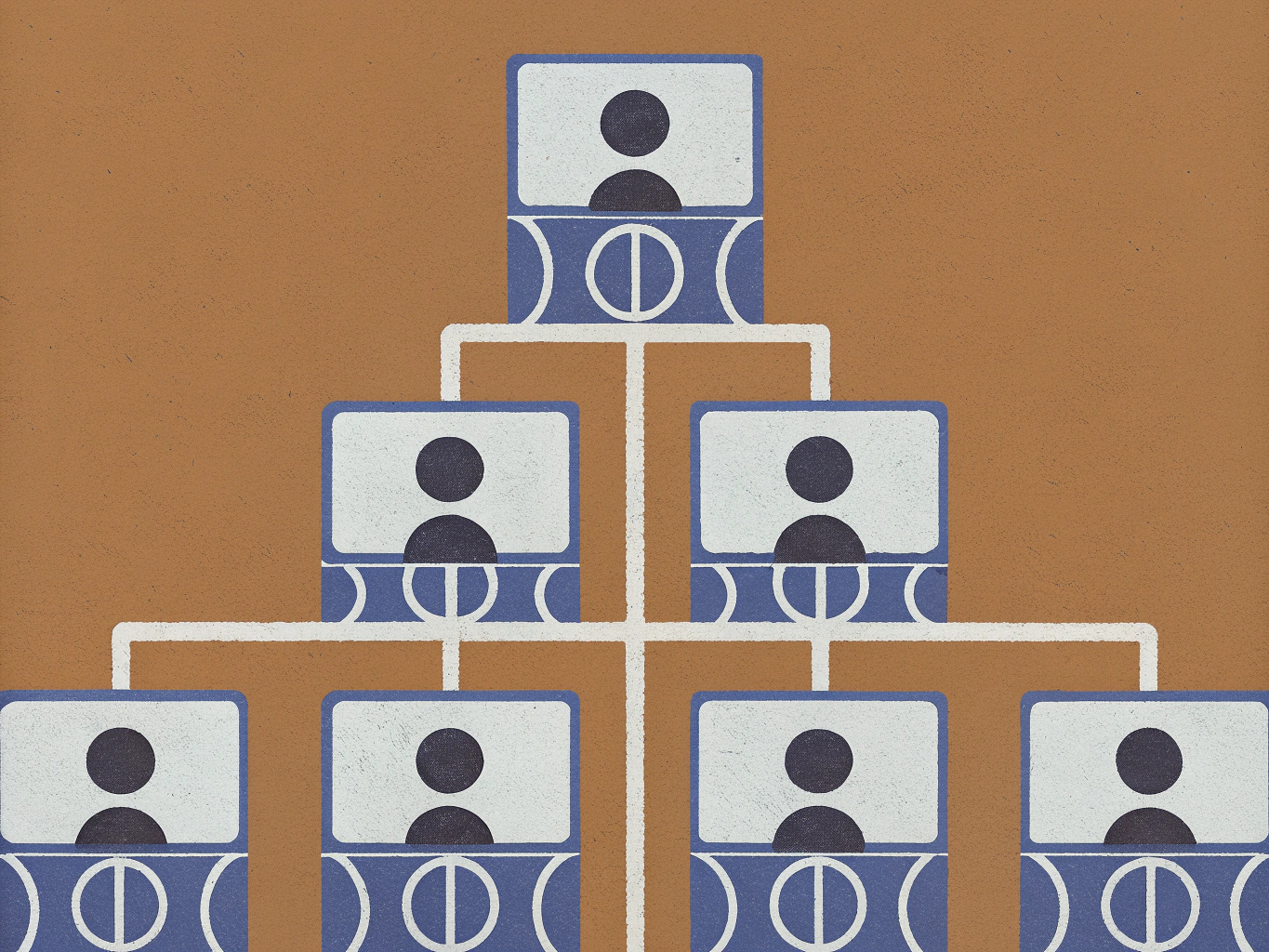
The corporate landscape, long defined by its rigid hierarchies and meticulously drawn organizational charts, stands on the precipice of a seismic shift.
No longer is the “org chart” merely a diagram of reporting lines; it is, according to leading experts, on its way to becoming a relic of a bygone era, rendered obsolete by the relentless advance of artificial intelligence.
This isn’t just another technological update; it’s a profound redefinition of how humans will work together, manage, and lead.
Every technological revolution, from the assembly line to the internet, has reshaped the workplace.
The automation wave of the 1980s, for instance, birthed “process reengineering,” a methodical stripping away of inefficiencies.
Now, AI is poised to unleash a far more fundamental transformation, one that challenges the very foundations of traditional management.
Ron Carucci, a renowned consultant and researcher in organizational leadership, and Kathleen Hogan, Microsoft’s former chief people officer and now its EVP of the Office of Strategy and Transformation, have pinpointed four critical shifts that leaders and organizations must embrace to navigate this brave new world.
Their insights paint a picture of a future where adaptability, agility, coaching, and meaningful contribution eclipse the conventional markers of power and progression.
The first, and perhaps most immediate, pivot required is a move from “change management” to “change readiness.”
For decades, corporate change was treated as a project: a carefully planned initiative with a defined beginning and end, complete with communication strategies and phased rollouts.
The underlying assumption was a predictable future.
But today, the pace of disruption is dizzying.
There’s no time to map out a fixed destination when the ground beneath your feet is constantly shifting.
The new imperative is to cultivate a culture where change is not an event to be managed, but an inherent, continuous state.
Microsoft, under the visionary leadership of Satya Nadella, exemplifies this by fostering a “growth mindset” and rewarding “positive pivoters” – individuals who embrace change as the norm rather than a hardship.
This means hiring for learnability and adaptability, not just current expertise, and empowering employees to actively drive change, not just react to it.
Experimentation and learning from failure become daily practices, not exceptions.
The old notion of “control” as a leadership virtue is being replaced by the imperative of continuous adaptation, a direct challenge to the comfortable stability many leaders have long sought.
Hand-in-hand with this cultural shift is the dismantling of traditional hierarchies in favor of “agile networks.”
The classic org chart, with its top-down decision-making and rigid reporting lines, was designed for stability, but it’s a liability in an environment demanding speed and flexibility.
The future organization will be characterized by fluid, networked structures where influence flows from expertise, not title.
Decision-making will be decentralized, empowering cross-functional teams to form, dissolve, and reform as challenges dictate.
Carucci cites an example of an organization that developed innovation hubs, giving empowered cross-functional groups the authority to make “go-no go” decisions on projects.
This radical trust dramatically accelerated project completion, leading to a remarkable 46% increase in successful product launches within a year.
It’s a compelling argument for jettisoning the cumbersome approval chains that have historically choked innovation.
The third critical transformation lies in redefining leadership itself: from “control” to “coaching.”
For generations, the archetypal leader was the one who brought order to chaos, who had all the answers.
But in an era where uncertainty is the only constant, this model is no longer tenable.
Future-ready leaders must embrace ambiguity and equip their teams to navigate complexity with confidence.
This demands a shift from dictating to guiding, from supervising to enabling.
Microsoft has emphatically declared this the “year of the coach,” embedding “model, coach, care” as foundational competencies for all managers.
This involves replacing annual reviews with real-time feedback, fostering psychological safety for risk-taking, and crucially, preparing managers to coach humans in an age where AI agents will become ubiquitous.
The unique human assets – relationship building, empathy, creativity – will be the true differentiators, and it will be the manager’s role to cultivate these irreplaceable skills.
Coaching, in this context, becomes a profound act of care, enabling individuals to thrive amidst disruption.
Finally, the very currency of career progression is changing: from “status as power currency” to “contribution as impact currency.”
For too long, career ladders have been defined by titles, team size, and access to exclusive meetings.
Promotion was the primary means of acknowledging high performers.
But in a world prioritizing speed, collaboration, and expertise, influence derived from meaningful contribution will eclipse mere rank.
Organizations must design pathways where employees can expand their impact by leading initiatives and shaping critical decisions, regardless of their official title.
This means inviting individuals with relevant expertise into key discussions, irrespective of their seniority.
Carucci recounts a financial services company that revamped its leadership meetings, assigning roles and clear expectations to attendees rather than inviting them based on rank.
This simple change eradicated the entitlement often displayed by senior leaders, fostering a collective understanding of shared success.
By prioritizing merit and impact over tenure and title, organizations can build faster decision-making processes and leadership pipelines that truly reflect capability.
As the AI revolution continues its relentless march, the traditional workplace structure is indeed being challenged at its core.
The demise of the rigid org chart isn’t just about efficiency; it’s about fostering a more adaptive, human-centric, and meritocratic environment where innovation can truly flourish.
Leaders who fail to guide their organizations through these fundamental shifts risk becoming as obsolete as the charts they once meticulously drew.
The time for static structures and top-down directives is over; the future demands fluidity, empathy, and a relentless focus on collective impact.
-
Frank DiBernardo handles LNGFRM's Foodie and Miscellaneous writing tasks. He's always getting ideas from users, so don't be afraid to send an email to the editor.