The digital world is awash with promises of artificial intelligence.
Yet for many, the reality of AI on their smartphones has felt more like a series of fragmented features than a truly integrated, intelligent companion.
Often, these capabilities rely on distant servers, tethering our “smart” devices to the cloud and, by extension, to data consumption and potential privacy concerns.
But a new narrative is emerging from Honor, a narrative that seeks to fundamentally redefine what AI means for the smartphone user, pushing intelligence firmly back into the palm of our hands.
At the recent Qualcomm Snapdragon Summit 2025, Honor made a significant declaration.
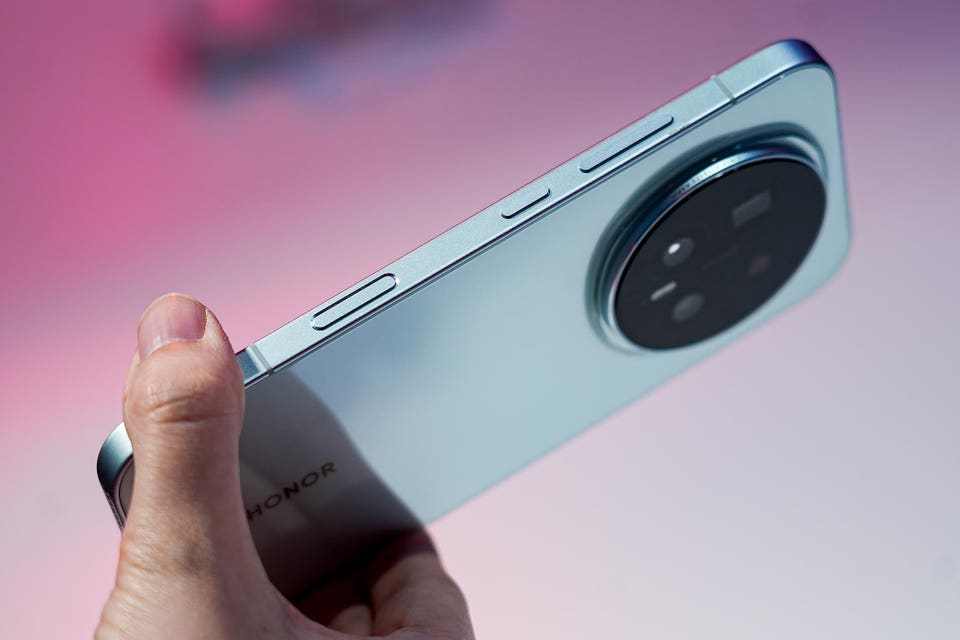
Its upcoming Magic8 family of smartphones will be powered by the new fifth-generation Snapdragon 8 Elite chipsets.
This isn’t just an incremental upgrade; it’s a foundational shift.
Honor’s collaboration with Qualcomm isn’t merely about raw power; it’s about a relentless pursuit of efficiency.
This isn’t just hardware and software efficiency, though those are paramount.
It’s about delivering efficiency to the consumer, making interactions smoother, faster, and more intuitive.
For years, many of the most impressive large language model AI features have been cloud-dependent.
The sheer computational heft required to run these models meant offloading the heavy lifting to powerful data centers.
However, 2025 marks a pivotal year in the industry’s drive to bring as much processing as possible directly onto the device.
The benefits are clear: reduced data usage, lower energy consumption, and, perhaps most importantly, enhanced privacy.
Keeping data local means personal information doesn’t need to travel across the internet to be processed, a significant reassurance in an age of heightened digital anxiety.
Achieving this on-device intelligence is no small feat.
AI models are notoriously large, demanding substantial memory and storage.
Honor’s answer to this challenge is the introduction of low-bit quantisation technology in the Magic8 series.
In essence, this is a sophisticated compression technique that dramatically shrinks the size of an AI model without crippling its functionality.
Imagine taking a massive 4.4 GB AI model and reducing it to a lean 1.02 GB – that’s the kind of transformation Honor is touting.
This reduction translates directly into faster calculations, lower power consumption, and the crucial ability to keep processing on the user’s device, thereby safeguarding privacy.
Yet, like any technological leap, quantisation comes with its own set of trade-offs.
The primary concern is a potential loss of accuracy.
Compressing a model can, in some instances, impact the precision of its results.
The specter of “AI hallucinations” – those bizarre, nonsensical outputs that can quickly erode user trust – looms large.
Honor faces the delicate task of balancing the profound efficiency gains of local AI with the imperative of maintaining user confidence.
While this is a significant developmental hurdle, experts like Himanshu Bamoria of Athina AI offer an optimistic perspective.
He suggests that for many common use cases, the loss in accuracy might be negligible, arguing that “the extra computational burden of high-precision models might not be justified” for a vast range of applications on a smartphone.
This implies that Honor is likely to deploy these quantized models in carefully defined roles, where the efficiency benefits outweigh the marginal risk of inaccuracy, ensuring a pragmatic and reliable user experience.
Beyond raw processing, Honor is also reimagining how we interact with the vast trove of information stored on our phones.
The transition from an “app-first” to an “AI-first” model demands a new paradigm for information retrieval.
Traditional keyword searches, while reliable for exact matches, often fall short when our queries are vague or based on meaning rather than specific terms.
Honor’s Next-Generation Hybrid Retrieval Technology seeks to bridge this gap, blending keyword-based and semantic search approaches.
This “hybrid” solution promises more relevant results, understanding intent rather than just matching words.
However, as Ilia Markov of Meilisearch points out, integrating multiple search algorithms is technically complex, requiring deep expertise.
Honor’s success will hinge on finding the optimal balance, ensuring that neither method overpowers the other, and ultimately presenting a seamless, trustworthy search experience to the user.
The true test of these underlying innovations, however, lies in their practical application.
Honor is bringing these advancements to life through features like Magic Color.
No longer will users need to navigate complex photo editing suites or endlessly scroll through their galleries.
With a simple, natural-language prompt – “Save the picture as a La La Land Color template” or “Help me find the photos I took at the Forbidden City” – Magic Color intelligently searches, identifies key elements of color and tone, and can even re-style another photo or video in that aesthetic.
This is AI as an enabler, removing friction and democratizing sophisticated creative tools.
Even gaming is getting an AI-powered boost.
Honor’s AI-powered Super Sampler balances the GPU and NPU (Neural Processing Unit) to upscale low-resolution, low-frame-rate games to crisp HD resolutions at up to 120 FPS.
This “dual engine” approach promises not only enhanced visual fidelity but also greater power efficiency compared to GPU-only upscaling methods.
It’s a clear signal that AI isn’t just for productivity; it’s for elevating every aspect of the smartphone experience, including entertainment.
In a market saturated with “AI features,” Honor is making a bold statement.
Its partnership with Qualcomm isn’t just about adding bells and whistles; it’s about fundamentally re-engineering the smartphone’s core.
The focus on efficiency, privacy, and on-device processing with the Magic8 series is Honor’s vision for an AI-first future.
It’s a future where intelligence is deeply embedded, personalized, and, crucially, always at your fingertips, without constantly reaching for the cloud.
The race to define smartphone AI is intensifying, and Honor is clearly aiming to lead from the ground up.
-
Frank DiBernardo handles LNGFRM's Foodie and Miscellaneous writing tasks. He's always getting ideas from users, so don't be afraid to send an email to the editor.