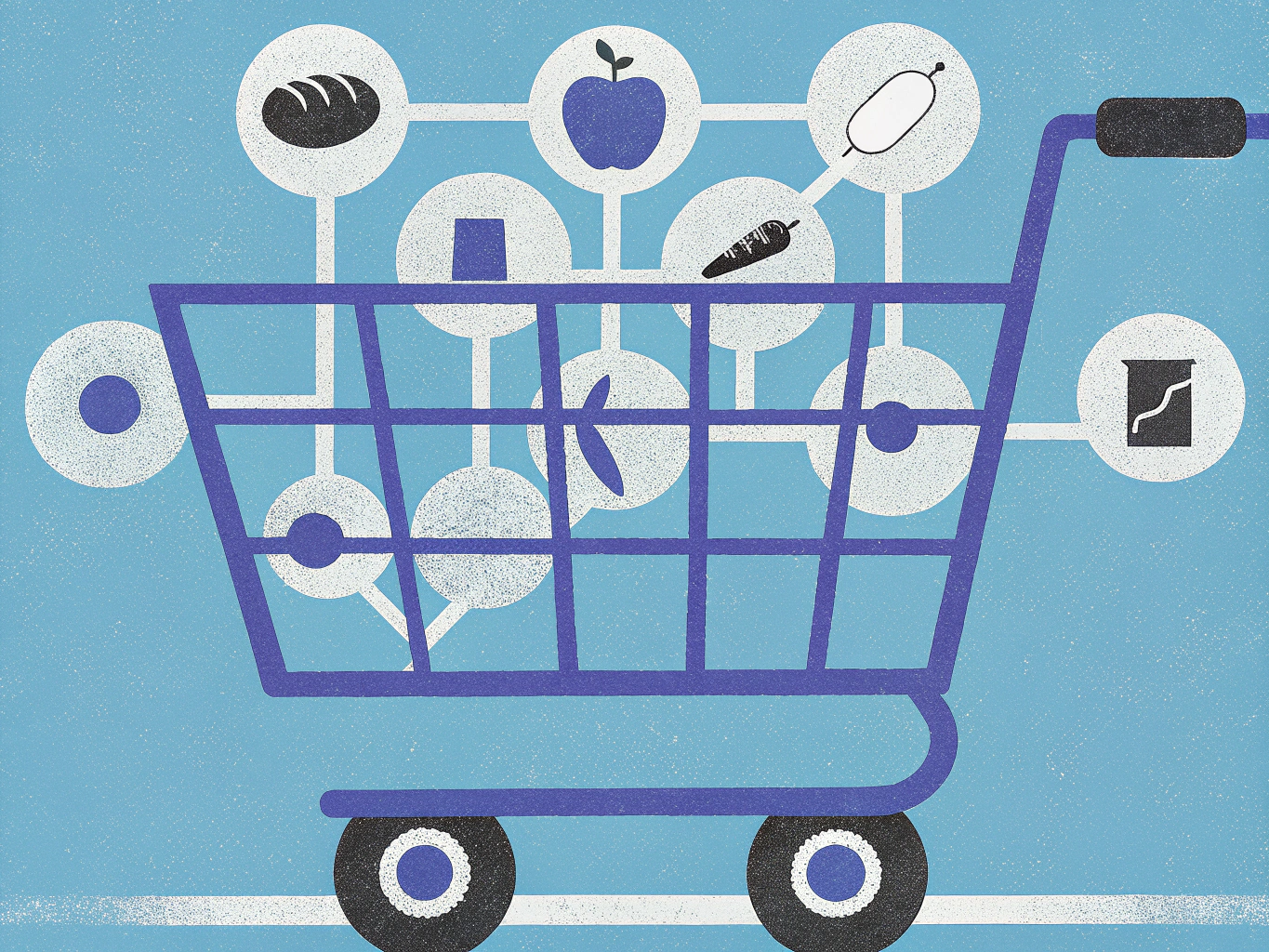
The digital aisles of online grocery stores, while convenient, have often felt like a stark, functional contrast to the sensory richness and serendipitous discoveries of a physical supermarket.
For years, the promise of personalized shopping has largely boiled down to basic “you bought this, so buy that” recommendations, often missing the nuanced patterns of human consumption.
But a quiet revolution, spearheaded by a team of data scientists, is now redefining this experience, turning sterile web pages into dynamic, intuitive shopping environments that mirror, and even enhance, the real-world spree.
At the heart of this transformation lies the Personalized Category and Item-within-Category (PCIC) model, a sophisticated algorithmic architecture designed to understand not just what consumers buy, but the deeper context of their purchasing habits.
This isn’t just about pushing products; it’s about anticipating needs, curating selections, and, crucially, making online grocery shopping feel less like a chore and more like a guided tour through a perfectly stocked pantry tailored just for you.
The deployment of PCIC wasn’t a mere flick of a switch.
It was an iterative journey, deeply informed by a “human-in-the-loop” feedback mechanism that stands as a testament to intelligent design.
Early internal testing revealed critical insights.
For instance, users weren’t keen on seeing certain sensitive categories pop up in their recommendations, leading to the creation of an exclusion list – a small but significant nod to privacy and comfort in the digital realm.
More profoundly, the team recognized that a customer might buy a new flavor of yogurt once, but that doesn’t mean they want it perpetually recommended.
The solution was ingenious: recommendations for repurchase items were filtered to include only those bought at least twice in the past six months or those with a consistently high repurchase rate.
This subtle refinement ensures that the “Buy It Again” list truly reflects habitual purchases, not fleeting experiments.
Perhaps the most insightful adjustment came from observing how people actually shop.
Many grocery trips involve buying multiple items from a single category – think several flavors of yogurt, different types of bread, or a variety of fruits.
Traditional recommendation engines, with their round-robin approach, might present one item from each category before circling back, leading to a disjointed experience.
PCIC addressed this by incorporating a “Number of Items Bought per trip” (NIB) variable, intelligently re-ranking items to group similar purchases, effectively creating miniature, personalized bundles that anticipate a shopper’s full needs within a category.
It’s a small mathematical tweak with a profound impact on user convenience.
The real validation of PCIC’s prowess, however, came in the crucible of A/B testing.
Pitted against existing online baselines, the new model delivered impressive, statistically significant lifts across key performance indicators.
Click-Through Rate (CTR) saw a healthy 6% increase, indicating greater user engagement with the recommendations.
Conversion Rate, the ultimate measure of turning clicks into purchases, jumped by 9%.
But the most striking metric was the 27% surge in units purchased.
This isn’t just about minor improvements; it signifies a substantial boost in basket size and overall sales volume, directly attributable to the enhanced recommendation quality.
The impact extended even to the search experience.
Integrating “Buy It Again” lists into web search results, filtered by the search query, proved remarkably effective.
While not always displayed (as many searches aren’t for previously purchased items), when they did appear, user interaction soared by over 20%.
More tellingly, while add-to-carts and average order values saw a modest 0-2% increase, users were able to directly add items to their cart from these lists, leading to fewer browsed items despite higher additions.
This speaks volumes about efficiency: PCIC helps users find what they need faster, reducing friction and streamlining the path to purchase.
But the true innovation lies in the concept of “virtual aisles.”
Research consistently shows that online grocery shopping often leads to lower basket variety and a tendency towards repurchasing essentials, with a noticeable decline in impulse buys, fresh produce, or discretionary items.
This “consumer inertia” is a challenge for retailers aiming to replicate the full-store experience online.
In response, PCIC was leveraged to create personalized “virtual aisles” in 2021, filtering recommendations by specific categories like “Milk,” “Yogurt,” or “Beauty.”
Within these virtual spaces, a customer’s personalized “Buy It Again” items were prominently displayed, followed by other relevant recommendations.
The results were transformative.
Users who engaged with these virtual aisles experienced a staggering 25-50% increase in units per order and a 7-35% rise in average order value.
While essential, lower-ticket items contribute less to dollar value than to units, the overall effect was a richer, more diverse shopping basket.
This virtual aisle concept, particularly potent within mobile apps for high-frequency categories, effectively bridges the gap between the structured convenience of online shopping and the exploratory nature of a physical store.
It encourages discovery and expands the typical online grocery cart beyond the bare necessities.
Looking ahead, the architects of PCIC envision even more sophisticated integrations.
The future involves models that seamlessly blend insights from personalized category features with individual item preferences, and even explore “mutual excitation” – understanding how the purchase of one item might inherently encourage the simultaneous or subsequent purchase of another.
This isn’t just about algorithms; it’s about the silent evolution of retail.
By meticulously analyzing and responding to the subtle nuances of human shopping behavior, the PCIC model moves online grocery beyond mere transaction, transforming it into an intuitive, personalized journey that benefits both the consumer seeking convenience and the retailer striving for deeper engagement and sustained growth.
The digital grocery cart is no longer just a list; it’s a reflection of our habits, aspirations, and the ever-evolving art of shopping.
-
Frank DiBernardo handles LNGFRM's Foodie and Miscellaneous writing tasks. He's always getting ideas from users, so don't be afraid to send an email to the editor.