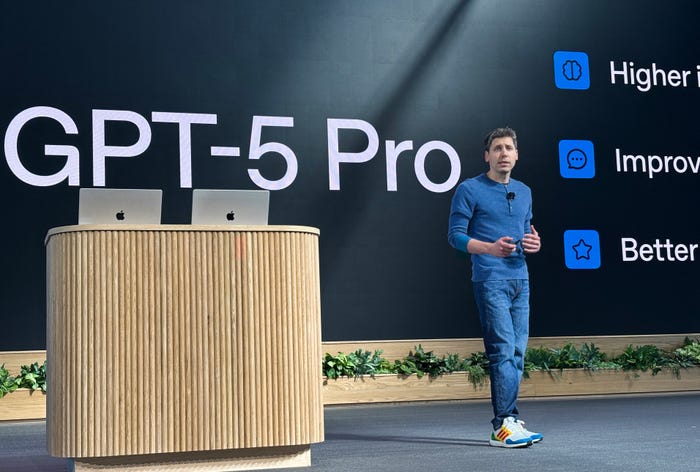
Sam Altman, the architect behind OpenAI, is not merely building an artificial intelligence company; he is, by all indications, forging a new industrial paradigm. Reflections by Sam Altman
This past week offered a revealing glimpse into the mind of a CEO whose ambition has already propelled OpenAI’s dealmaking valuation to an astonishing $1 trillion this year alone.
Far from resting on the laurels of such staggering figures, Altman’s recent pronouncements suggest this is merely the opening act of an even grander, more audacious strategy.
The sheer scale of OpenAI’s infrastructure investments is dizzying. From a blockbuster chip deal with AMD to massive compute partnerships with giants like Nvidia, CoreWeave, and Oracle, Altman is orchestrating a capital-intensive symphony designed to underpin the future of AI. OpenAI wants to build the next era of the web
Speaking on “The A16z Podcast,” Altman described these moves as a “very aggressive infrastructure bet,” a wager so immense that, in his view, it necessitates the support of “the whole industry, or a big chunk of the industry.”
This isn’t just about securing resources; it’s about reshaping the very supply chains of the burgeoning AI economy. AI is reshaping supply chains.
What makes this strategy particularly compelling is Altman’s unshakeable conviction, even in the face of potential skepticism. He readily acknowledges that some might deem these deals “too ambitious or risky,” yet he remains confident that, in time, they will “all make sense.”
This isn’t just corporate bluster; it speaks to a deep-seated belief in the transformative power of the AI models OpenAI is developing. If these models reach their anticipated capabilities, Altman posits, the “economic value that sits there can go very, very far.” A new look at the economics of AI
It’s a vision that demands not just innovation, but also unprecedented control and foresight over the foundational elements of AI.
Perhaps the most fascinating revelation from Altman this week was his candid admission of a fundamental shift in his strategic philosophy. For years, he was “always against vertical integration,” the idea of a company controlling multiple facets of its supply chain. Traditional economic theory champions specialization, arguing that companies should focus on their core competencies and allow the market to efficiently connect the dots. But for OpenAI, Altman now admits, “I was just wrong about that.” What Is Vertical Integration?
The unique demands of developing and deploying advanced AI, it seems, have rendered conventional wisdom inadequate. To truly deliver on its mission, OpenAI has found it necessary to “do more things than we thought,” a concession that highlights the unprecedented challenges and opportunities within the AI frontier.
This pivot isn’t just a tactical adjustment; it’s a philosophical recalibration, acknowledging that the future of AI might require a level of integrated control rarely seen outside of historical industrial giants.
Then there’s the elephant in the room: the financing of these colossal bets. Analysts have noted that some of OpenAI’s deals appear “circular or self-funding,” raising legitimate questions about who ultimately foots the bill. Altman’s answer is straightforward, if not entirely reassuring in the short term: OpenAI’s revenue.
This statement, however, clashes with recent reports indicating that while the company generated $4.3 billion in revenue in the first half of 2025, it also incurred a net loss of $13.5 billion.AI reshaping financial services
The gap between current financial realities and the scale of these investments is stark, leading one to ponder the timeline for profitability and how long such aggressive spending can be sustained.
Yet, Altman, ever the visionary, isn’t just thinking about paying for current deals. He envisions OpenAI playing a much larger role in the broader AI ecosystem’s financial future. He stated that OpenAI is “working on plans to be able to help with the financing these companies need at this kind of scale ahead of revenue.” This is an audacious claim, positioning a company currently operating at a significant loss as a potential financier for others.
It suggests a future where OpenAI, fueled by tens of billions in funding and an unshakeable belief in its own trajectory, could become a pivotal financial engine for the entire AI industry, shaping not just technology, but also market dynamics and investment flows.
In essence, Sam Altman is not merely leading a tech company; he is engaged in an industrial-scale undertaking that is redefining the very nature of corporate strategy in the 21st century. His approach is characterized by relentless expansion, a willingness to challenge established economic principles, and an unwavering faith in the long-term value of artificial general intelligence.
The $1 trillion in dealmaking is not an endpoint, but a waypoint on a journey that promises to be as transformative as it is financially demanding. The coming months, as Altman himself suggests, will undoubtedly reveal even more layers to this ambitious saga, leaving us to wonder just how far this “aggressive infrastructure bet” will ultimately take us.
-
Frank DiBernardo handles LNGFRM's Foodie and Miscellaneous writing tasks. He's always getting ideas from users, so don't be afraid to send an email to the editor.