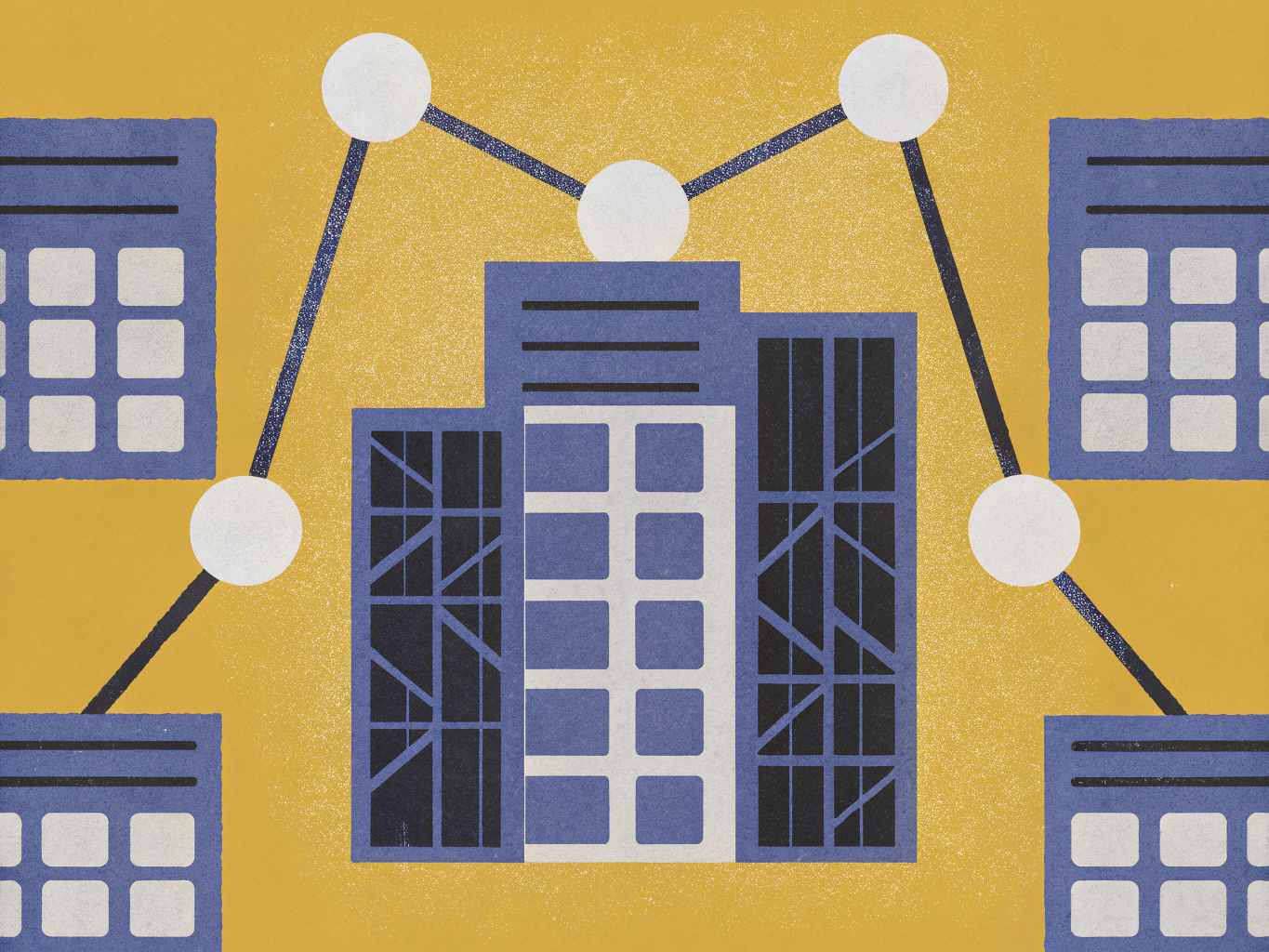
The corporate landscape, once meticulously mapped by hierarchical lines and boxes, is on the cusp of an unprecedented transformation.
It’s not merely an evolution; it’s a revolution, driven by the relentless march of artificial intelligence.
Just as automation in the 1980s spurred a wave of process reengineering, stripping away inefficiencies, AI is now poised to dismantle the very architecture of organizations.
It threatens to render the venerable org chart a relic of a bygone era.
This profound shift, far from being a theoretical musing, is already being navigated by forward-thinking leaders.
Ron Carucci, a renowned consultant and researcher in organizational dynamics, and Kathleen Hogan, Microsoft’s former chief people officer and now EVP of Strategy and Transformation, have distilled this impending upheaval into four critical paradigm shifts.
Their insights paint a vivid picture of a future where agility, influence, and continuous adaptation trump fixed structures and static titles.
The first, and perhaps most fundamental, change is the pivot from traditional “change management” to an ingrained “change readiness.”
For decades, the playbook for organizational change involved carefully orchestrated communication plans, phased rollouts, and meticulously defined endpoints.
It was a project with a clear beginning and end.
But today’s reality is a whirlwind of constant disruption.
There’s no time to chart a fixed course when the destination itself is perpetually shifting.
The new imperative is to cultivate a culture where change isn’t an event to be managed, but an inherent, everyday capability.
This demands a mindset shift: leaders must view change as a continuous state, not a series of isolated incidents.
At Microsoft, this translates to nurturing “positive pivoters” – individuals who embrace fluidity as the norm, rather than clinging to stability as the ultimate virtue.
It’s about hiring and developing talent for their capacity to learn and adapt, not just their existing expertise.
The anecdote of Microsoft’s journey in AI, where challenging fixed mindsets and embracing external perspectives under Satya Nadella proved crucial, underscores this point.
It’s a powerful reminder that even industry giants must shed the illusion of having all the answers and instead foster an environment where experimentation and learning from failure are normalized.
This fluidity naturally leads to the second critical shift: the dismantling of hierarchical leadership in favor of agile, networked structures.
The traditional pyramid, with its rigid reporting lines and concentrated decision-making at the apex, was once the bedrock of stability.
Yet, in our hyper-accelerated world, this very stability has become a liability, suffocating agility as decisions laboriously ascend and descend the chain of command.
The future demands a flatter, more dynamic ecosystem where influence flows from expertise, not rank.
Teams will coalesce and dissolve organically, forming around challenges as they arise.
Carucci’s work with an organization that developed “innovation hubs,” empowering cross-functional groups with autonomous “go-no go” decision-making power, offers a compelling case study.
The result? A staggering 46% increase in successful product launches within a year.
This isn’t just about efficiency; it’s about unlocking latent potential and accelerating innovation by removing bureaucratic bottlenecks.
The org chart, in this new world, becomes less a rigid blueprint and more a fluid, ever-shifting constellation of talent.
Hand-in-hand with this move away from hierarchy is the third transformation: leadership evolving from control to coaching.
For generations, the quintessential leader was the one who brought order to chaos, exerting firm control over ambiguity.
But uncertainty is no longer an occasional intruder; it is the permanent backdrop of modern business.
Future-ready leaders must not merely tolerate uncertainty, but actively embrace it, becoming coaches who empower their teams to navigate complexity with confidence.
This redefinition of leadership demands a departure from rigid performance reviews in favor of real-time, continuous feedback.
It requires a delicate balance of high expectations with psychological safety, fostering an environment where employees feel secure enough to take risks and experiment without fear of reprisal.
Microsoft’s declaration of the current period as the “year of the coach,” emphasizing competencies like “model, coach, care,” is indicative of this paradigm shift.
It’s a recognition that even as AI agents become integral to daily operations, the irreplaceable human assets – relationship building, empathy, creativity – will need expert coaching to be fully harnessed.
Leaders will no longer be the sole fount of answers but skilled facilitators, asking the right questions to unlock collective intelligence.
Finally, the very currency of career progression is being redefined.
The fourth shift moves from status as power currency to contribution as impact currency.
For too long, professional advancement has been inextricably linked to titles, team size, and invitations to exclusive meetings.
Promotions were the primary badge of increasing influence.
But in an era where speed, collaboration, and specialized expertise are paramount, true leadership will be measured by tangible contribution, not by a hierarchical rung.
Organizations must design pathways where employees can expand their influence by spearheading initiatives, shaping critical decisions, and contributing to strategic problem-solving, irrespective of their formal title.
The example of a global financial services company, where Carucci helped redesign leadership meetings to focus on assigned roles and clear expectations rather than mere seniority, perfectly illustrates this.
The entitlement of “I deserve to be here because I’m a senior vice president” is replaced by a shared understanding of how everyone can collectively create success.
This shift isn’t just about fairness; it’s about optimizing collective intelligence, ensuring that the most capable and impactful individuals are at the forefront, accelerating decision-making, and building leadership pipelines based on genuine merit.
As AI continues its inexorable march, these aren’t mere suggestions for organizational improvement; they are survival strategies.
The world of work is no longer static, and neither can its leadership structures be.
Guiding organizations toward more adaptive, fluid models that empower leadership at all levels is no longer an option, but an urgent necessity.
The time has come to shed the outdated maps and embrace a new, dynamic compass for human endeavor.
The org chart, indeed, is dead. Long live the network.
-
Frank DiBernardo handles LNGFRM's Foodie and Miscellaneous writing tasks. He's always getting ideas from users, so don't be afraid to send an email to the editor.